The legal ceremony is only about 20 minutes. The rest of your wedding day is yours. A typical Mahé beach wedding runs about two and a half hours from pickup to the last photograph: you get ready in your own room, your chauffeur collects you in the early afternoon, the registrar’s ceremony on the sand takes around 20 minutes with your own vows inside it, and the photographer then has you for two hours as the light softens. Barefoot is welcome. Exact times vary with your beach, your accommodation and the registrar’s diary.
Your Seychelles wedding at a glance
The legal ceremony is about 20 minutes. Everything before it and after it is yours to shape. This is the typical shape of a Mahé afternoon with a two o’clock ceremony.
| Time | What happens |
|---|---|
| 10:30 | Getting ready in your own room, her side and his |
| 11:30 | Hair and makeup at your door, optional |
| 13:15 | Chauffeur pickup |
| 13:45 | Beach arrival, welcome drinks and the two minute brief |
| 14:00 | Shoes off, the walk to the gazebo |
| 14:05 | The legal ceremony, about 20 minutes, your own vows inside it |
| 14:20 | The rings |
| 14:25 | Signing the register |
| 14:35 | Cake and the first toast |
| 14:50 | Two hours with the photographer |
| 16:30 | Back to your accommodation, or dinner on the sand |
| Next day | Certificate, then the Supreme Court apostille |
Important. This is a typical Mahé wedding timeline, not a fixed schedule. Your actual ceremony time and sequence may vary depending on your accommodation, your beach, the registrar’s availability, your photography package, the weather and the arrangements you choose. On La Digue, for example, Anse Source d’Argent narrows at high tide, so ceremony times there follow the tide table. We confirm your own running order before you fly.
Every couple asks the same three things before they fly. Is there a script? Can we say our own vows? Would it be strange to be barefoot? Here is the whole day, minute by minute, so nothing is a mystery.
Most of the wedding pages on the internet stop at the price. They tell you what is included and where to send your passport, and then they go quiet on the part you will actually remember. This guide is the opposite. It follows one ordinary Tuesday on Mahé from the moment the hair stylist knocks on your door to the moment the photographer lowers the camera, and it names every person who will be there and what each of them is doing. Anisa, our wedding planner, is the person who writes your version of it.
The structure below is the one we use for almost every wedding we arrange. Around 95 in every 100 of our couples marry on Mahé, and the ceremony itself is set for early afternoon, usually two o’clock, because that gives you a calm morning, a warm and quiet beach, and four full hours of daylight for photographs afterwards. Praslin and La Digue follow the same shape with a ferry added at either end.
The day, hour by hour
The exact timing and sequence vary according to the registrar, the location and the circumstances of your ceremony, but the shape holds. Read it once and you will walk into the day already knowing what happens next.
- 10:30
Getting ready, her side and his
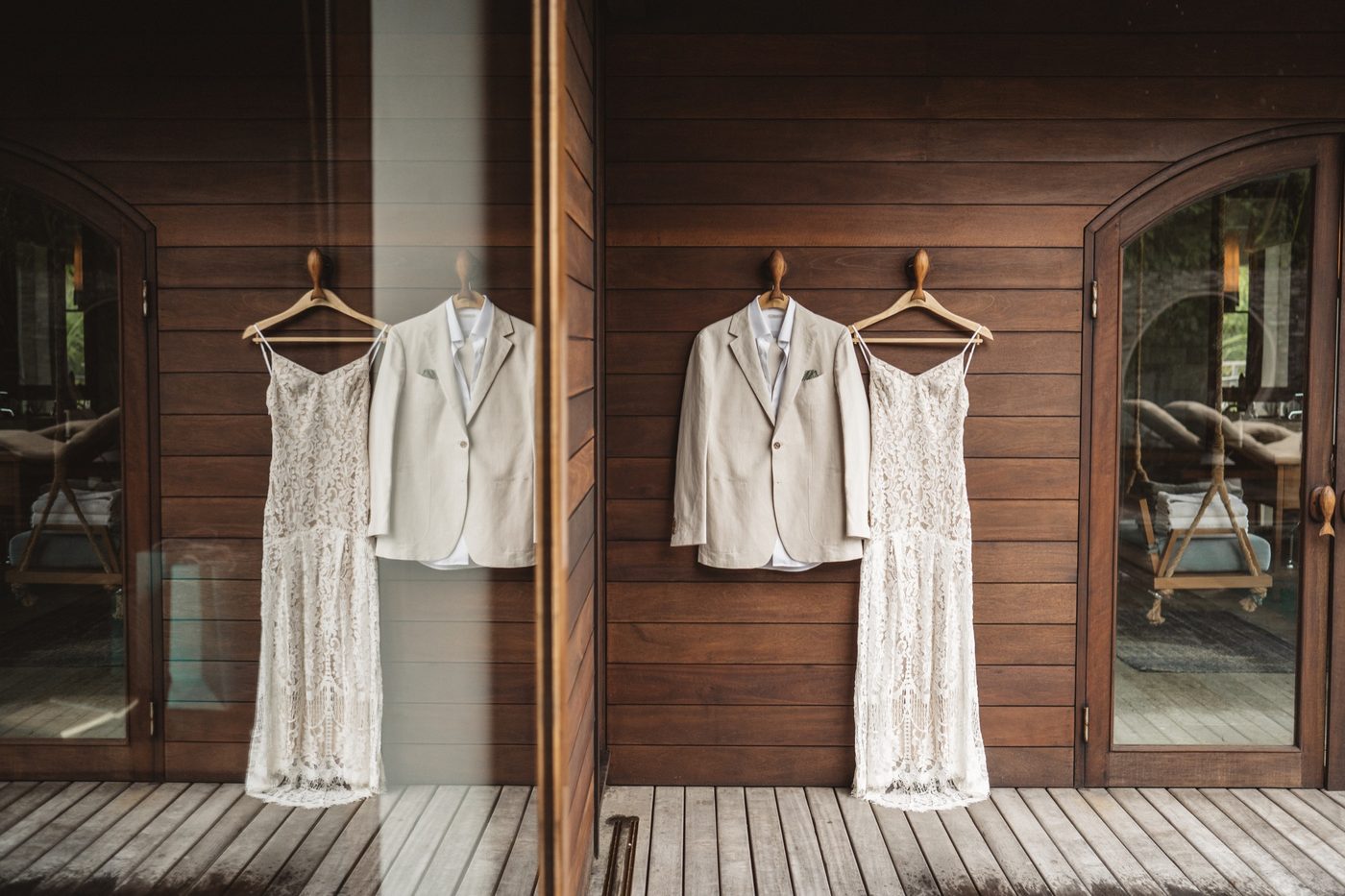
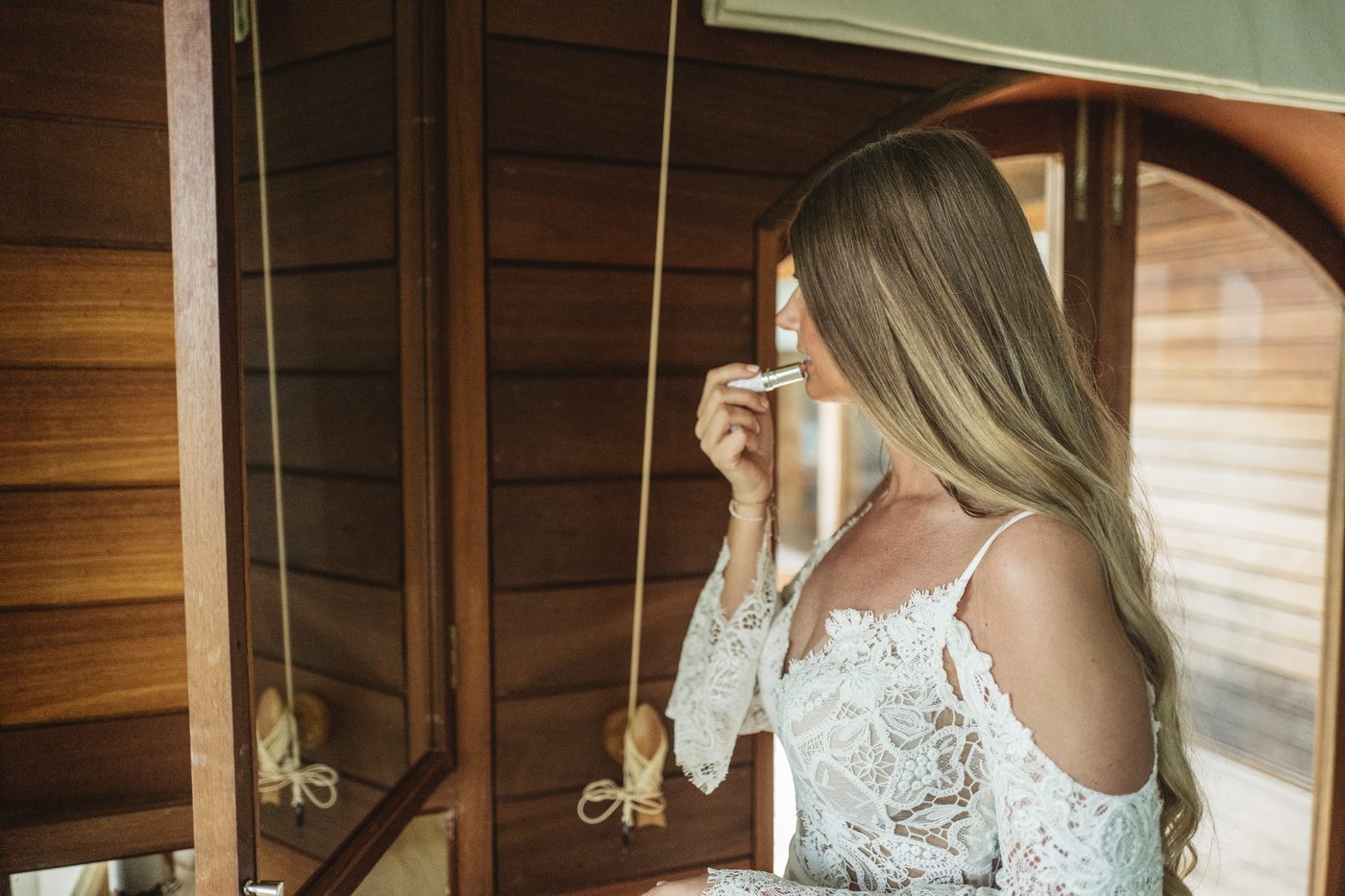
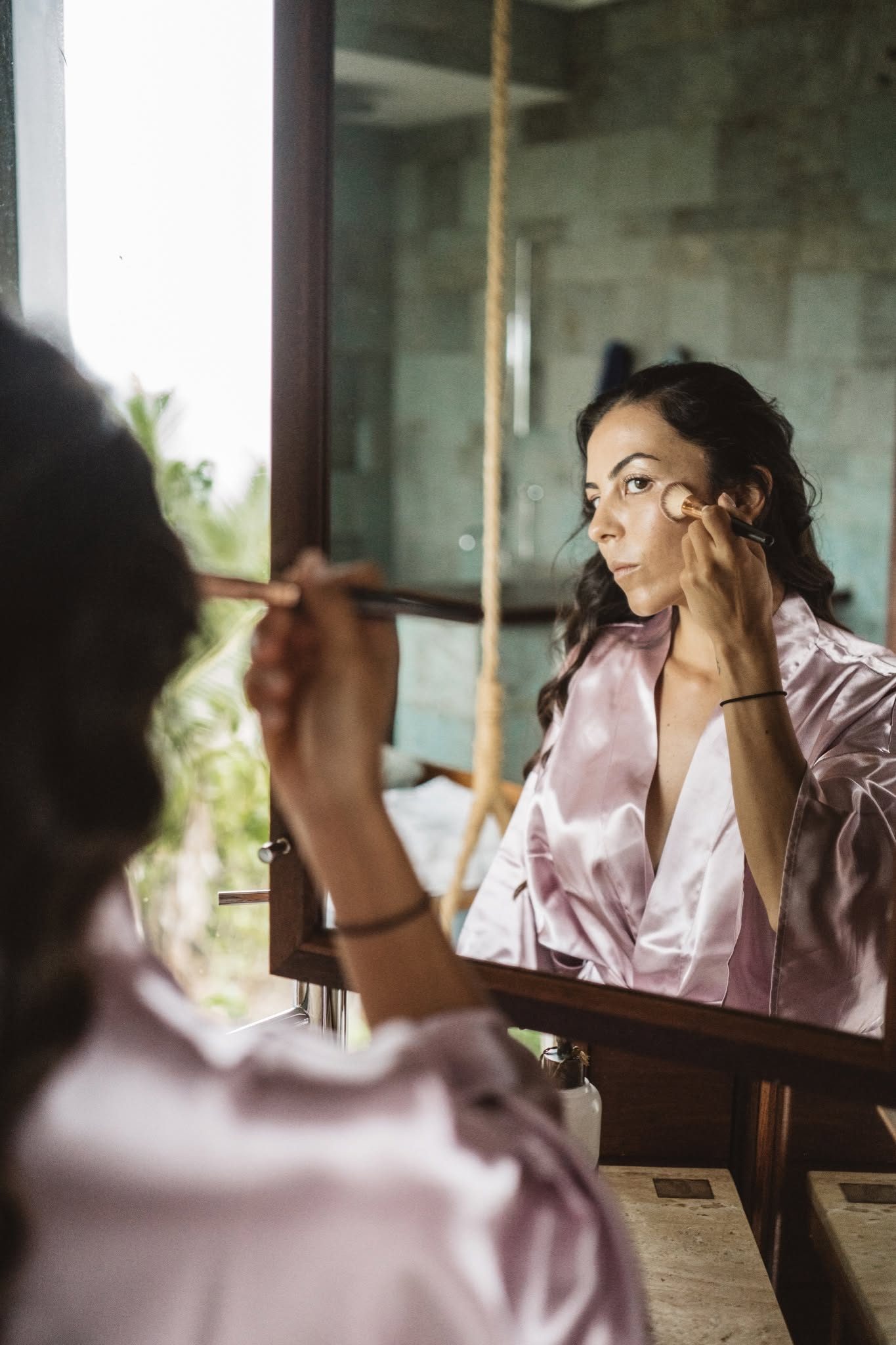
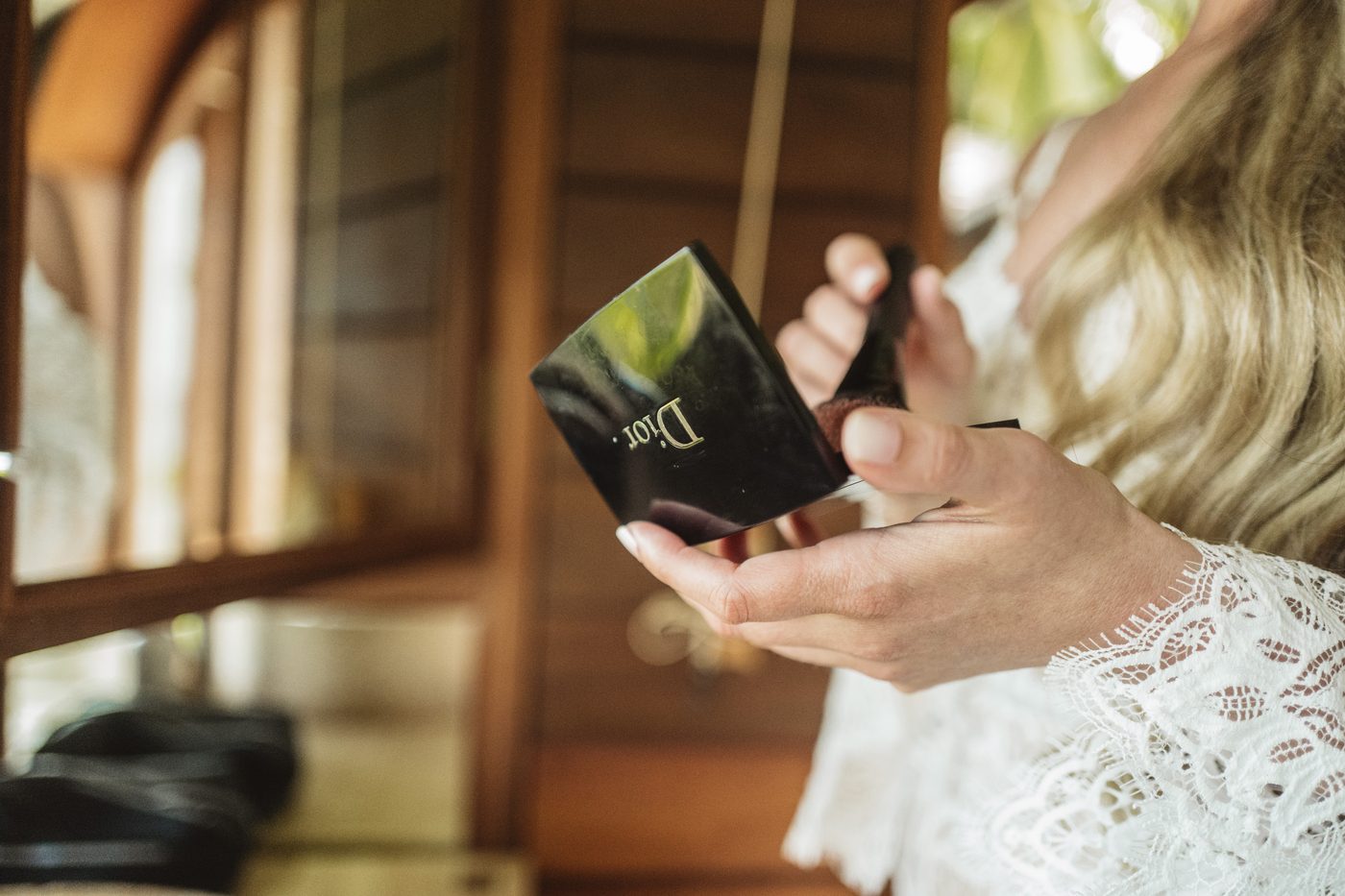
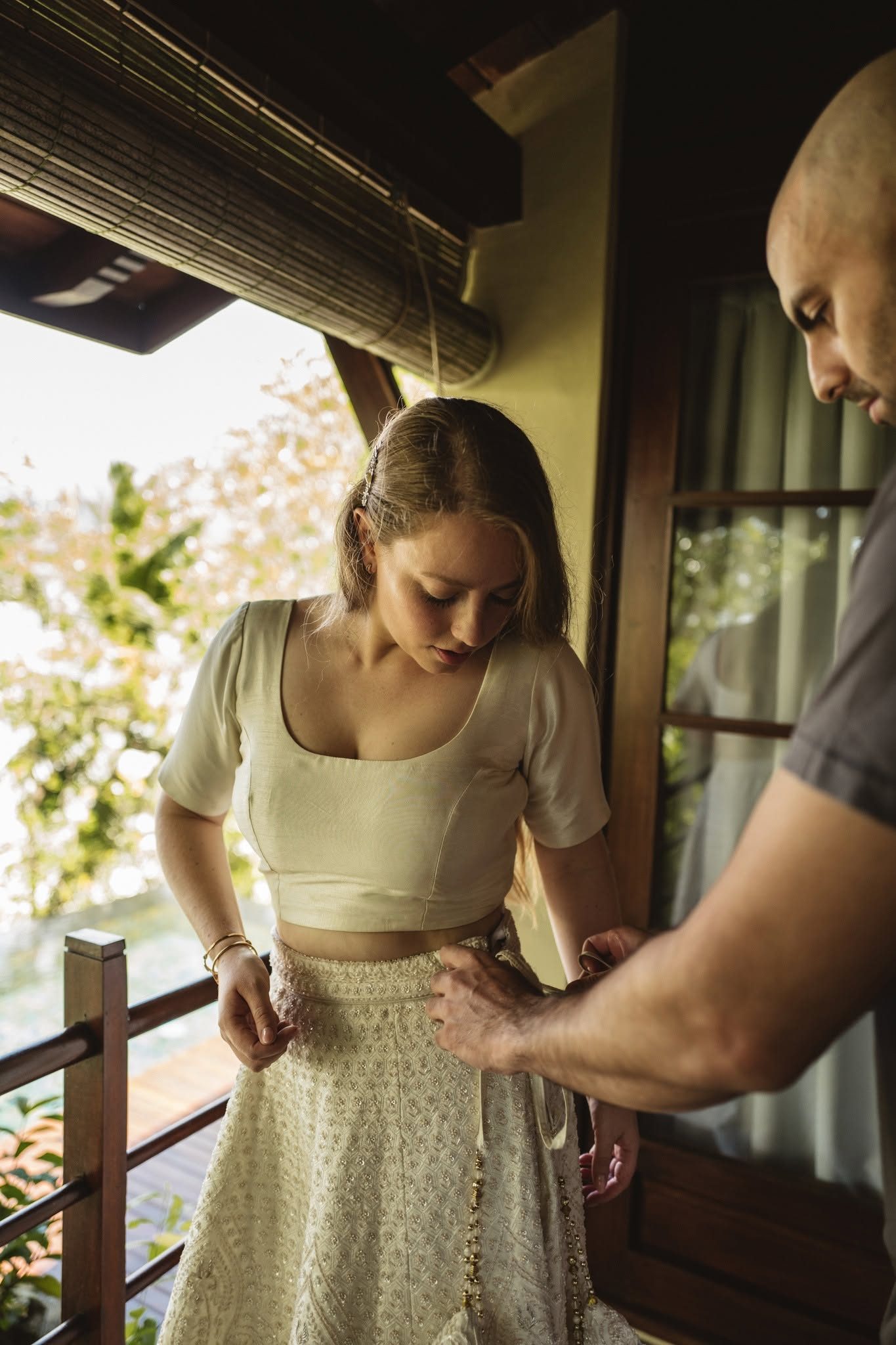
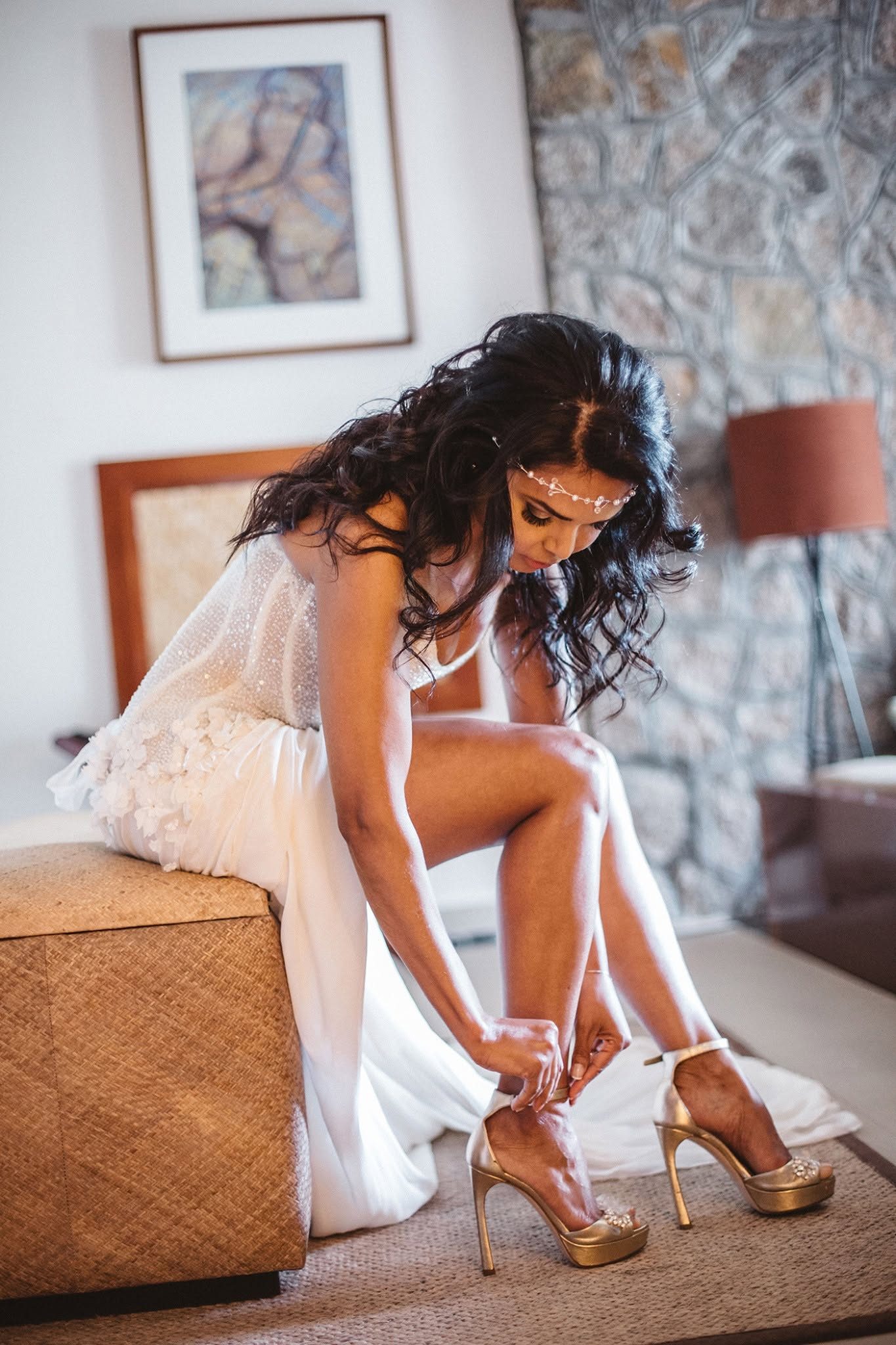
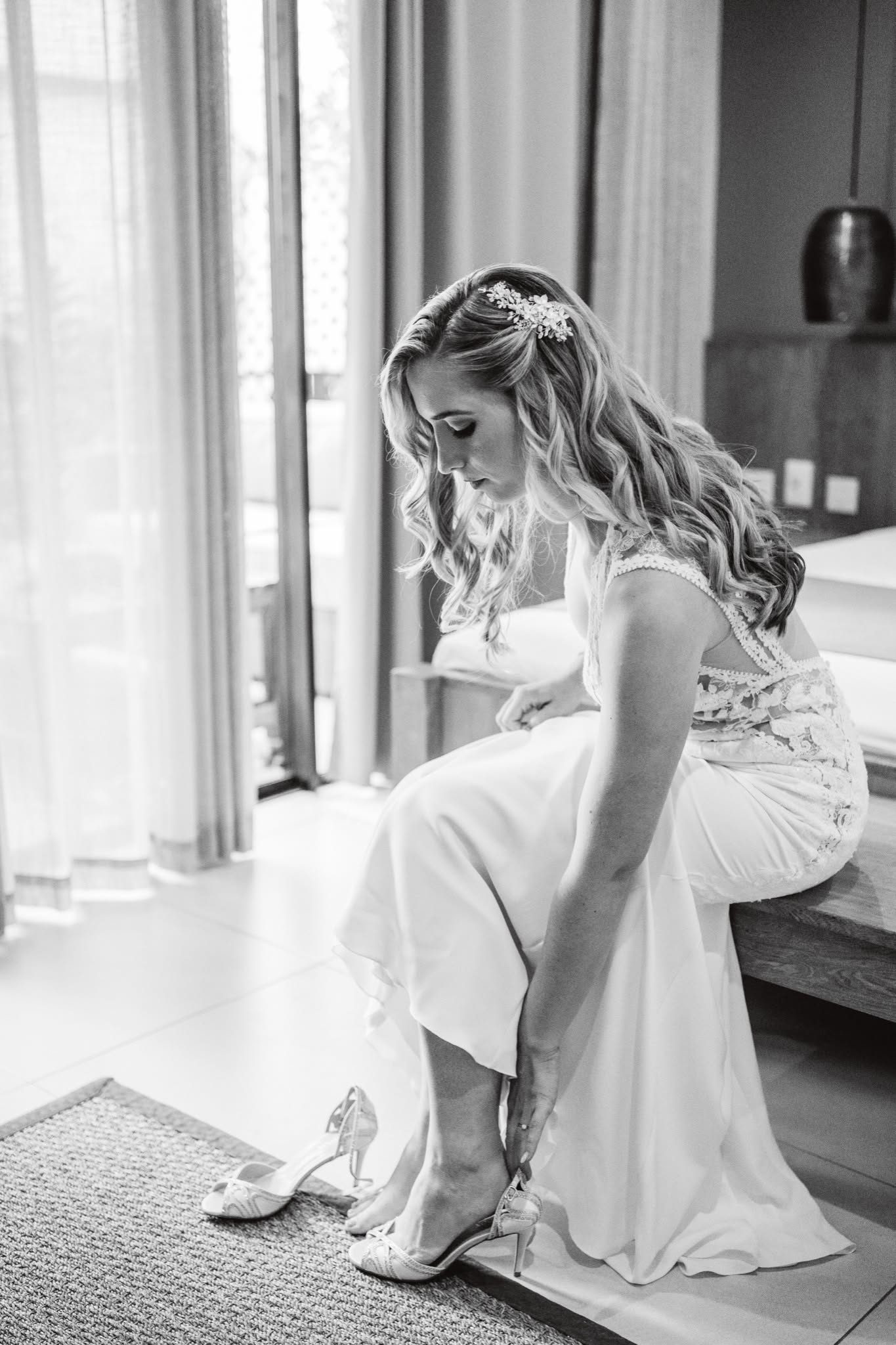
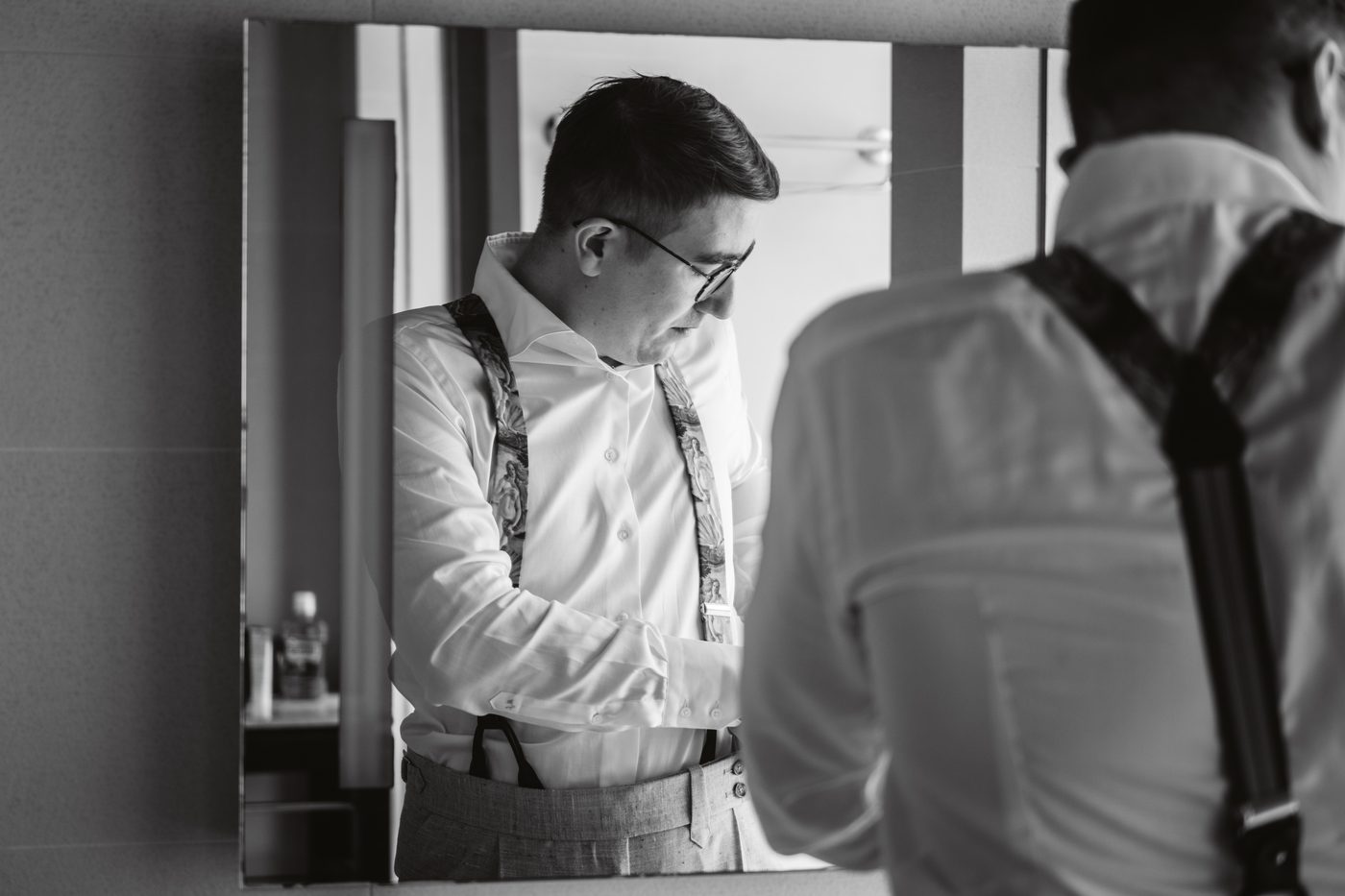
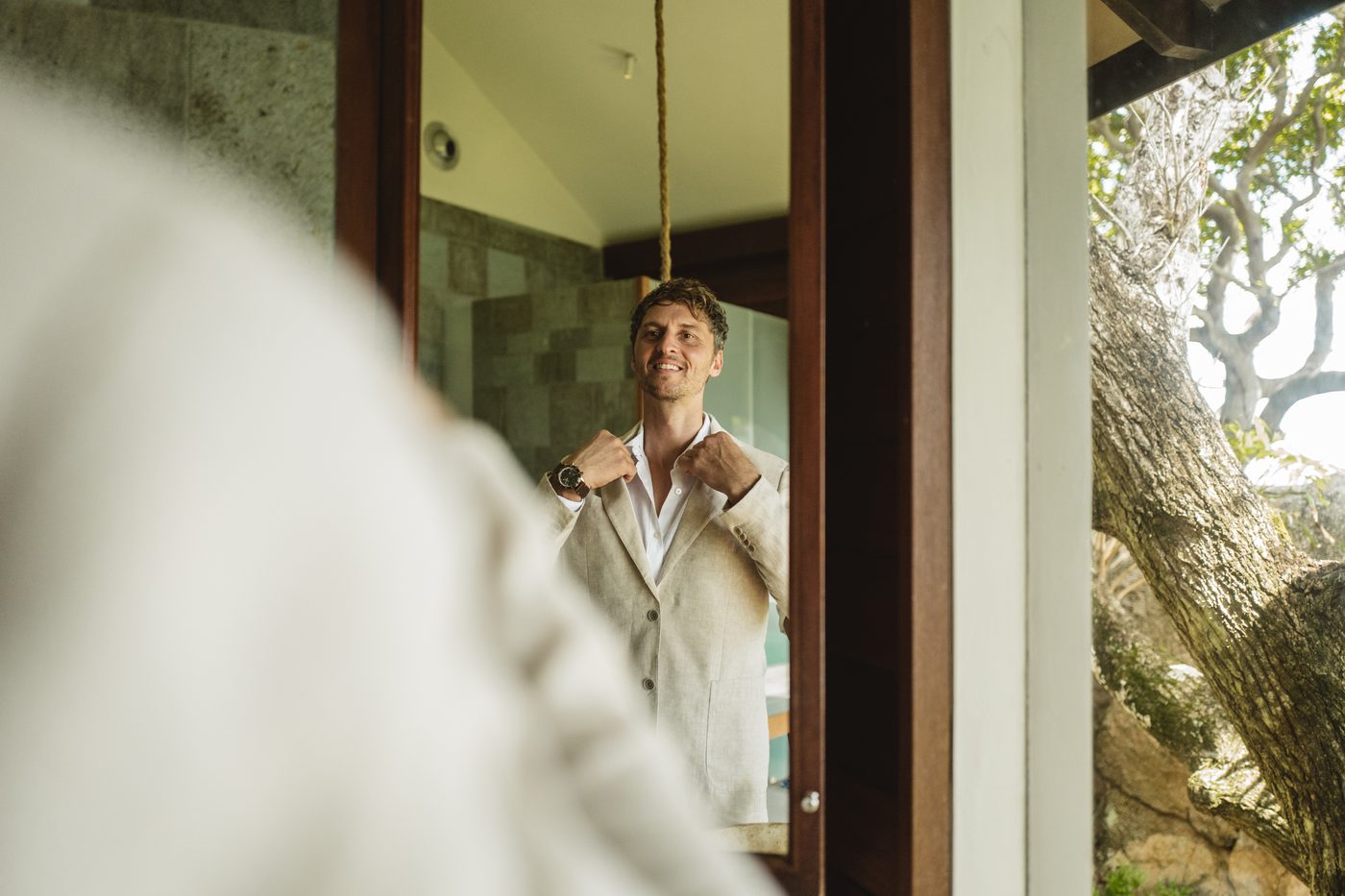
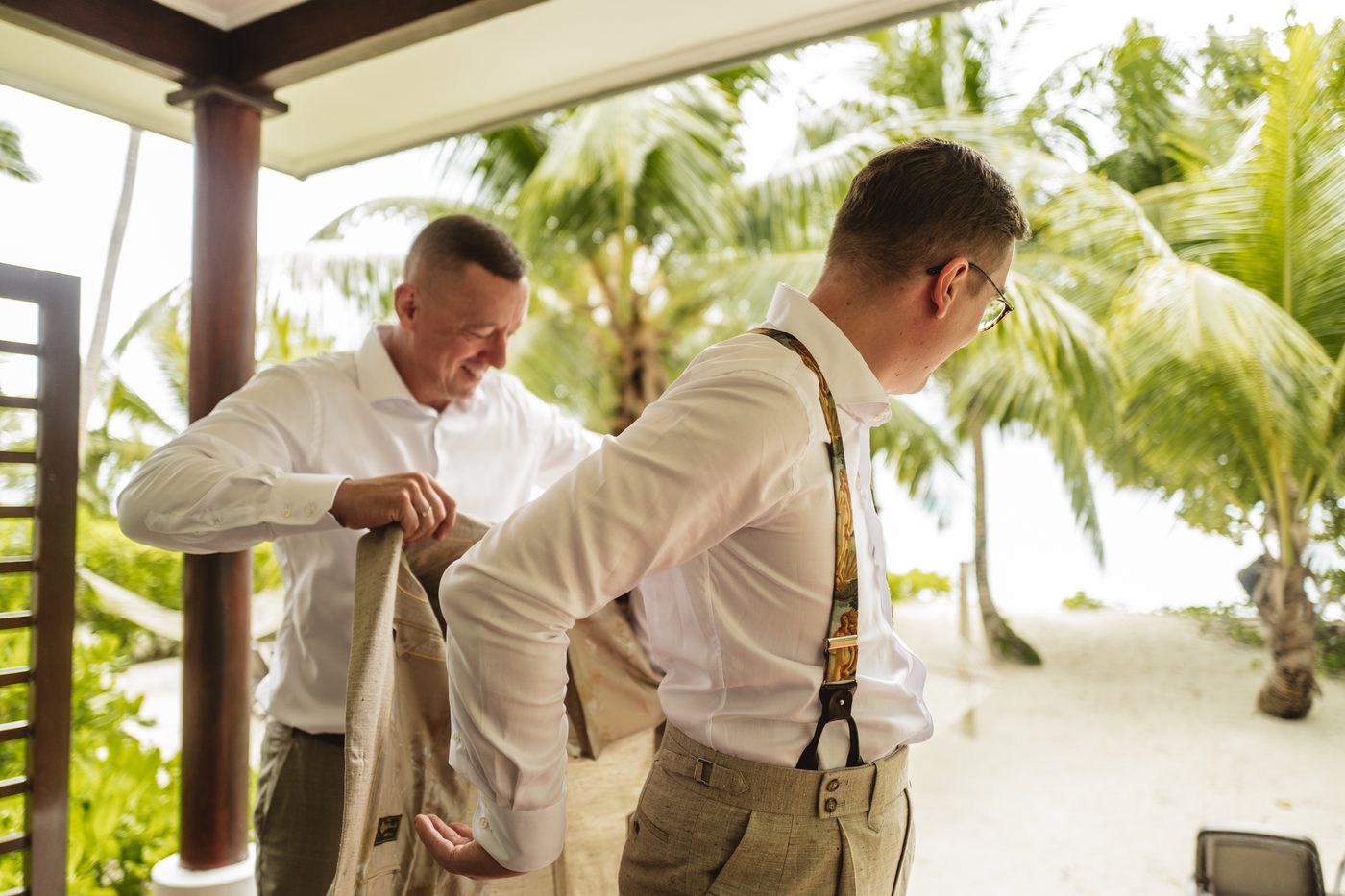
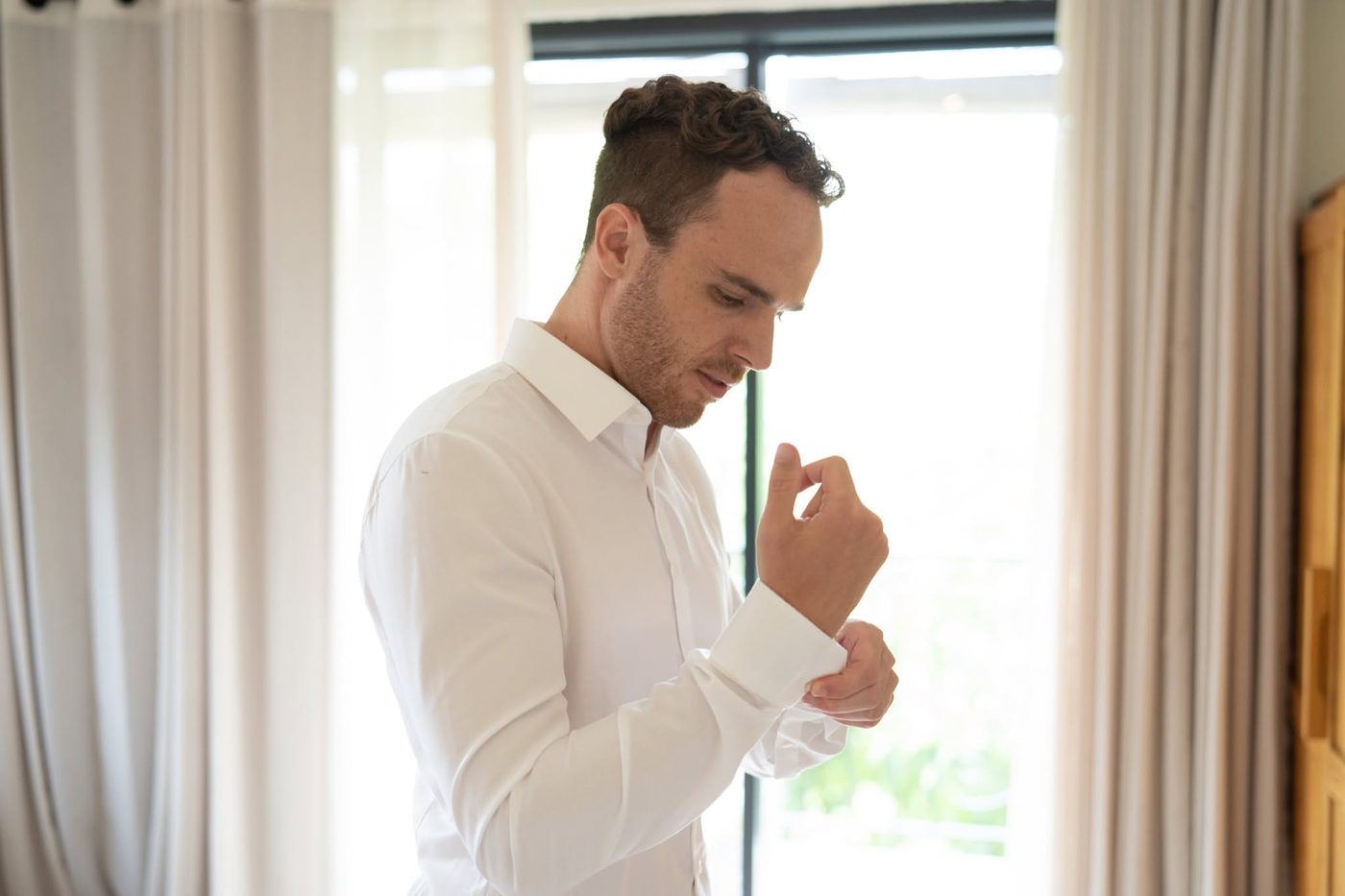
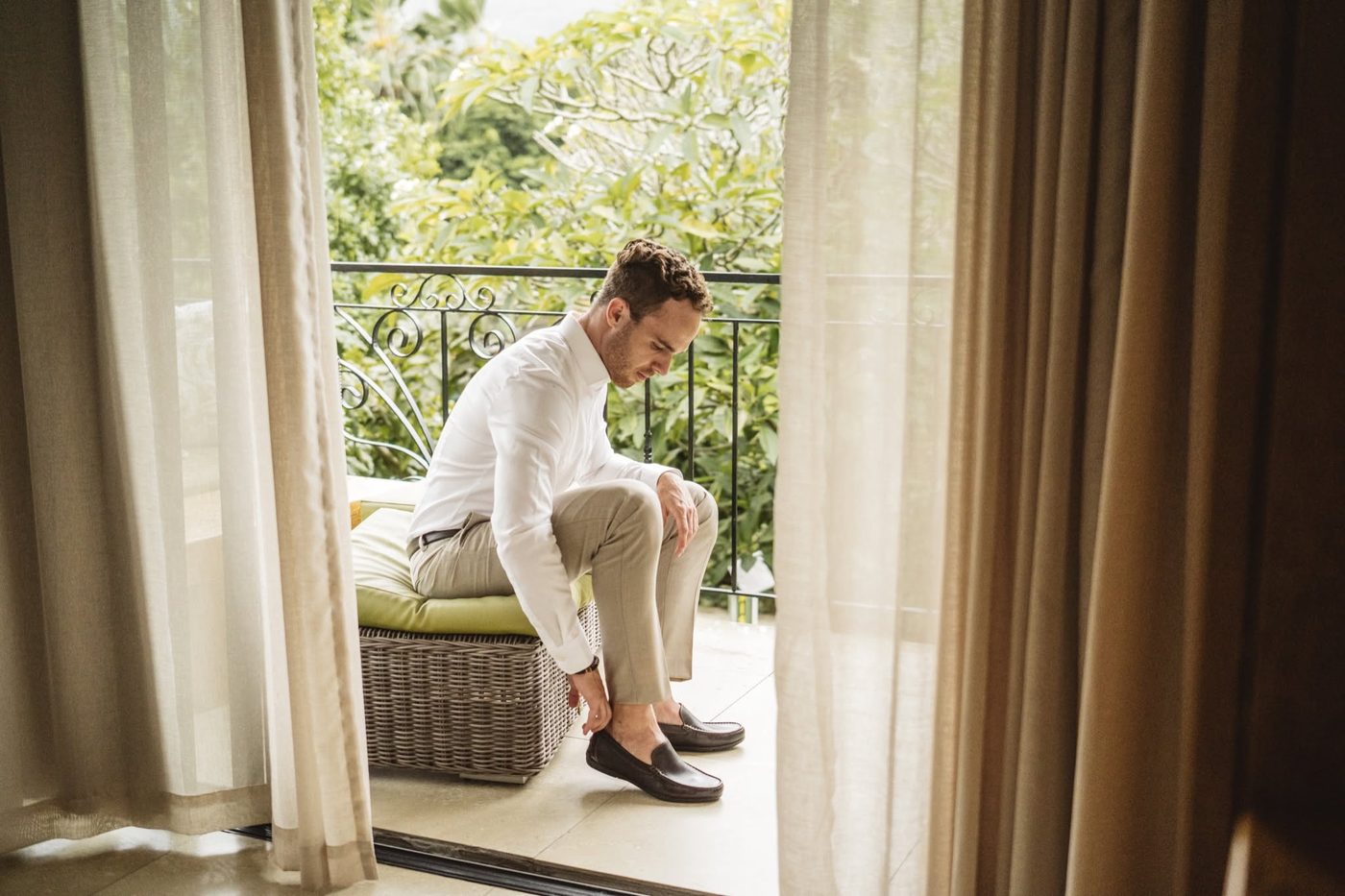
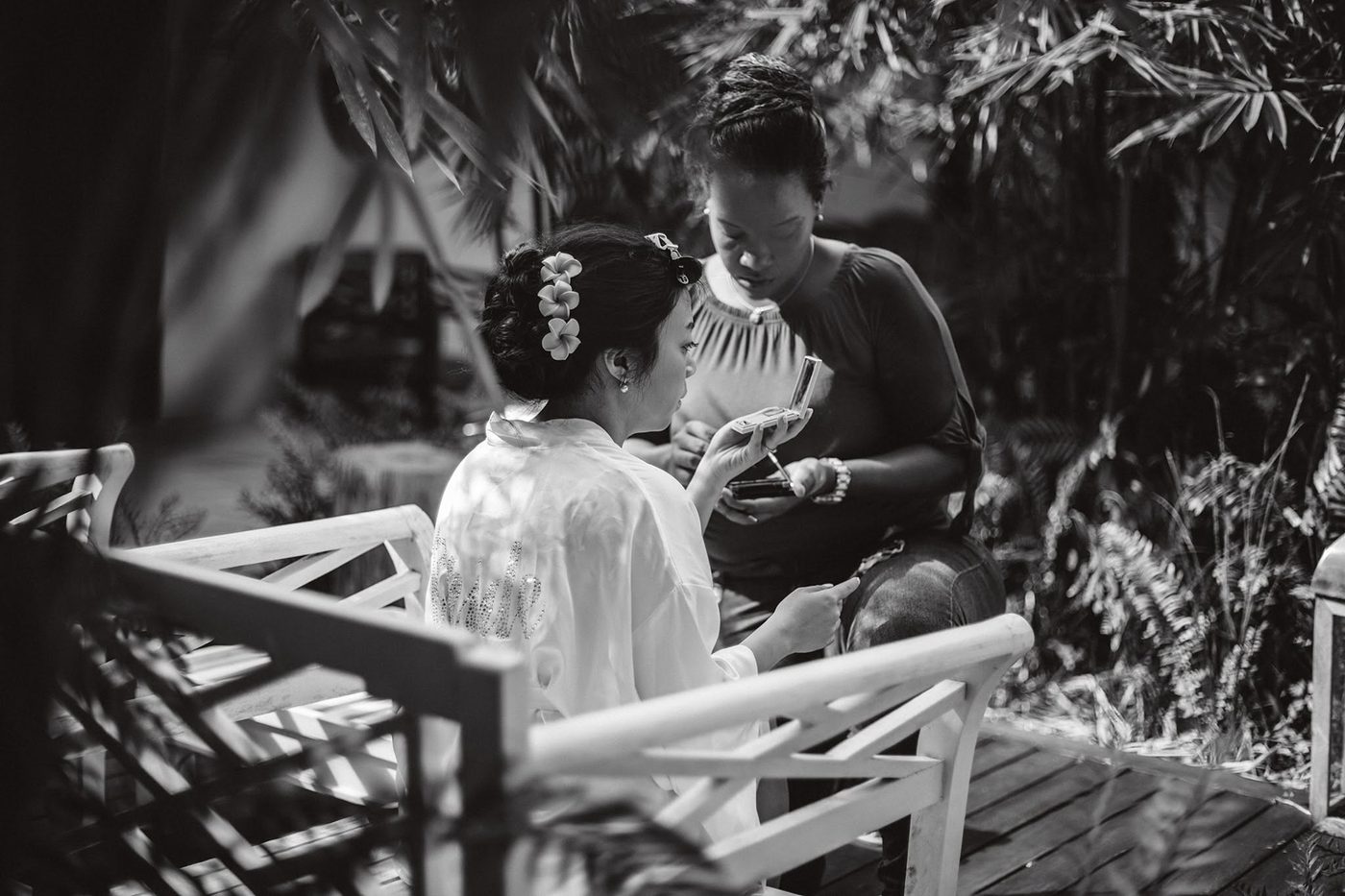
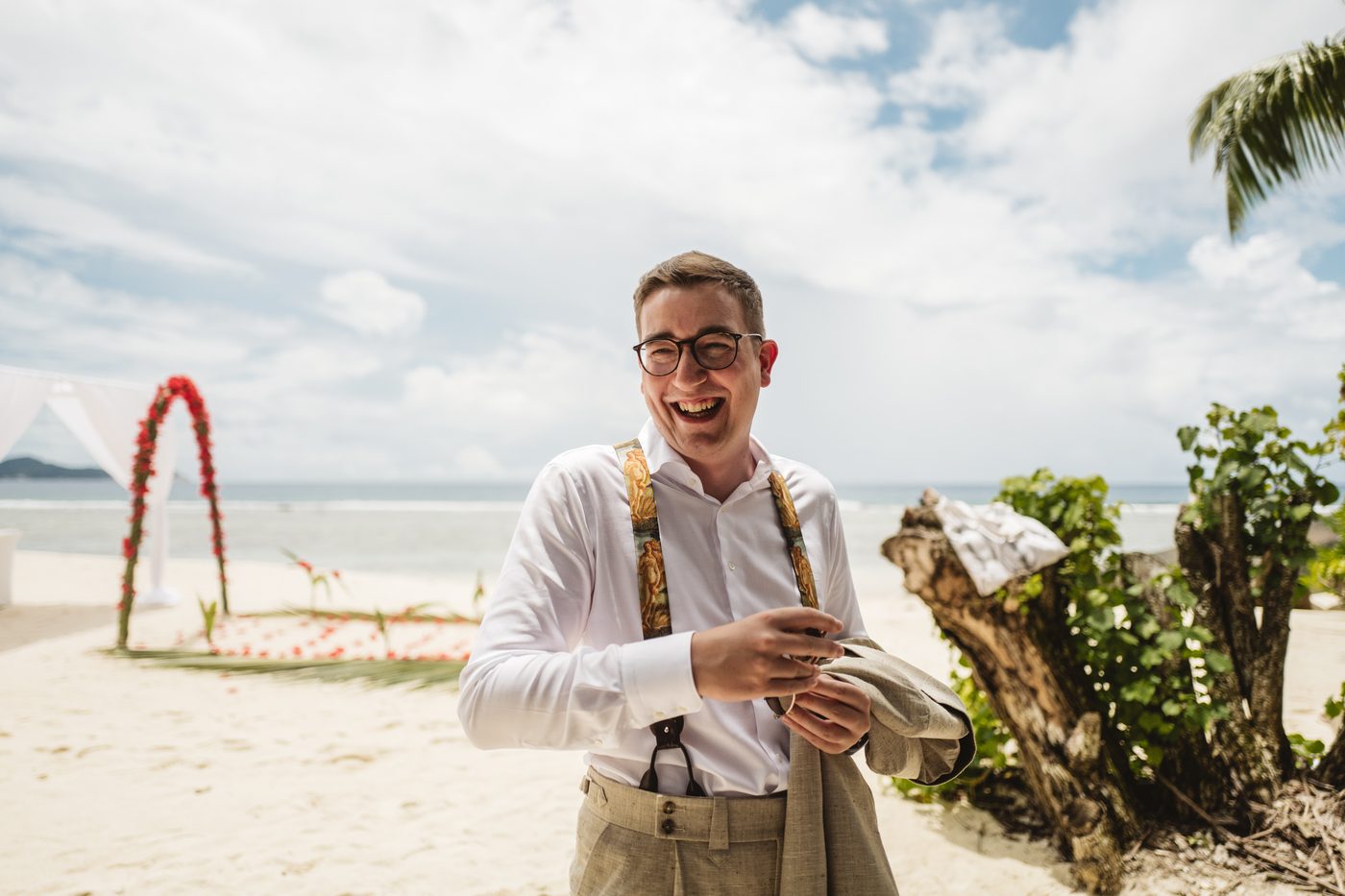
Most of our couples get ready themselves, in their own room, with the doors open to the sea. There is no bridal suite to hire and no queue for a mirror. She does her makeup by the window, a mother or a friend laces the back of the dress, and he buttons a linen shirt in the bathroom mirror while the jacket waits on a hanger. A late breakfast, a swim, then you dress.
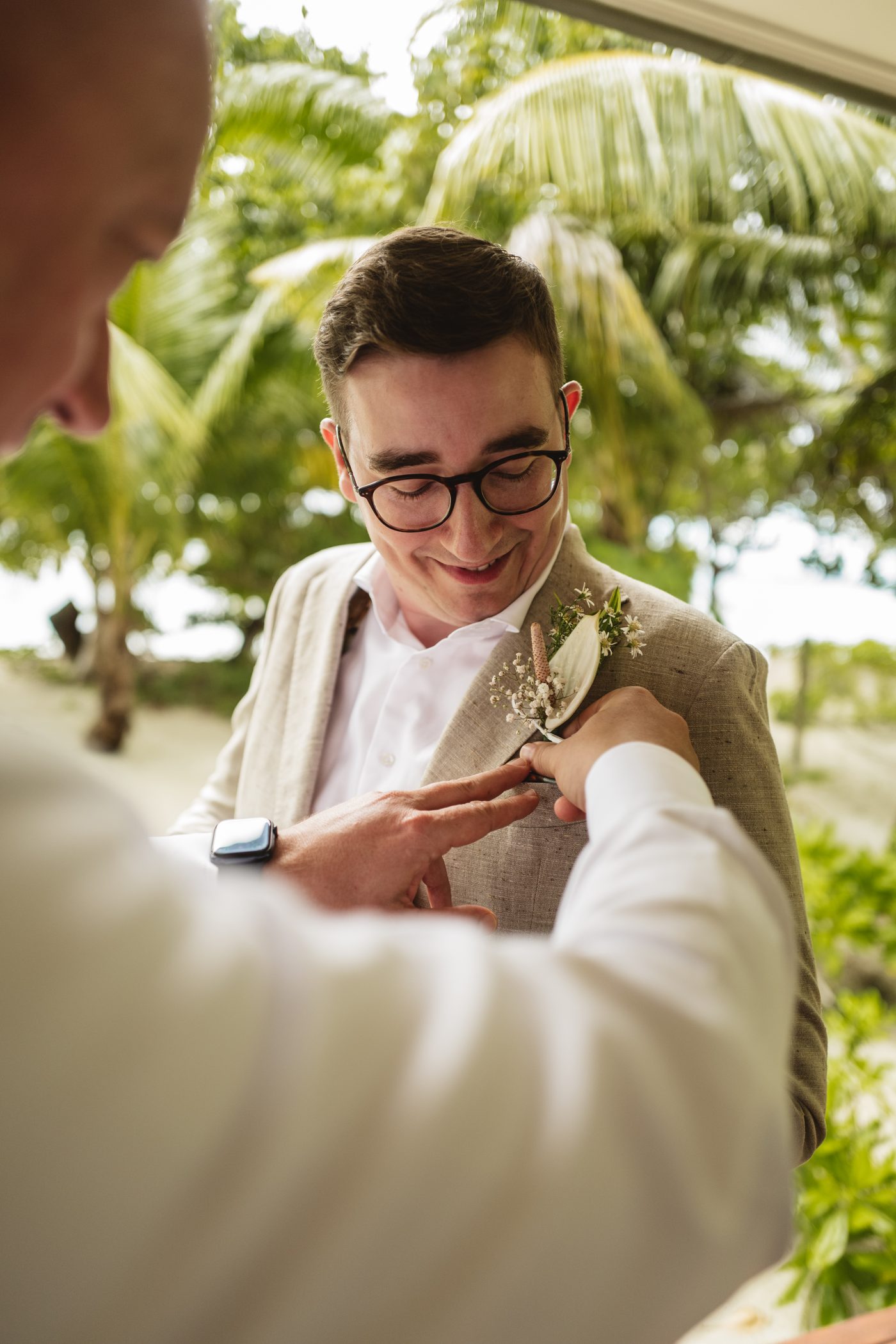
These are the pictures couples say they wish they had asked for. If you would like the photographer to start at your room rather than at the beach, tell us when you book and we add the hour. Grooms get their own set, which is a side of the day almost nobody photographs, and the boutonnière being pinned is often the frame that ends up on the wall.
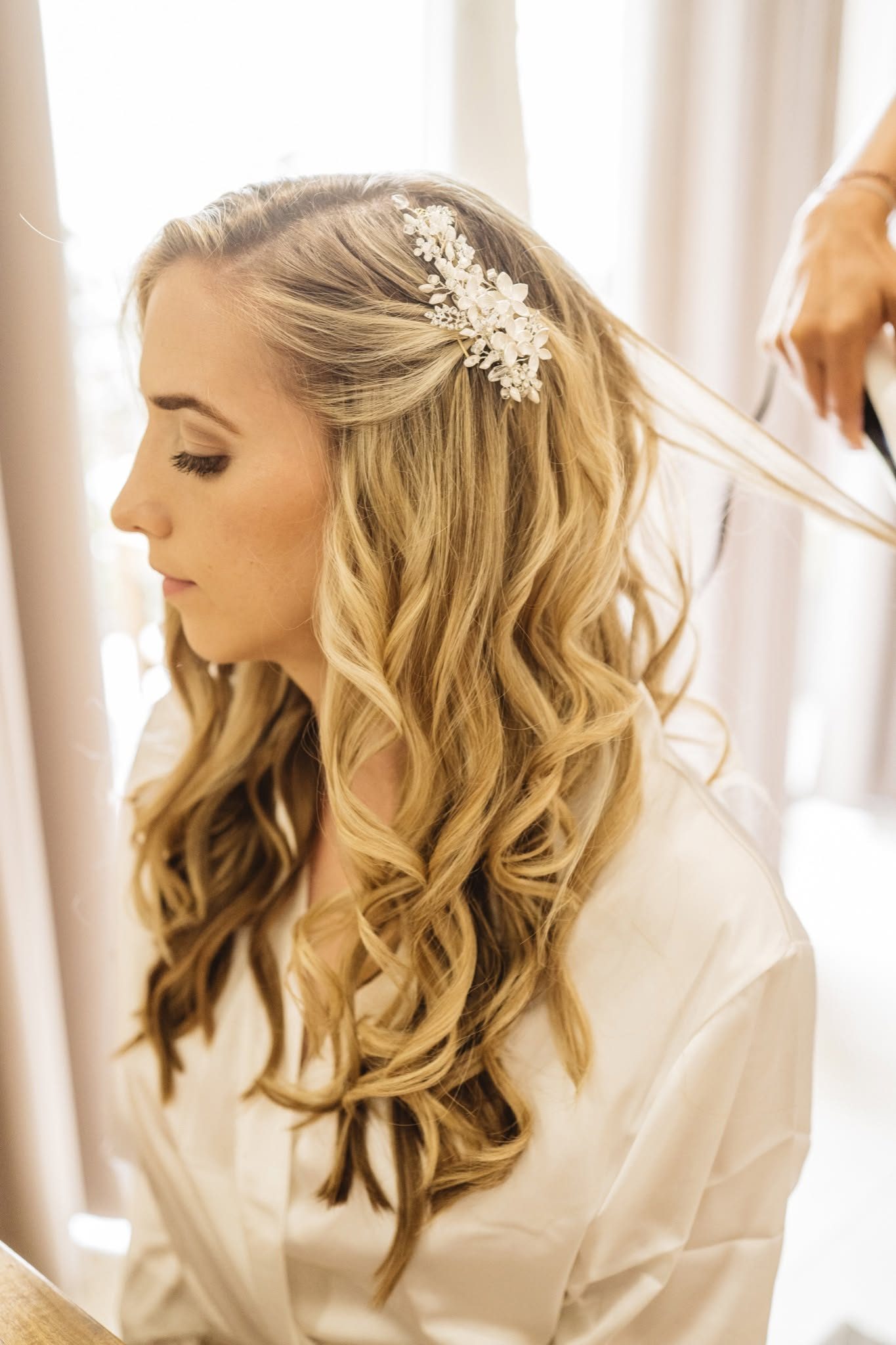
Her sideThe dress, the mirror, one steady pair of hands

His sideLinen, a mirror, and the boutonnière


- 11:30
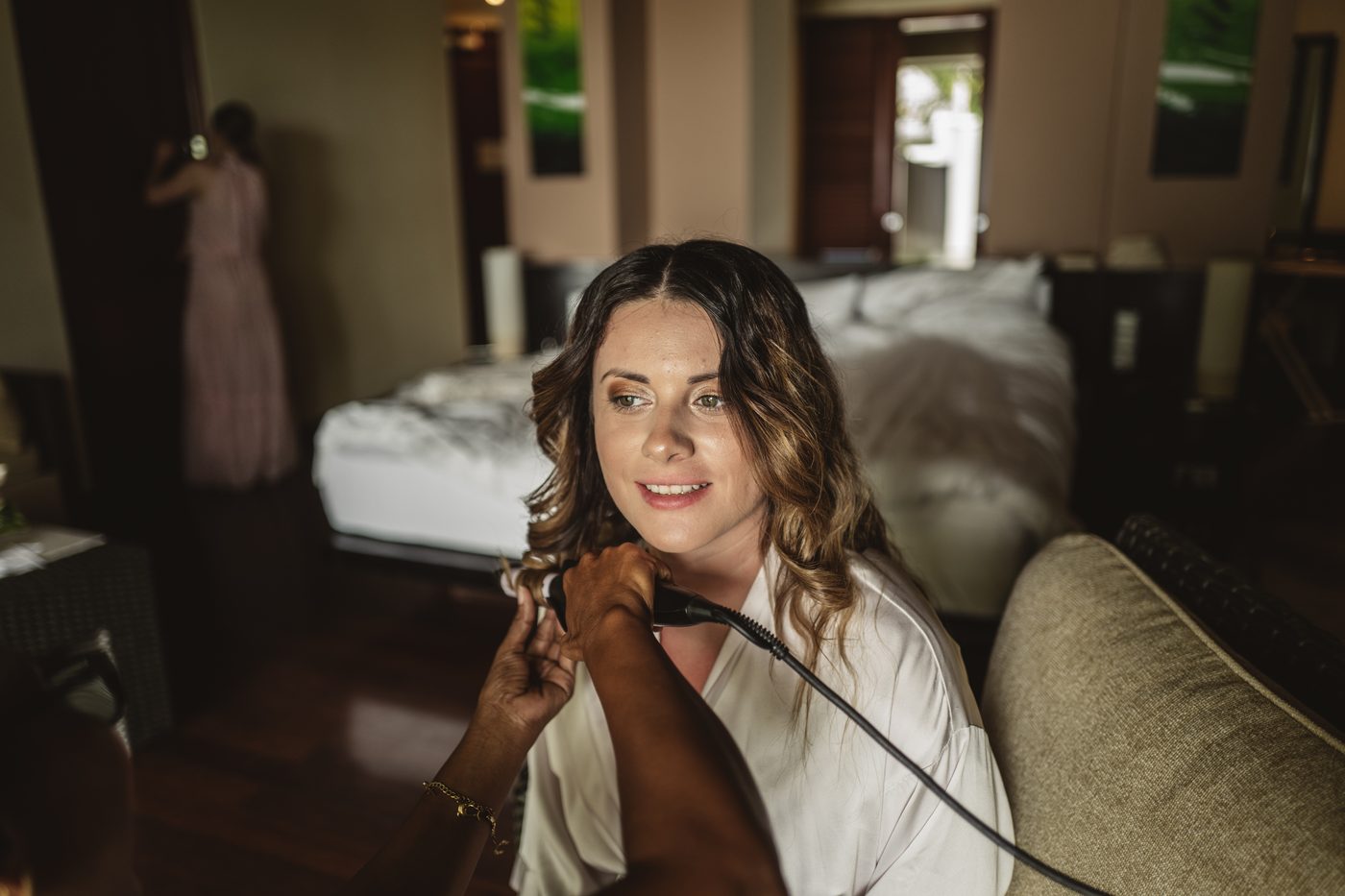
The stylist arrives at your dooroptional
If you have added the bridal stylist, she comes to you. Hair and makeup at your hotel or villa, roughly two hours before the car, with a trial look first if you want one. There is no salon to find and no taxi to book. You sit by a window with a coffee while the island gets on with its morning.
Grooms usually use this window for a swim.
- 13:15
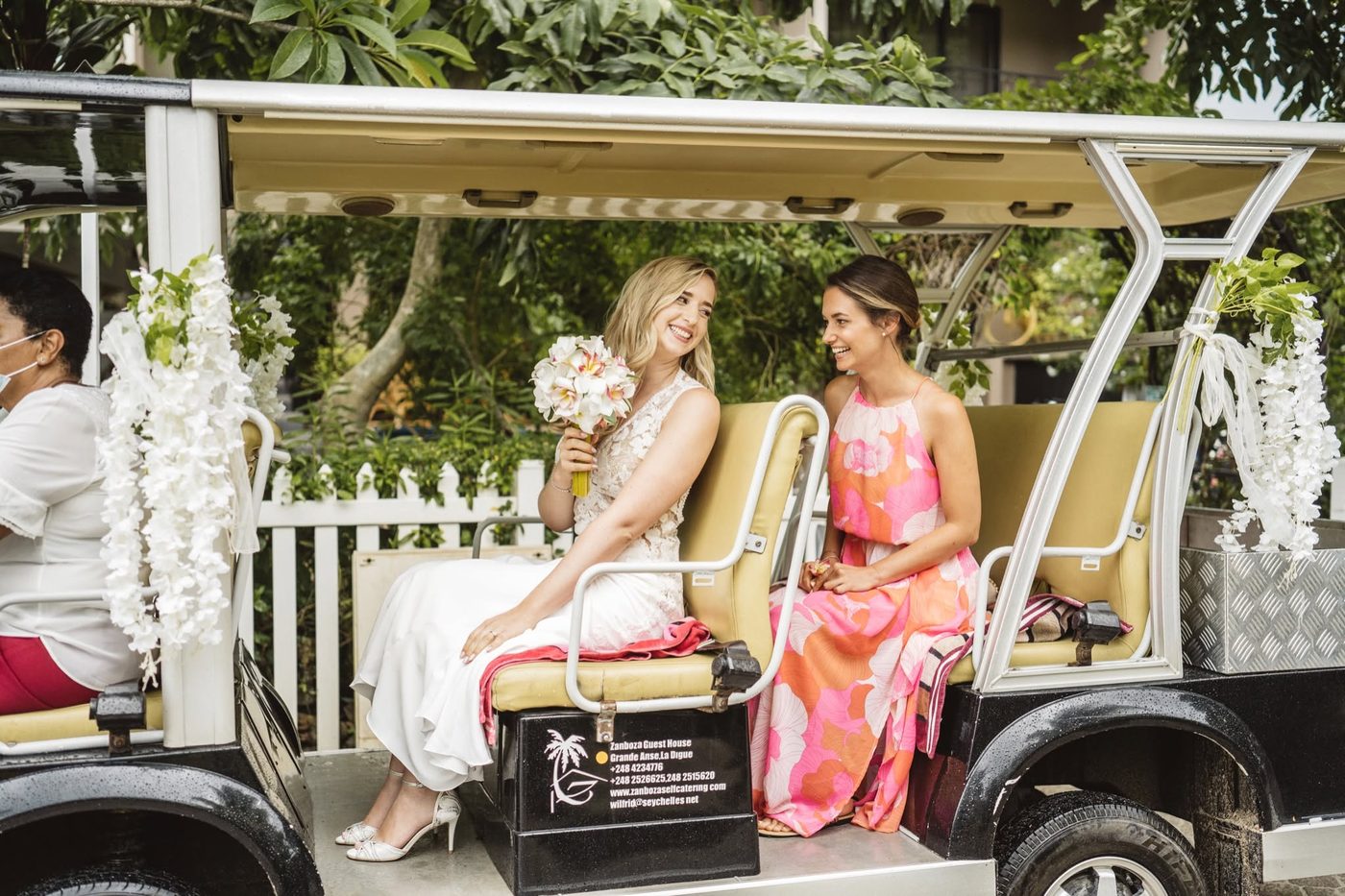
Your chauffeur collects you
A chauffeur driven wedding car is part of every package. The drive to the beach is 20 to 40 minutes depending on where you are staying, and it is a quiet twenty minutes. Windows down, coast road.
- 13:45
Arrival, welcome drinks and the two minute brief
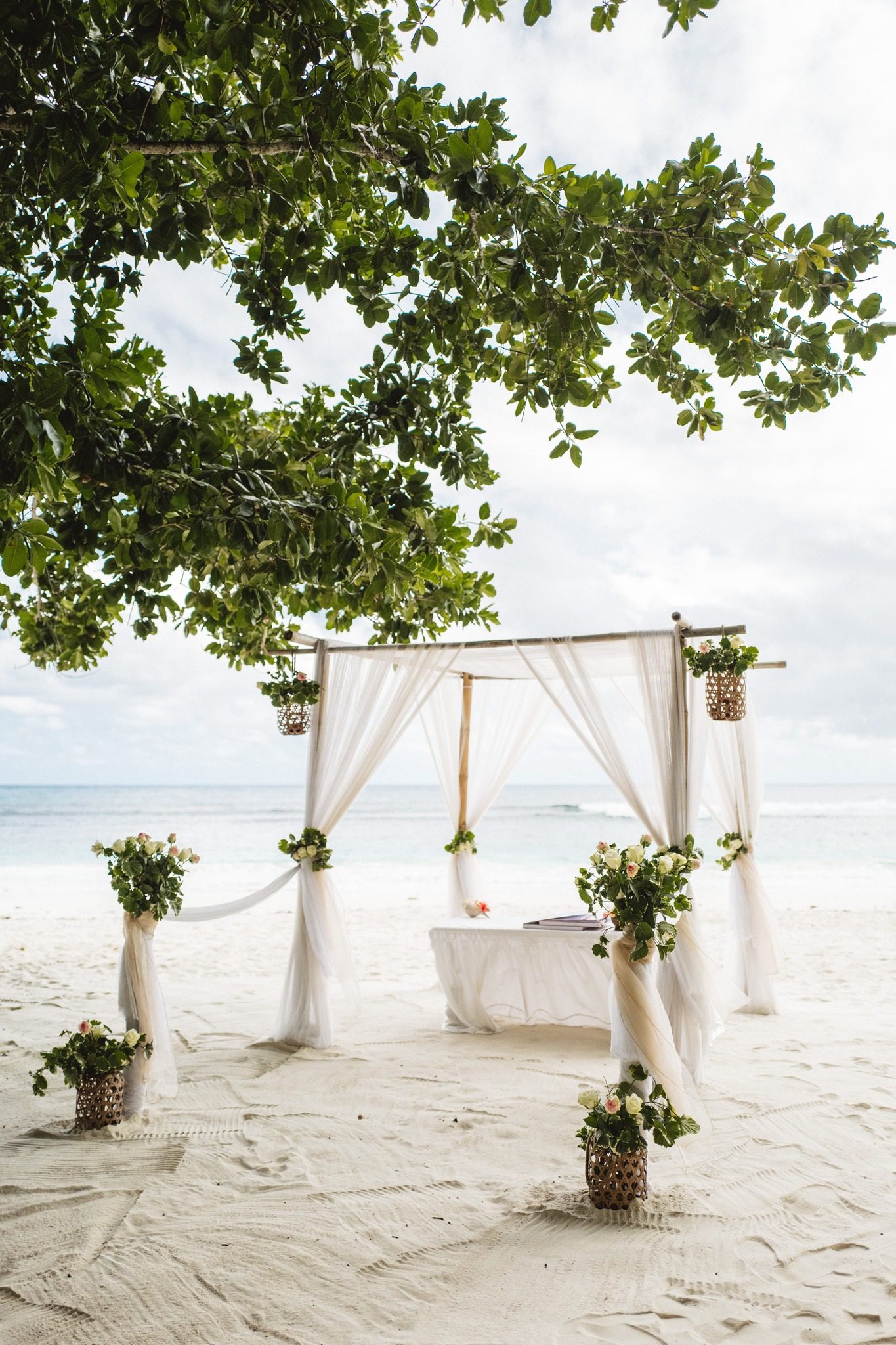
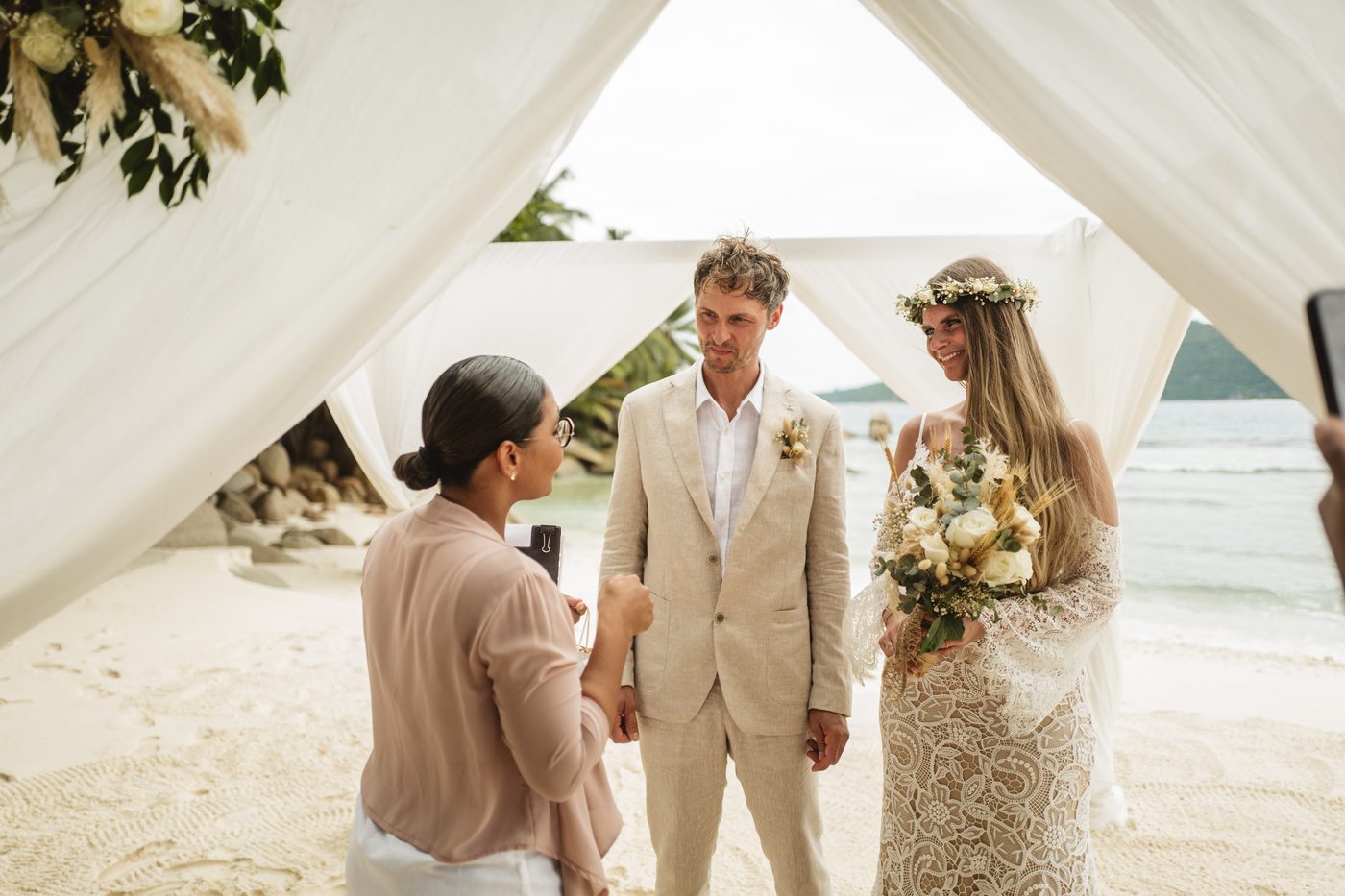
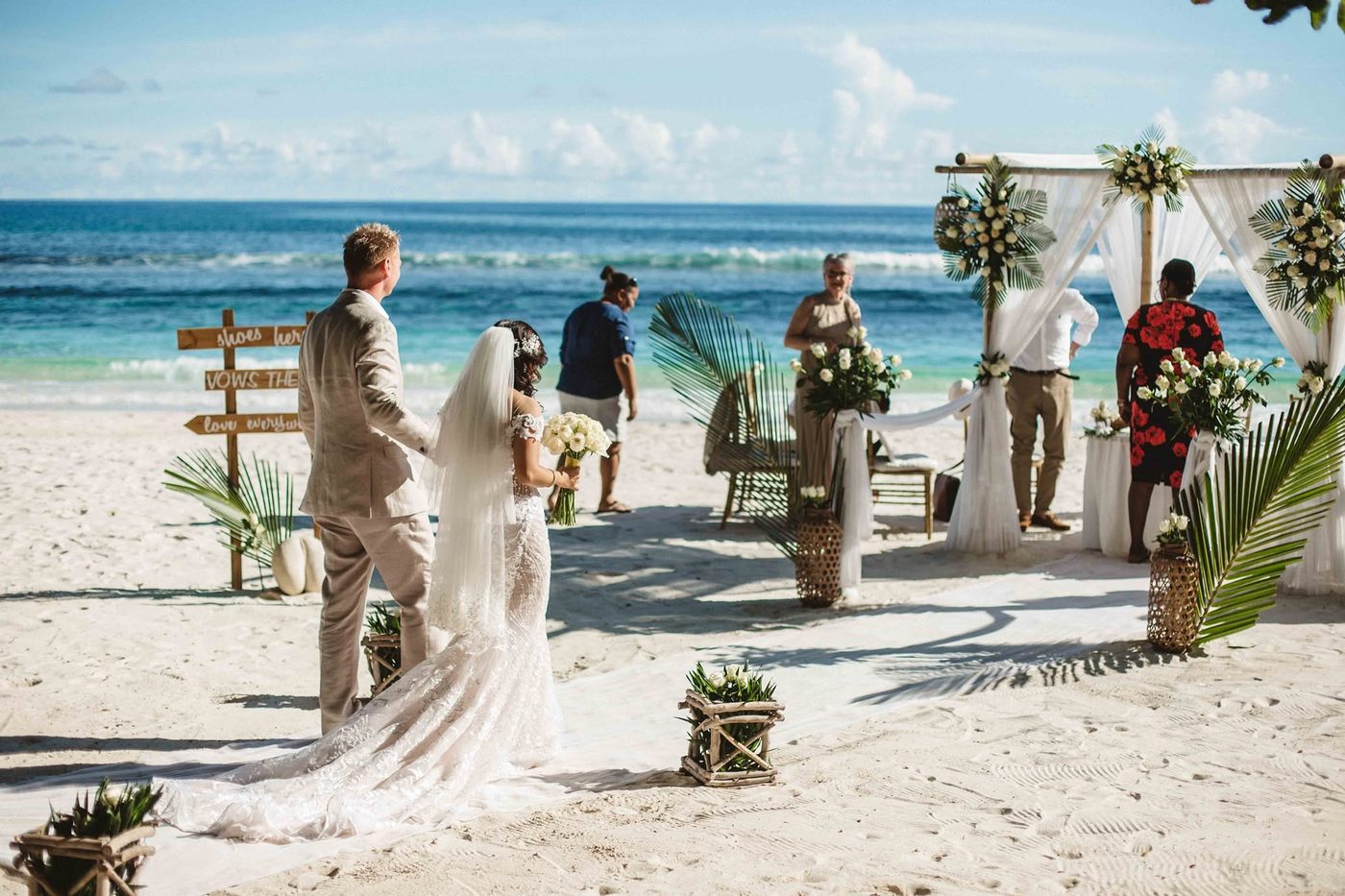
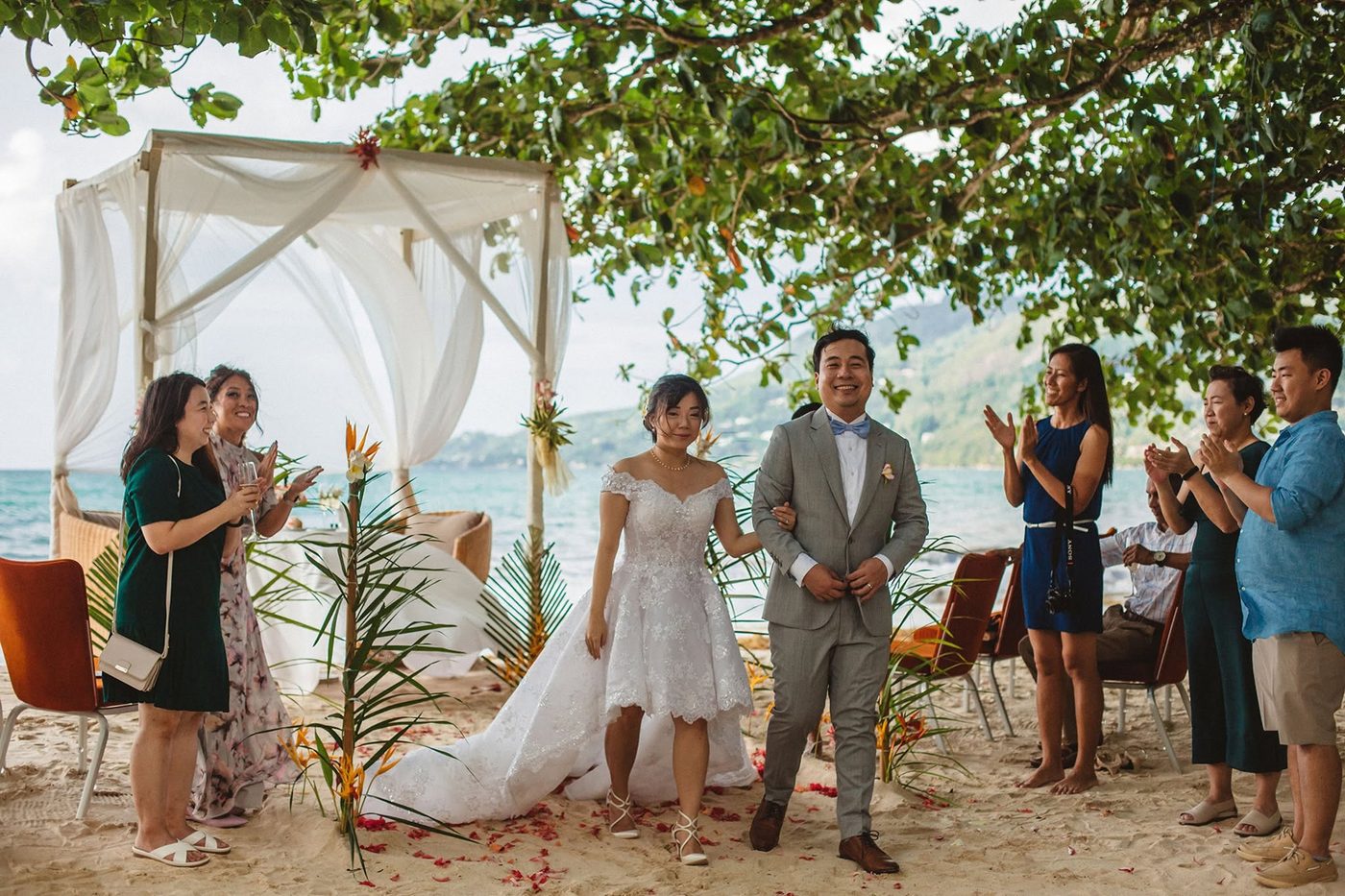
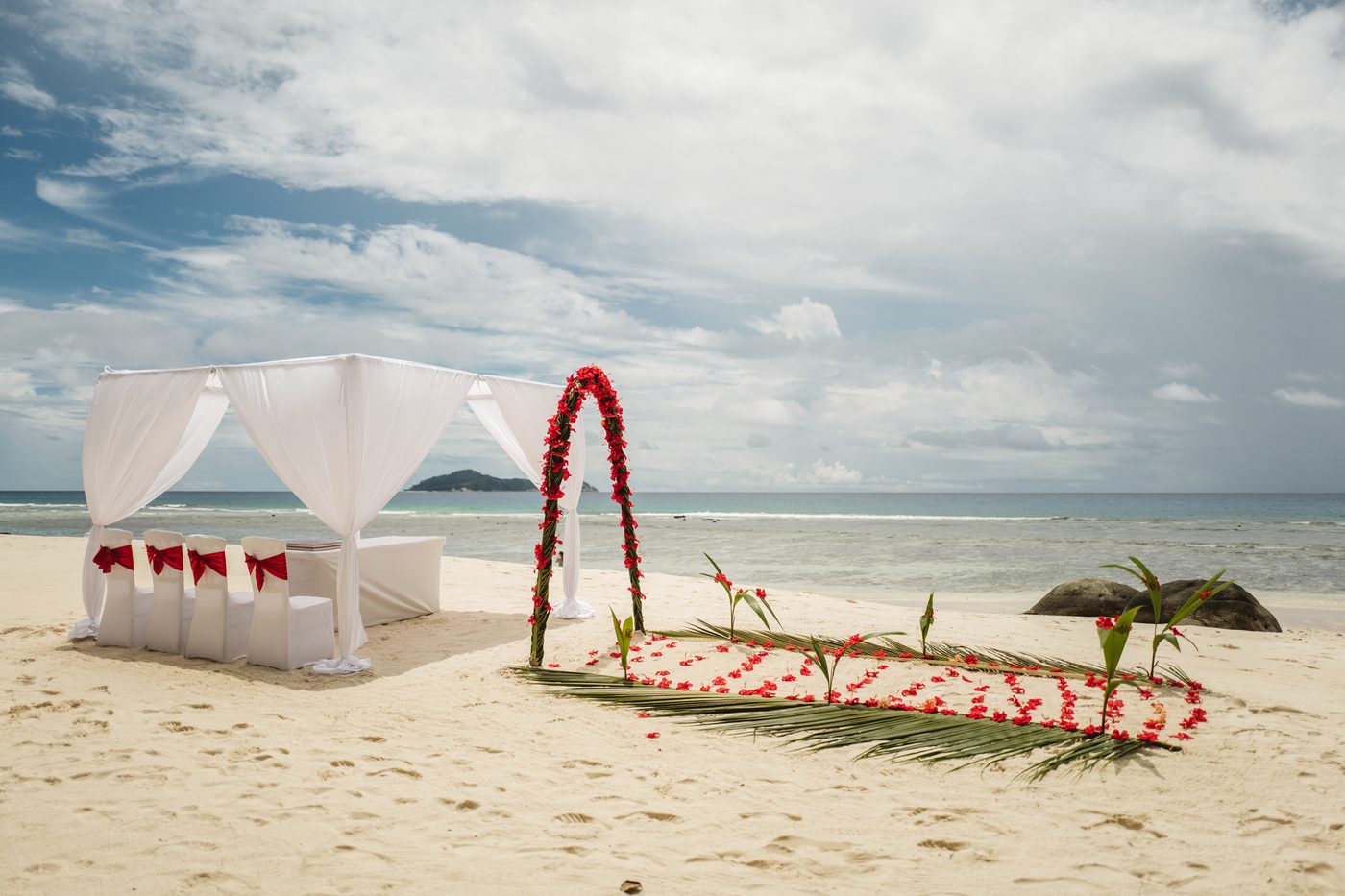
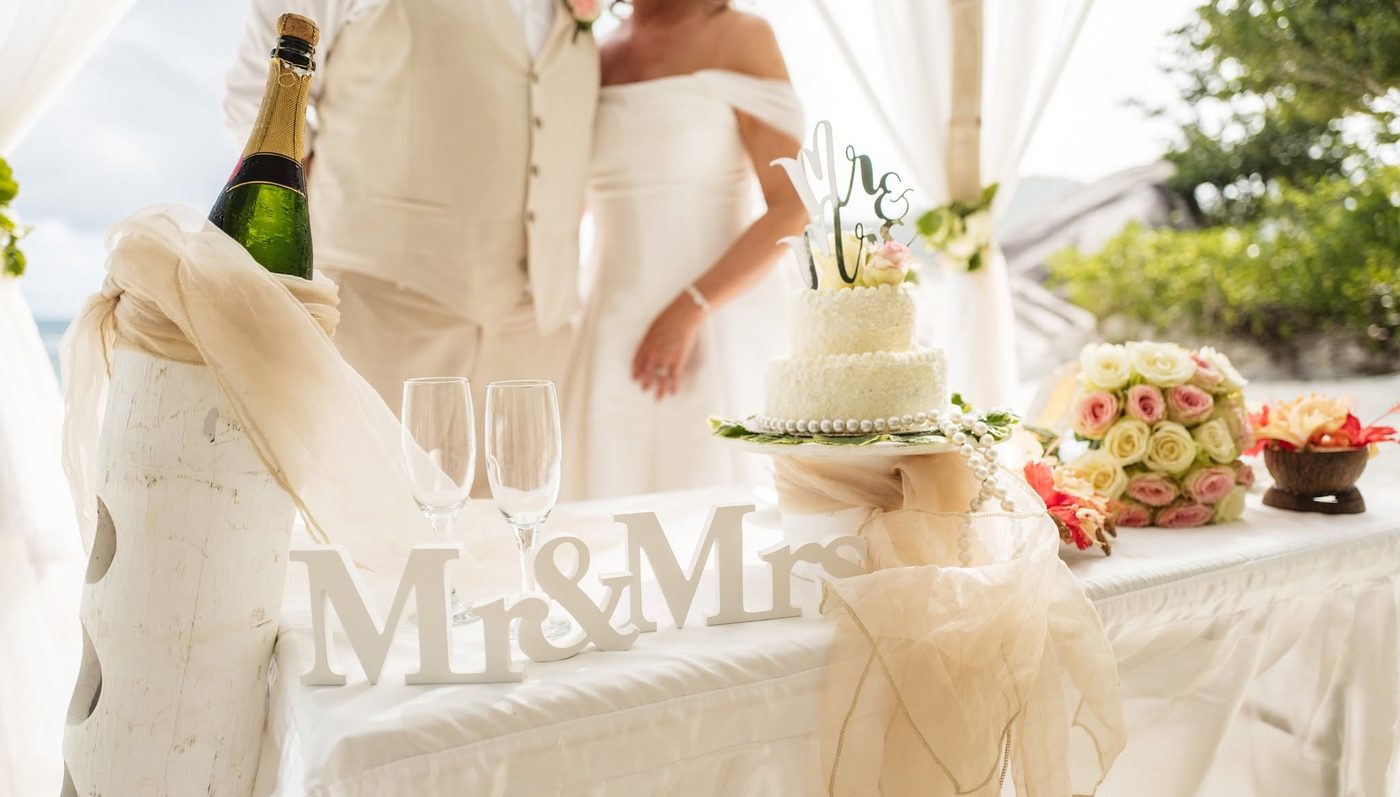
You step out onto the sand and the setup is already waiting. The bamboo gazebo is dressed in white drapes and fresh flowers, the reception table and Creole wedding chairs are in place, and there is something cold in your hand within a minute of arriving. Welcome drinks come with the Mahé package.
Our coordinator then walks you through the next twenty minutes. Where you stand, where the registrar stands, when to speak, when the rings come out. It takes two minutes and it is the reason nobody looks lost in the photographs.
- 14:00
Shoes off, and the walk to the gazebo
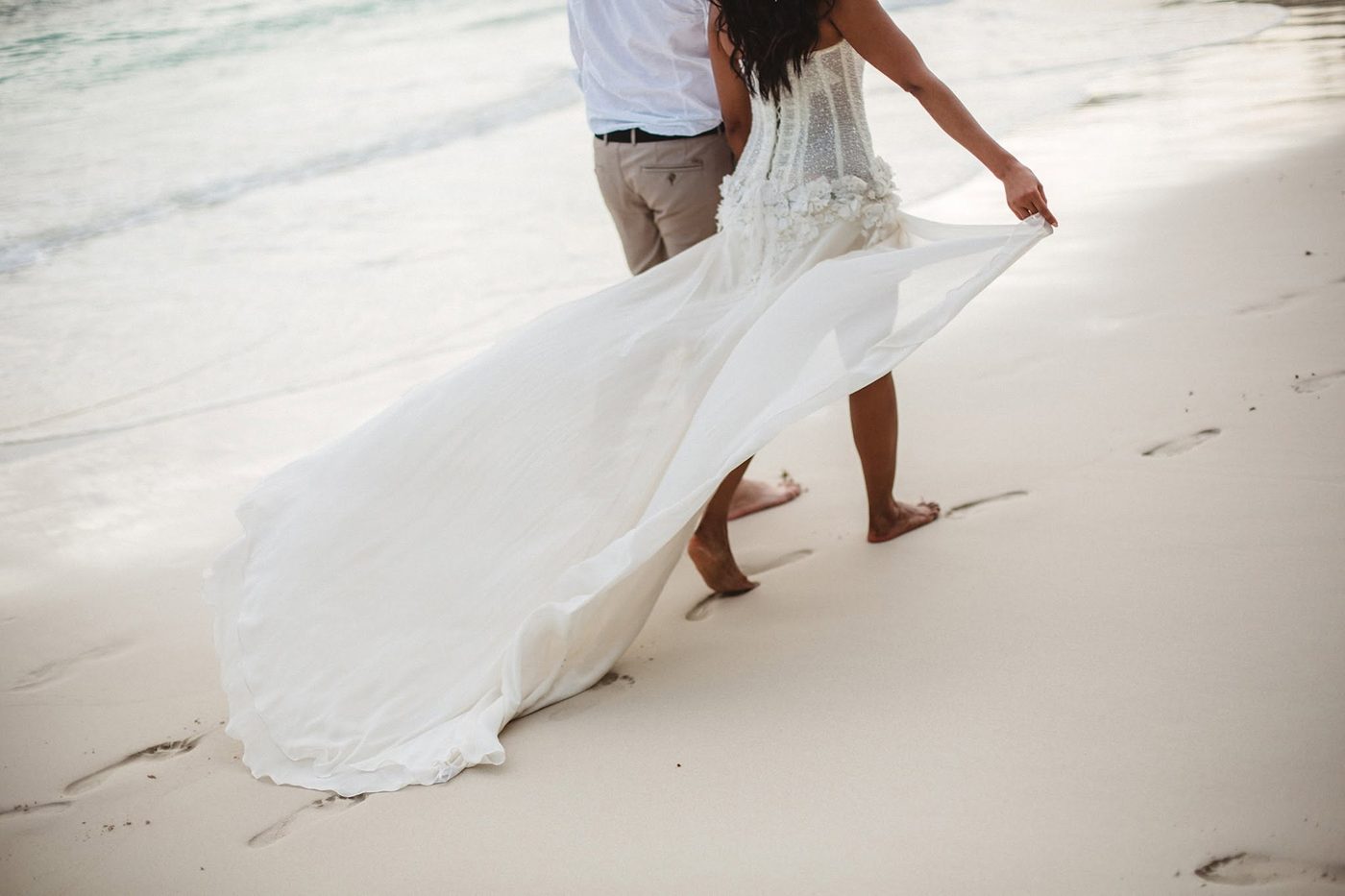
This is where barefoot happens. The sand on our beach is powder fine and heels sink in it, so most brides leave their shoes by the chairs and never think about them again. Grooms follow.
If you want to walk in to a song, tell us the song and a speaker plays it.
- 14:05
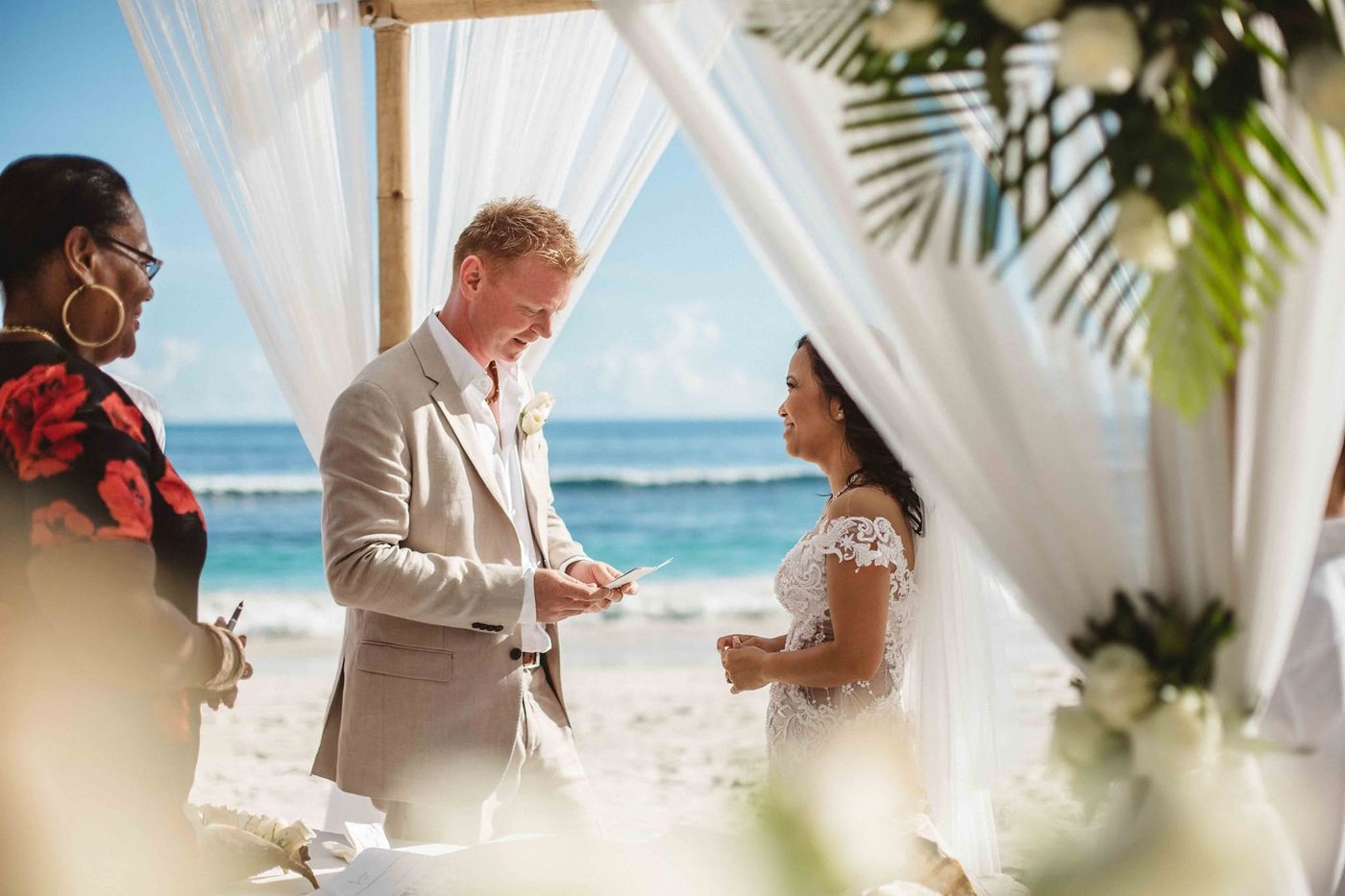
The ceremony itself, about 20 minutes
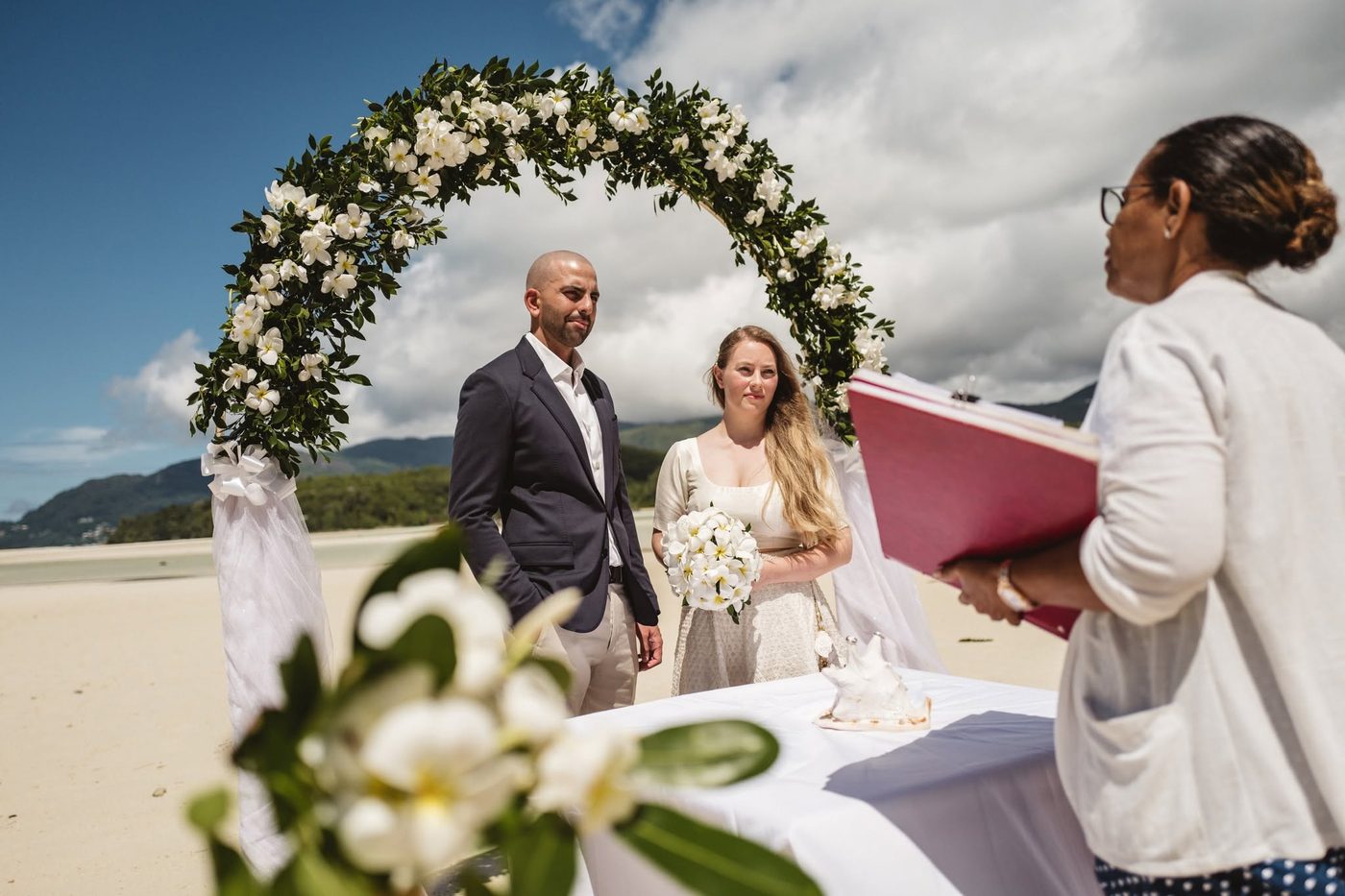
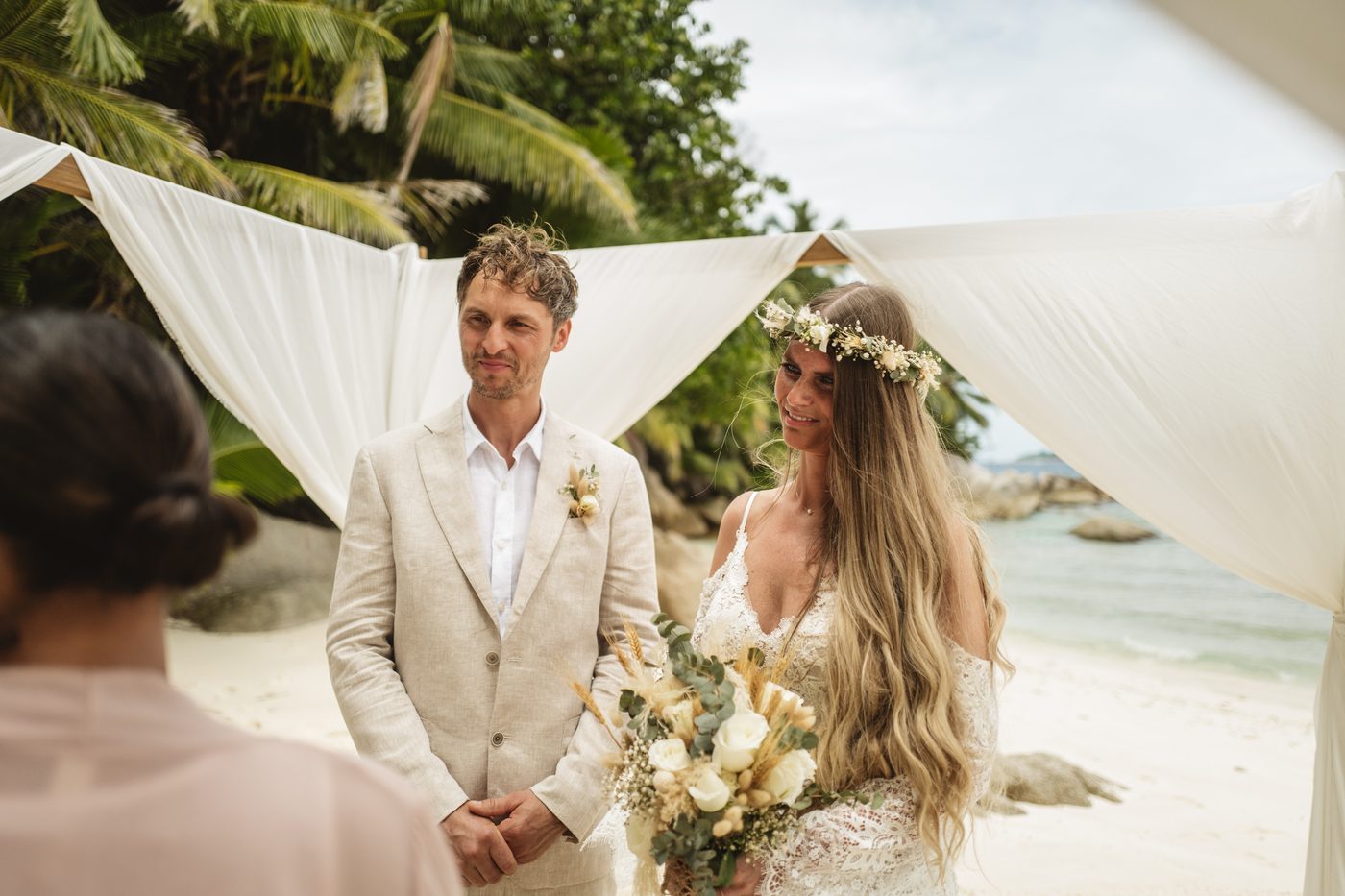
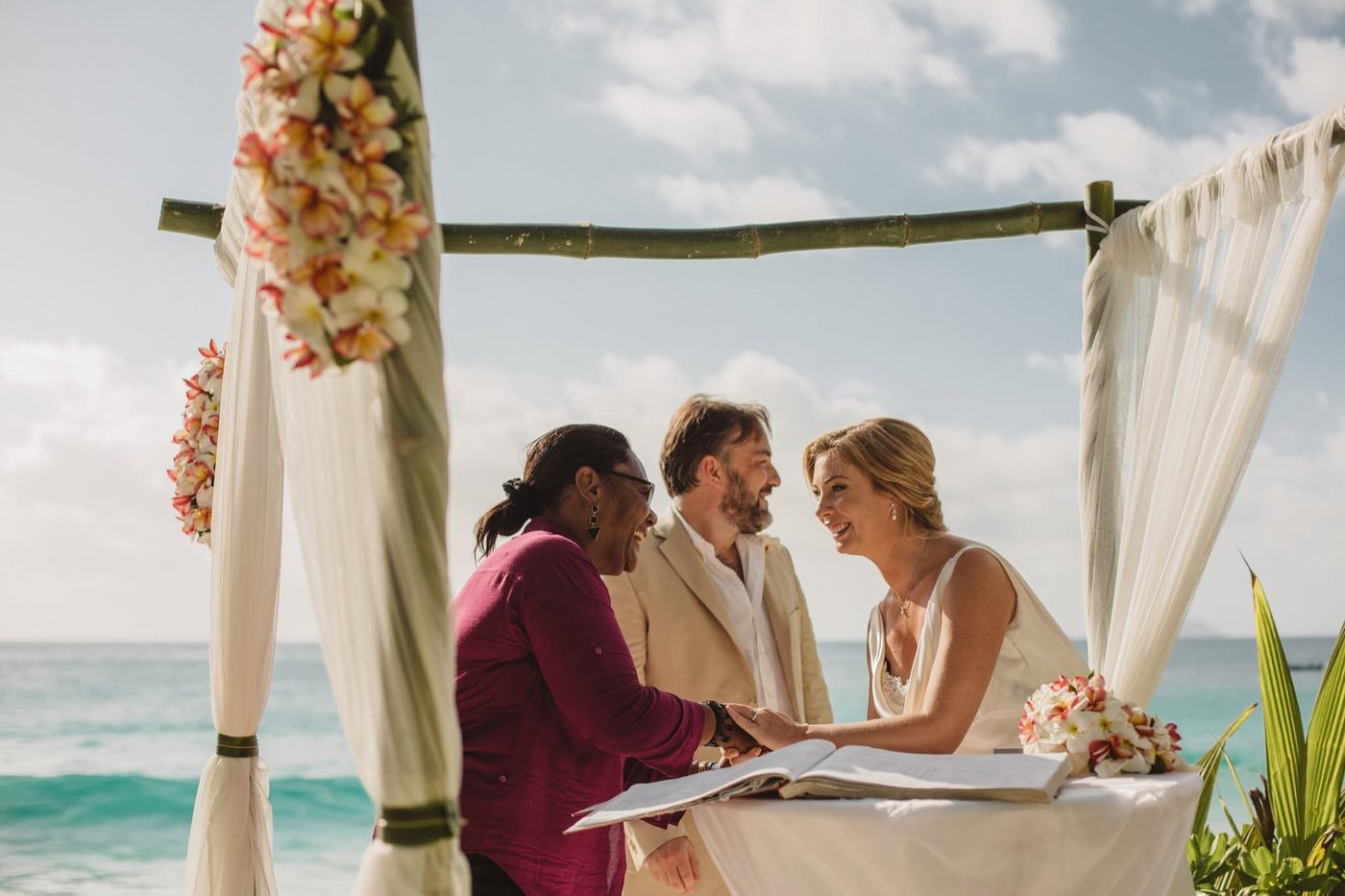
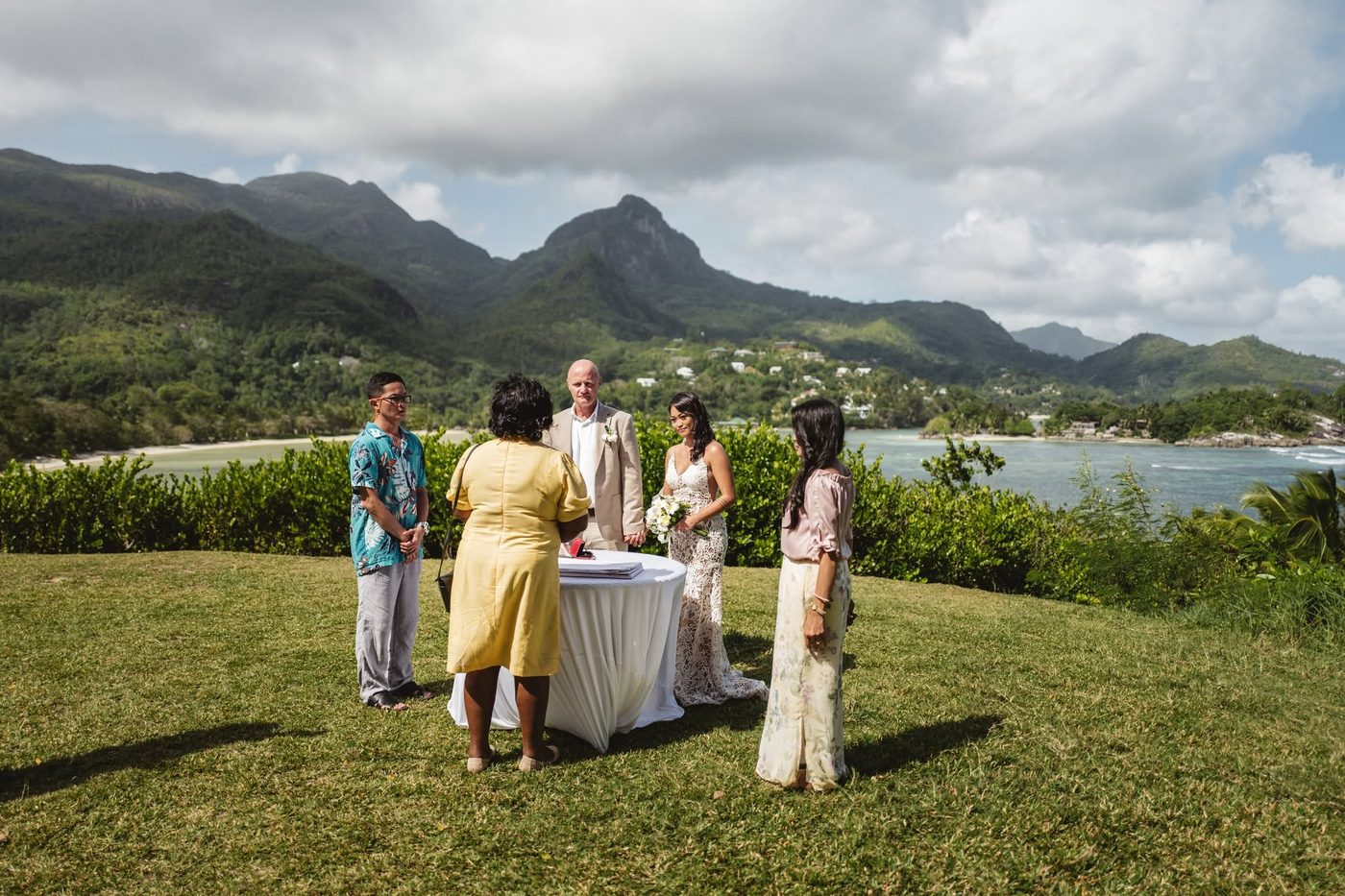
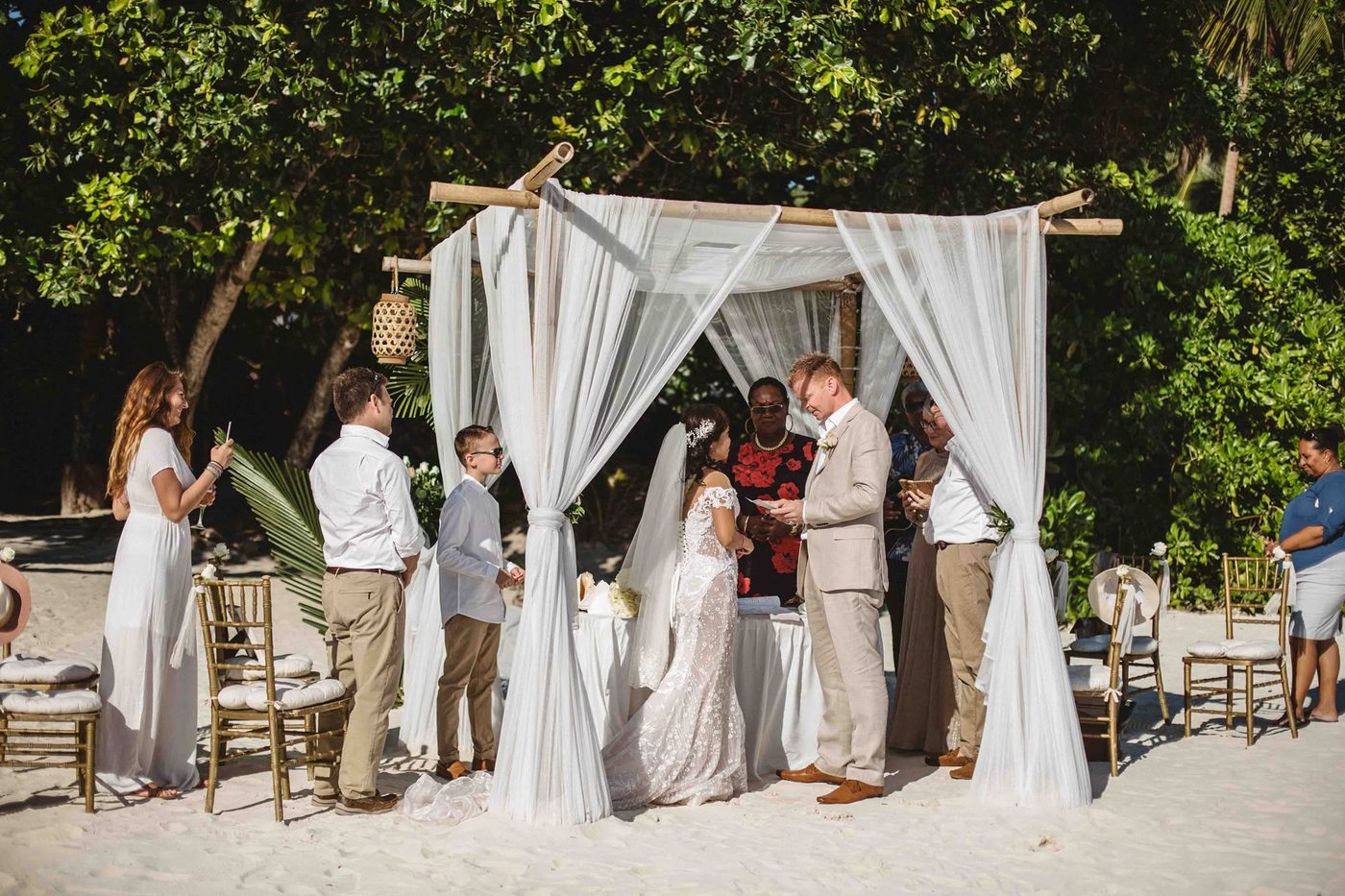
Your registrar is an officer of the Civil Status Office. This is a real civil marriage under Seychelles law, not a symbolic blessing, and the legal part is short. The registrar reads your names as they appear on the notice of marriage, asks each of you in turn whether you take the other as your spouse, hears your yes, and declares you married. Two witnesses must be present. If it is just the two of you, we provide them at no charge.
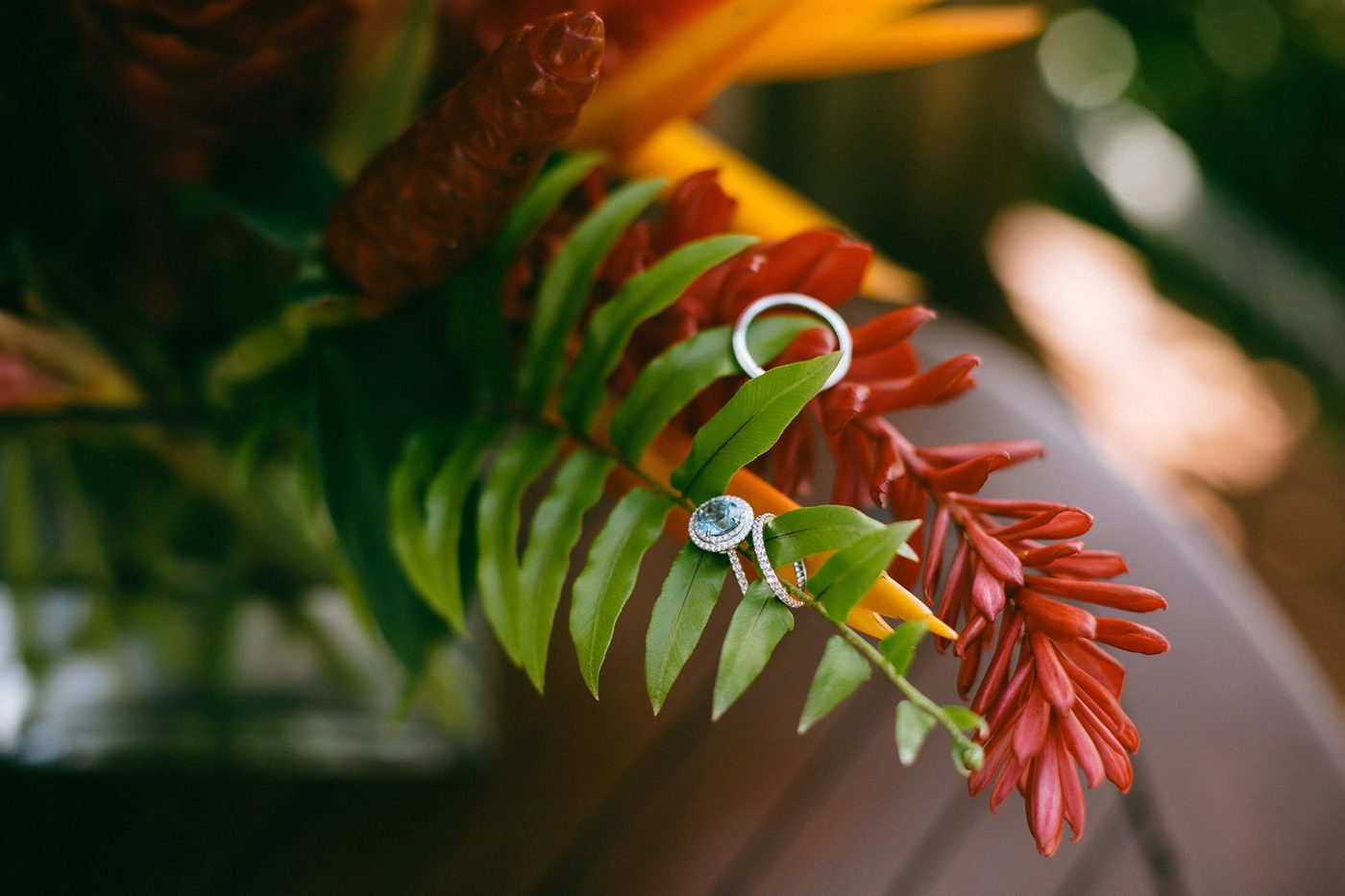
Everything around that legal core belongs to you. Your own vows are welcome and most couples write them. A reading from a friend, a moment of silence, a poem in your own language, all of it fits. The rings wait in a coconut casket, a small Seychellois touch.

- 14:20
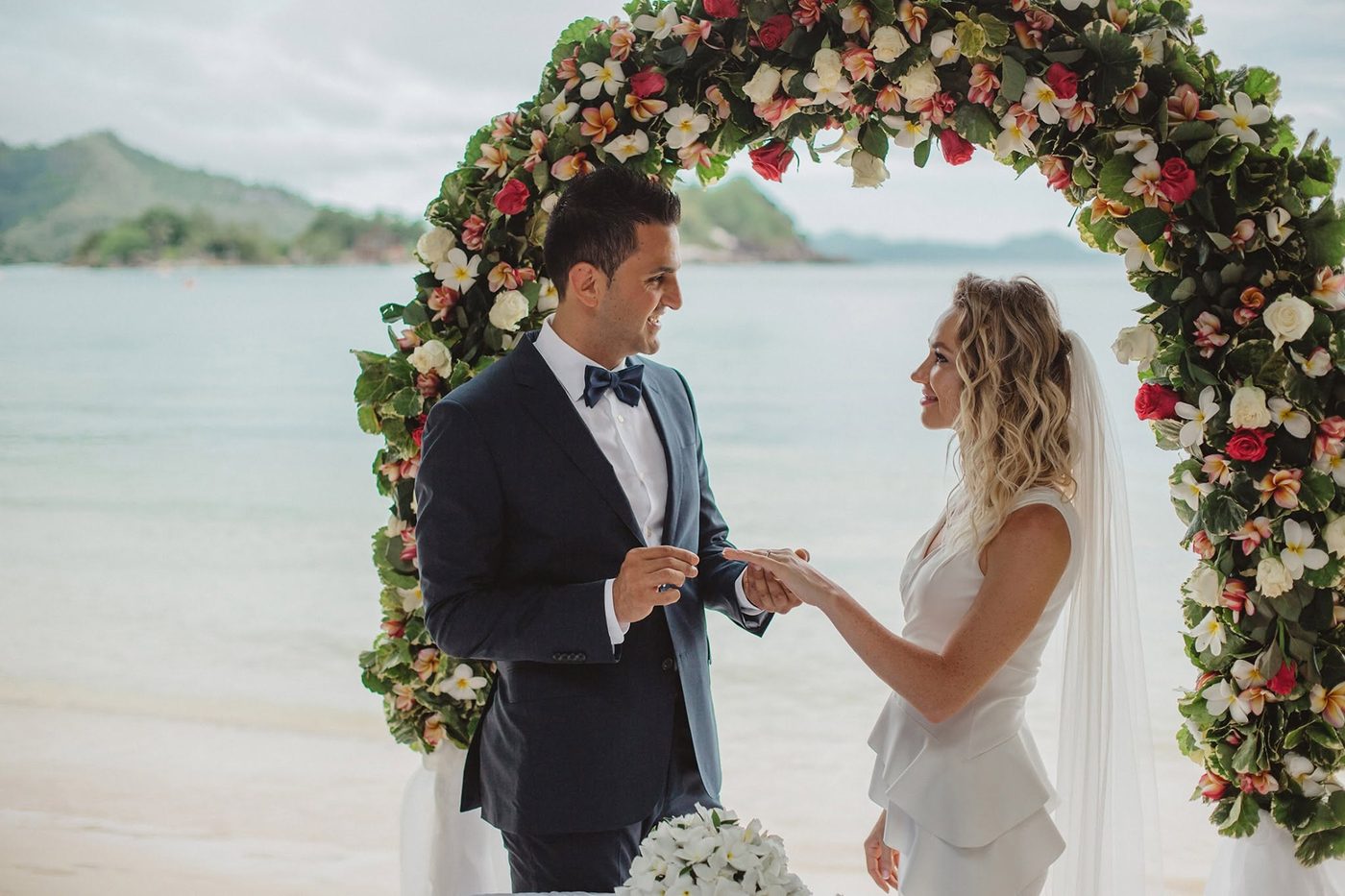
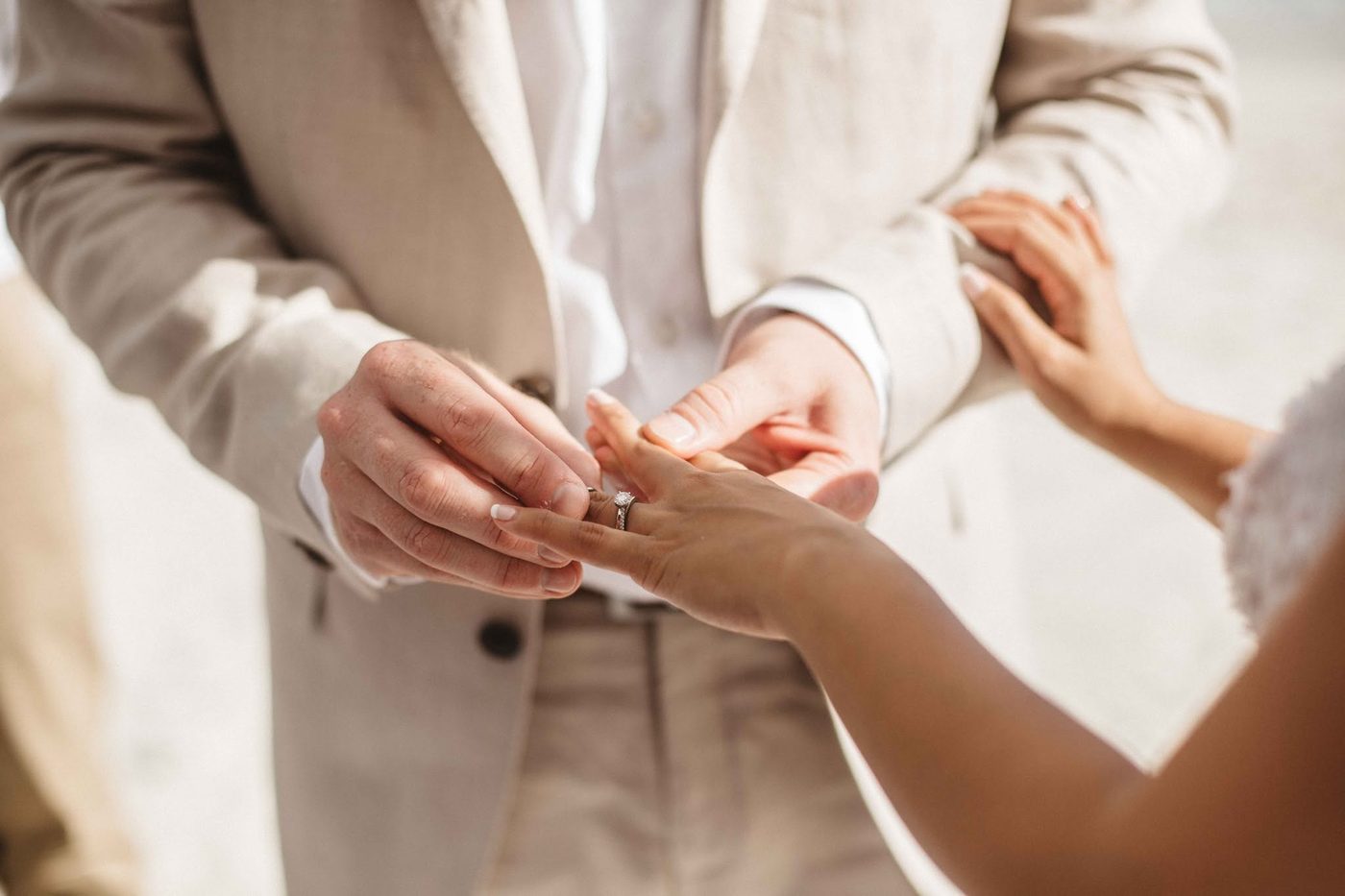
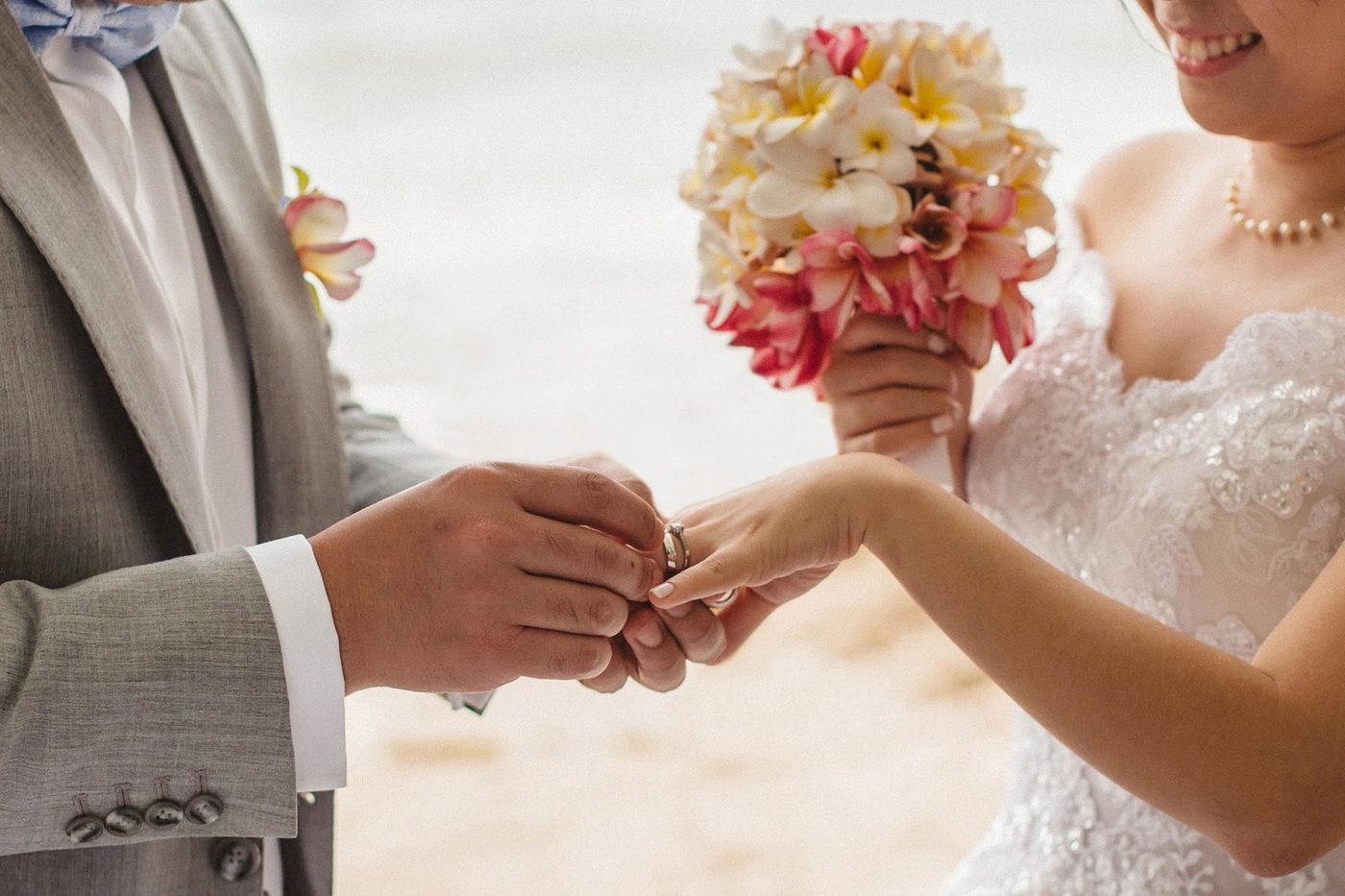
The rings
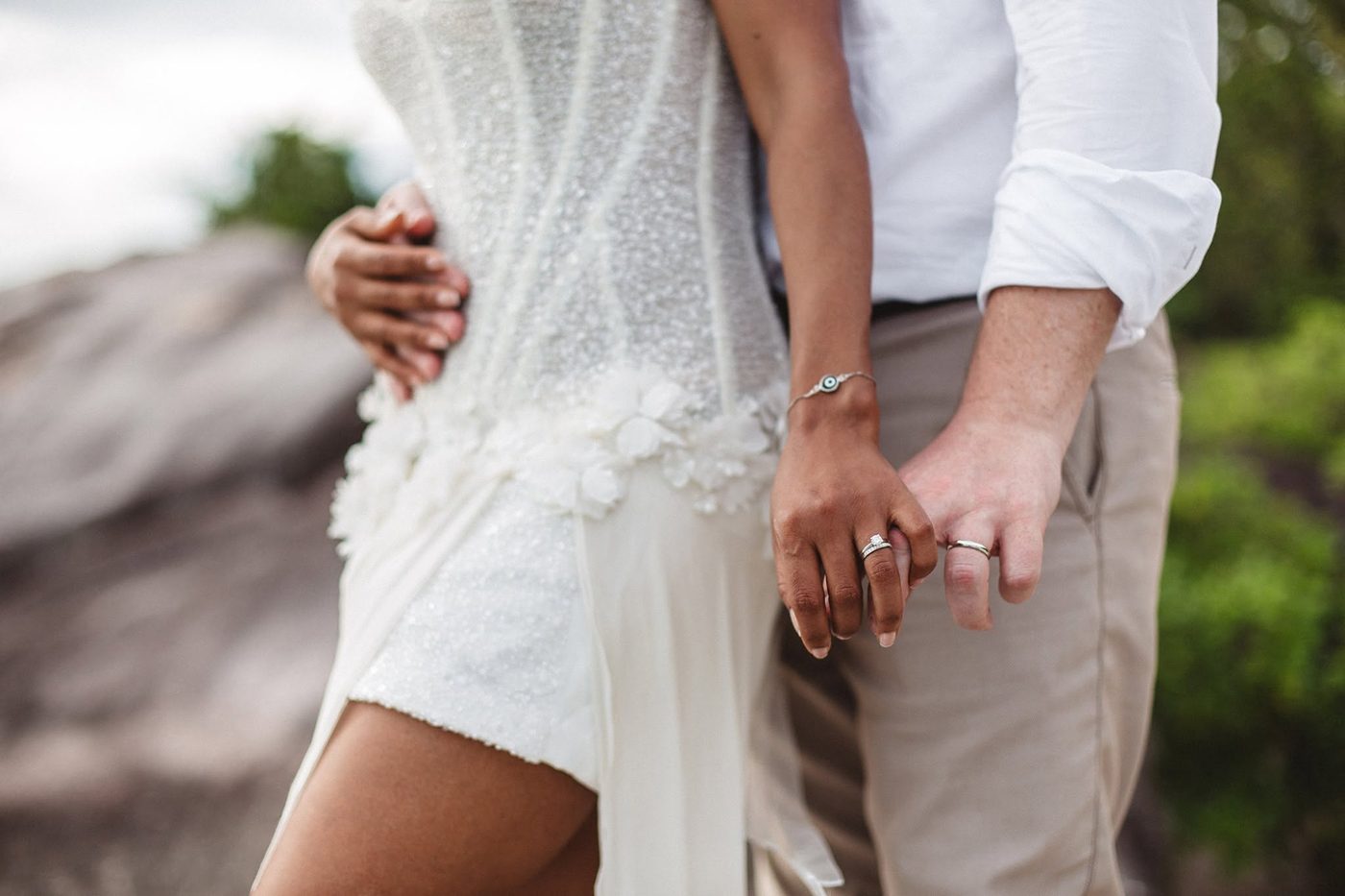
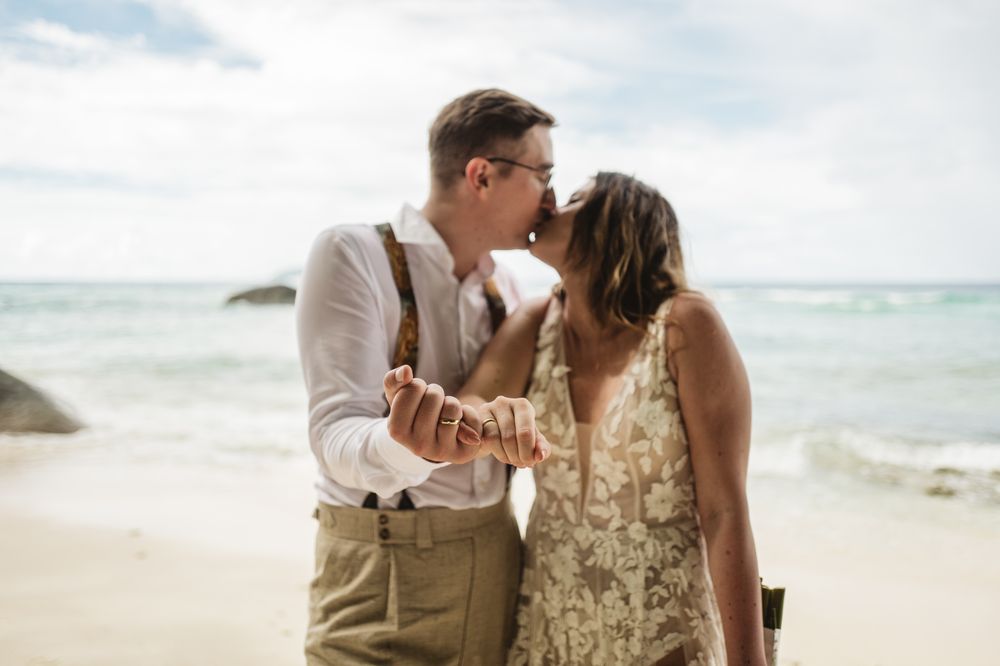
This is the moment every photographer waits for, and it has its own line in the registrar’s running order. After each of you has said yes and before the registrar declares you married, the coconut casket is opened and the rings come out. Rings are not a legal requirement in Seychelles, so the exchange belongs entirely to you. Most couples say one short line each as they slide the ring on, some say nothing and simply hold the hand a second longer, and both are right.
Slow down here. The ring goes on the left hand, the photographer is a metre away at knee height, and that frame of two hands is the one most couples print. The bride’s bouquet is handed to a witness or to our coordinator so both her hands are free.

- 14:25
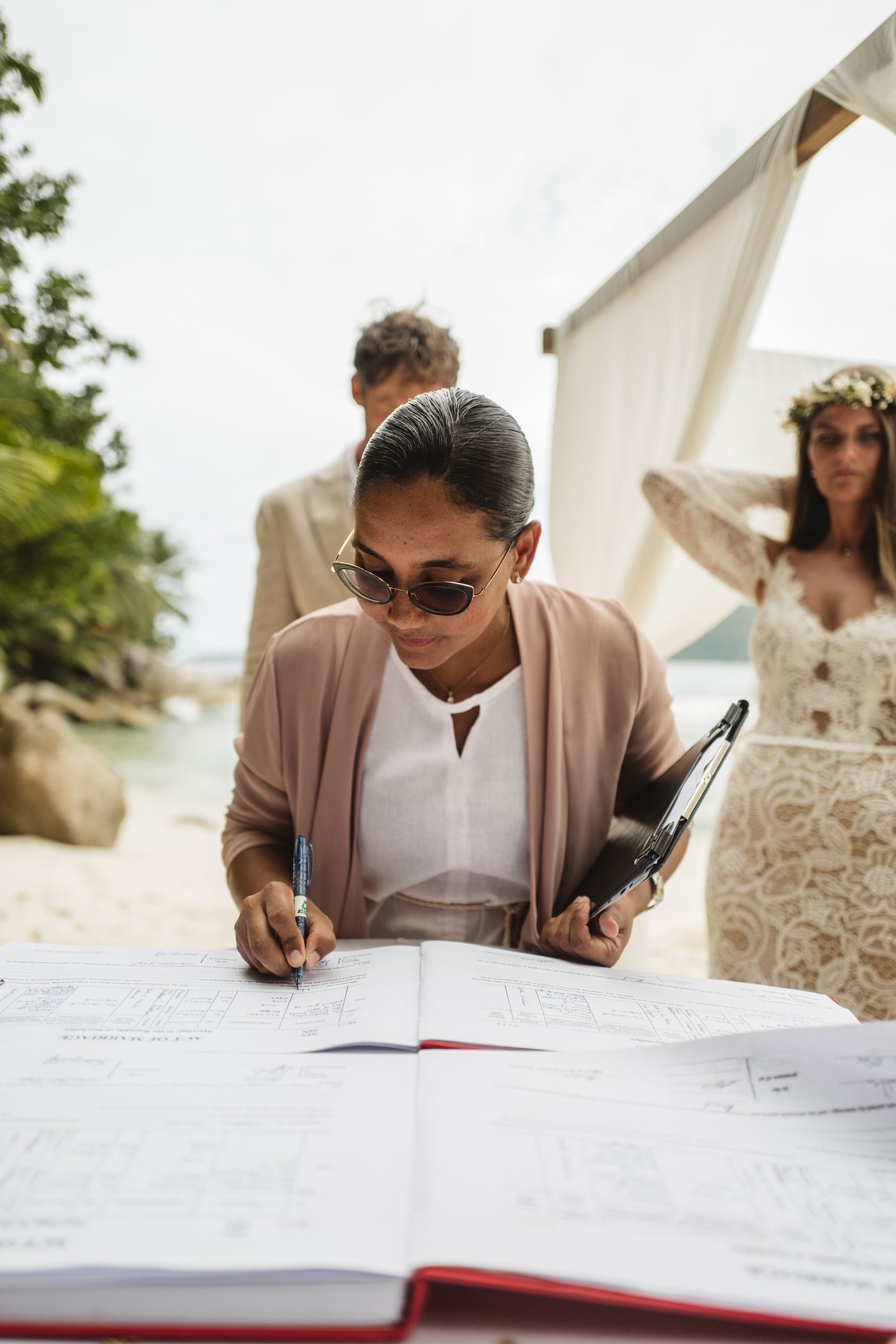
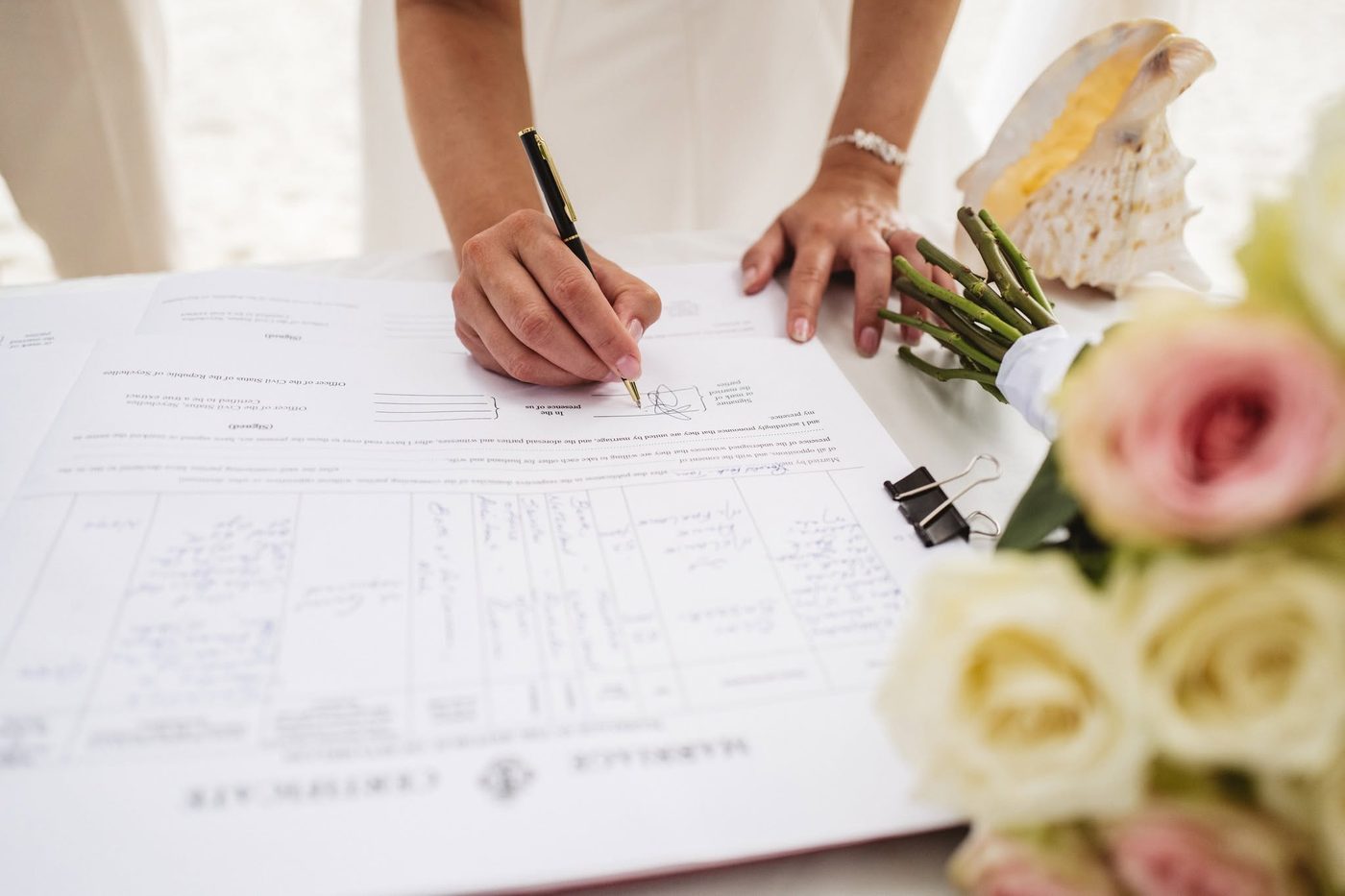
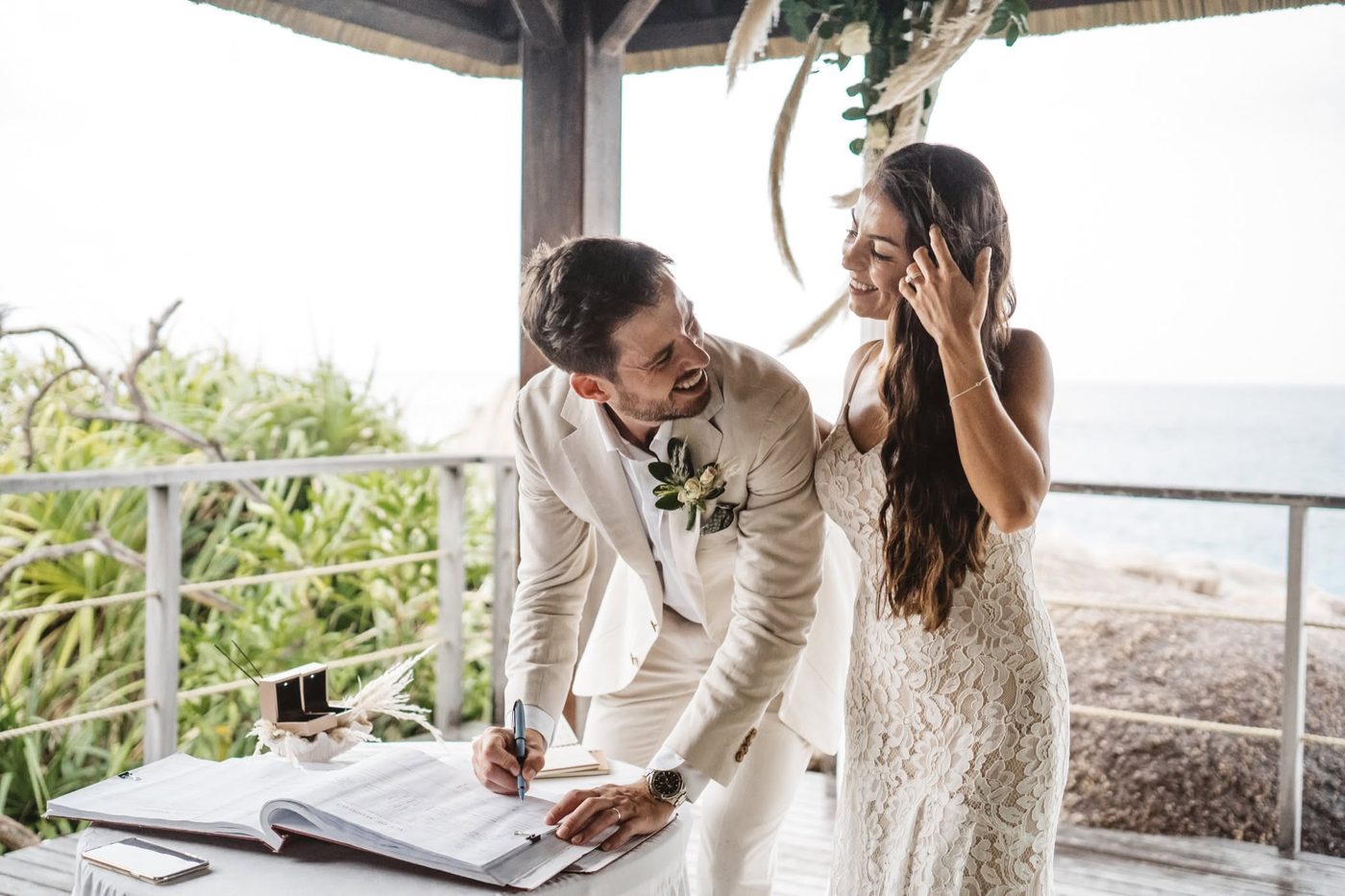
Signing the register
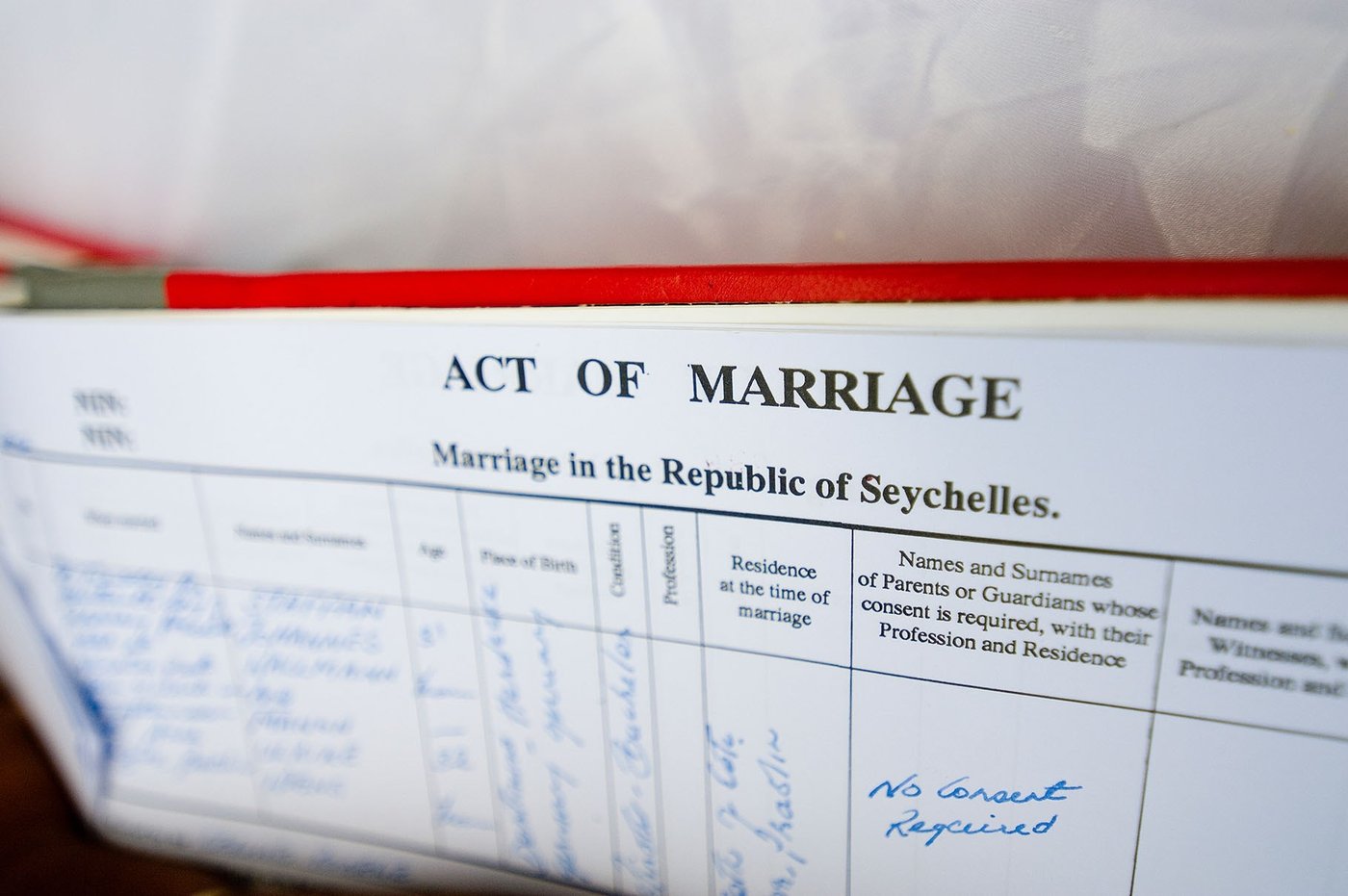
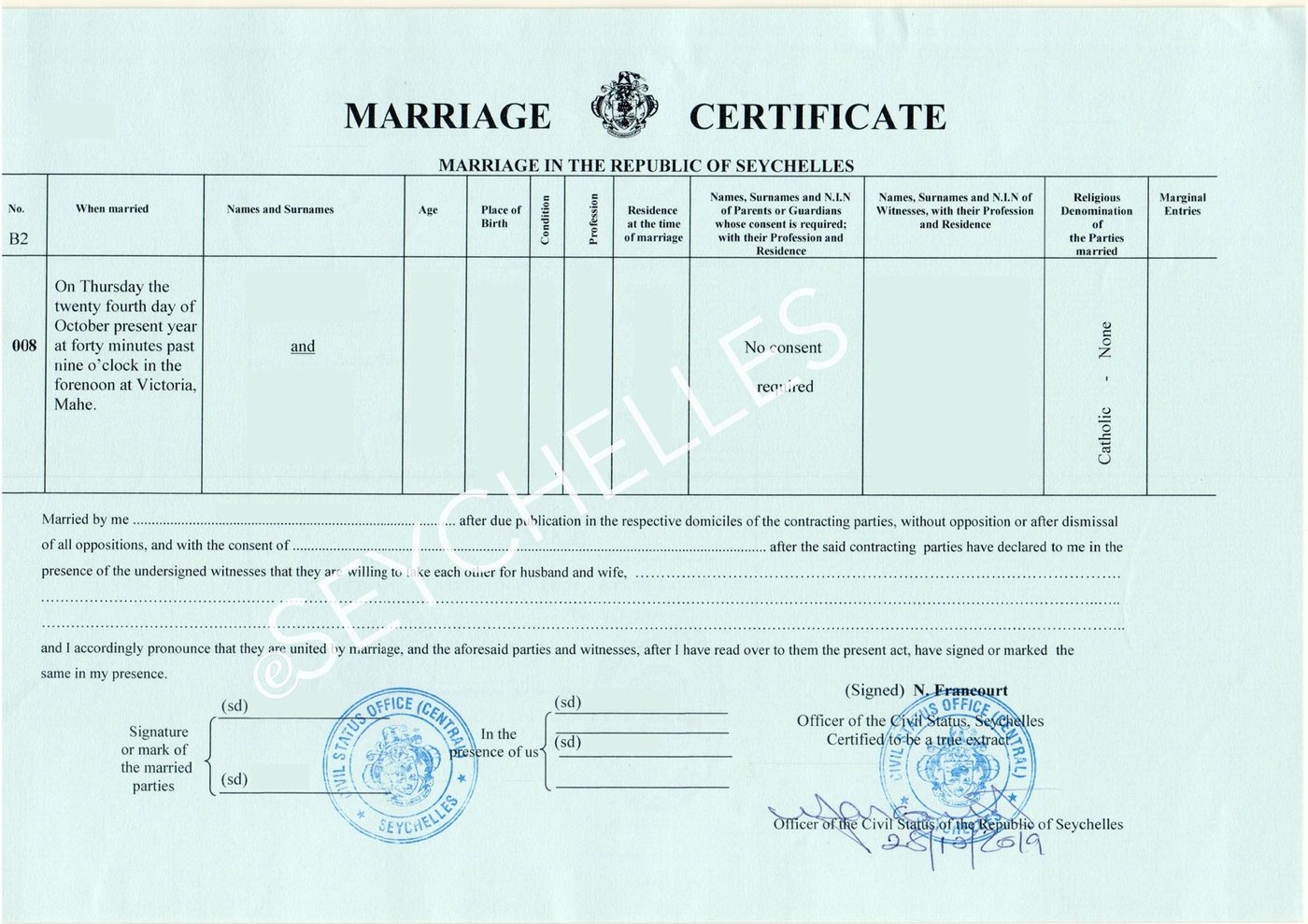
You and your witnesses sign the marriage register at the reception table with the sea behind you. This is the moment the marriage becomes a record of the Republic of Seychelles. The registrar takes the signed act back to Independence House in Victoria, and your certificate is drawn from it the next working day.
- 14:35
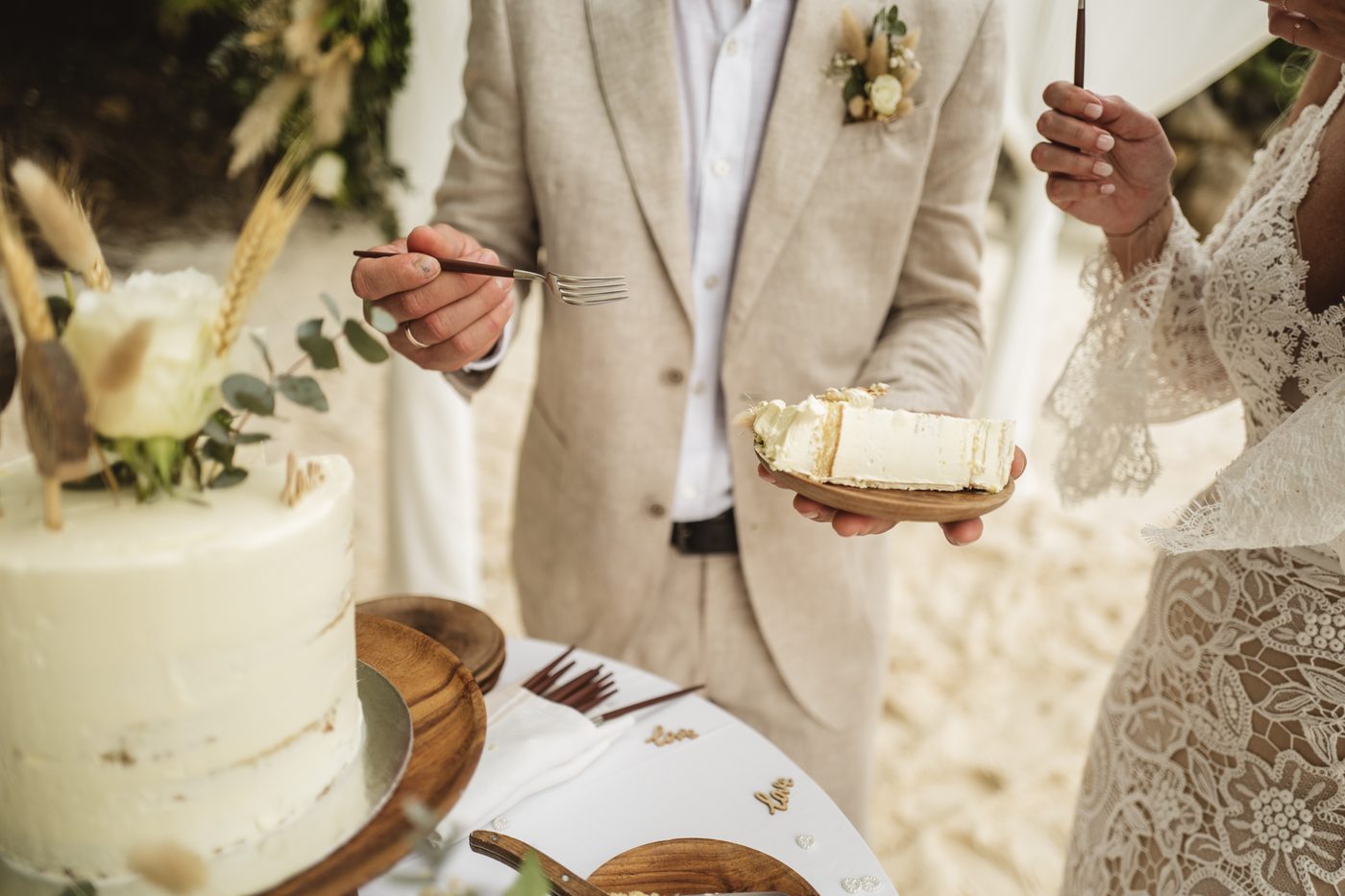
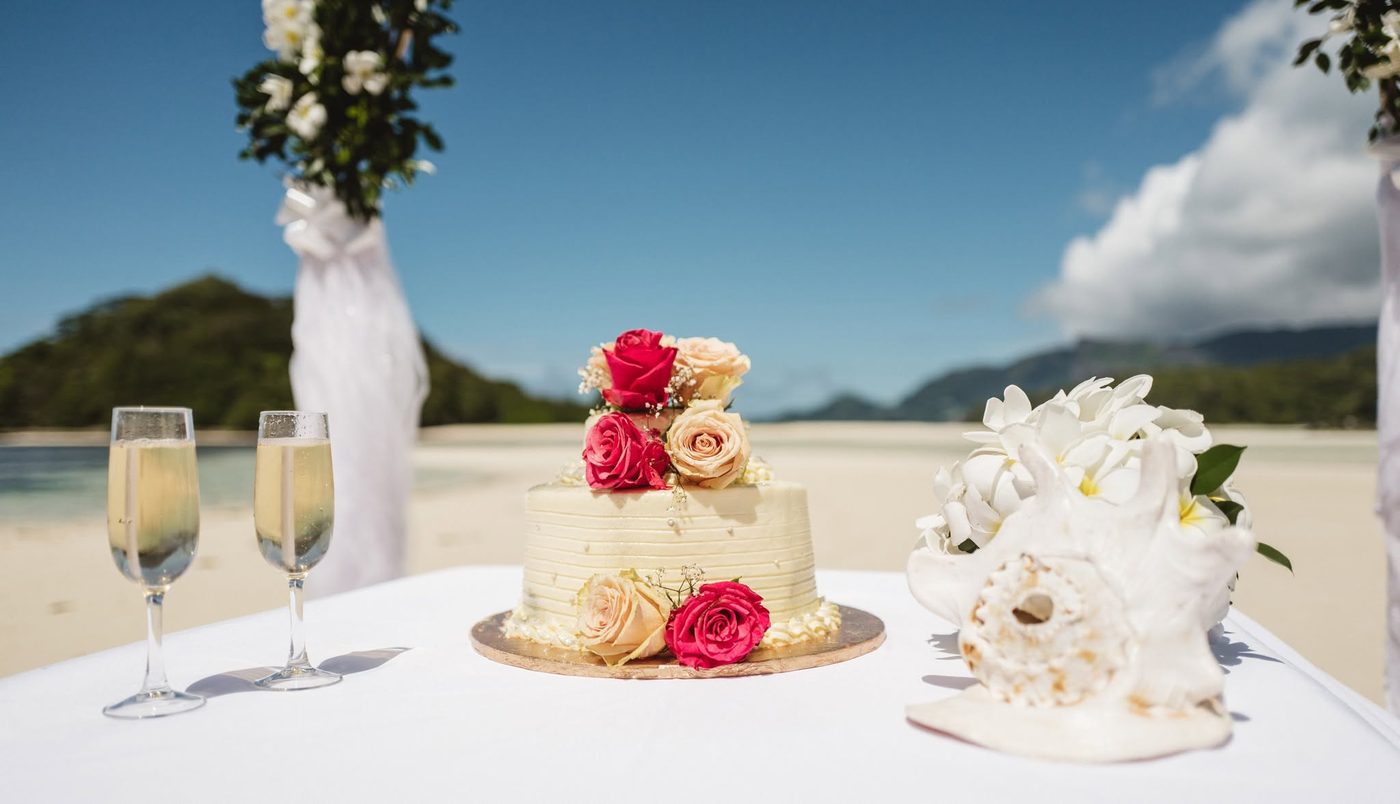
Cake, sparkling wine and the first toast
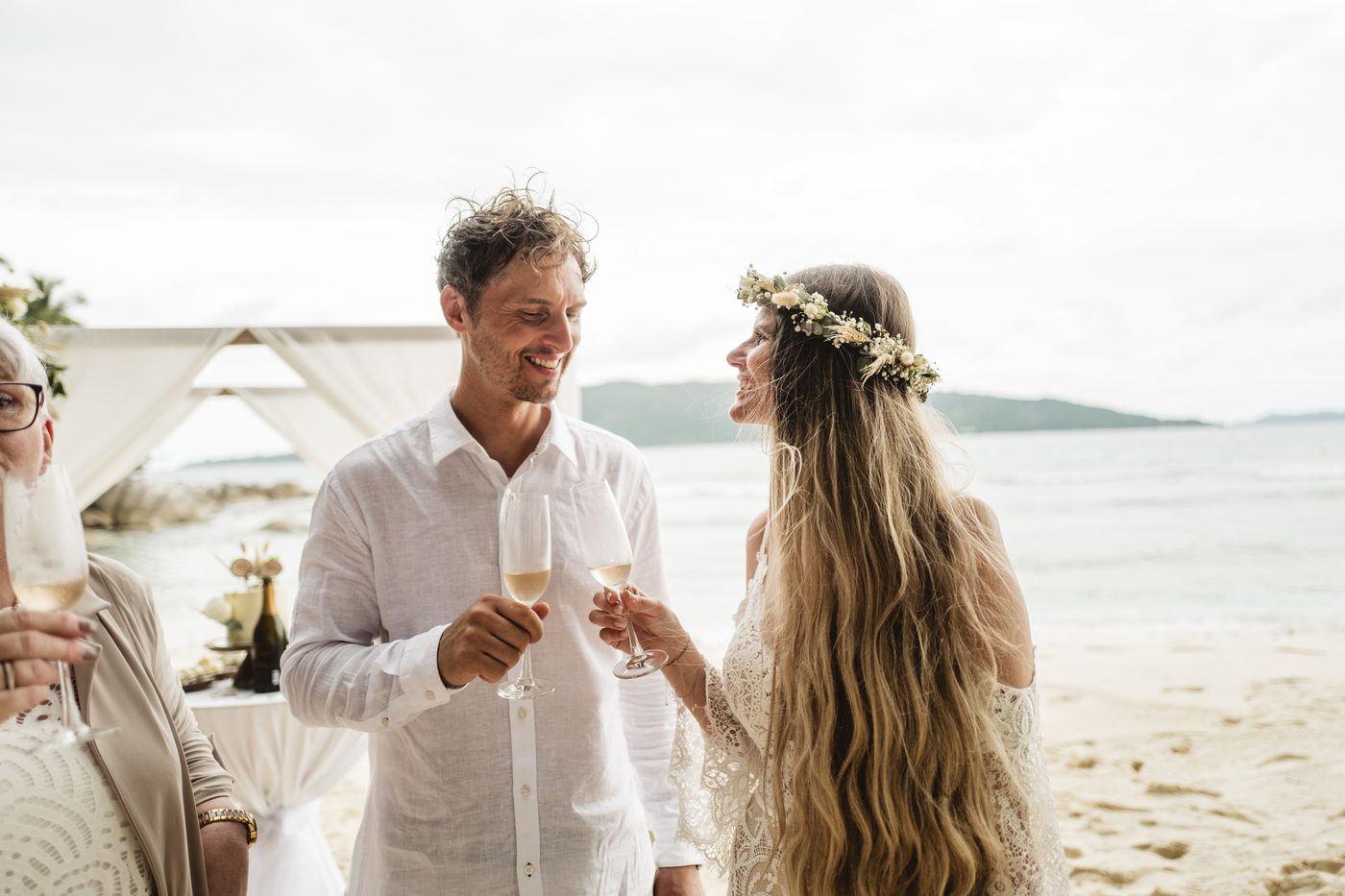
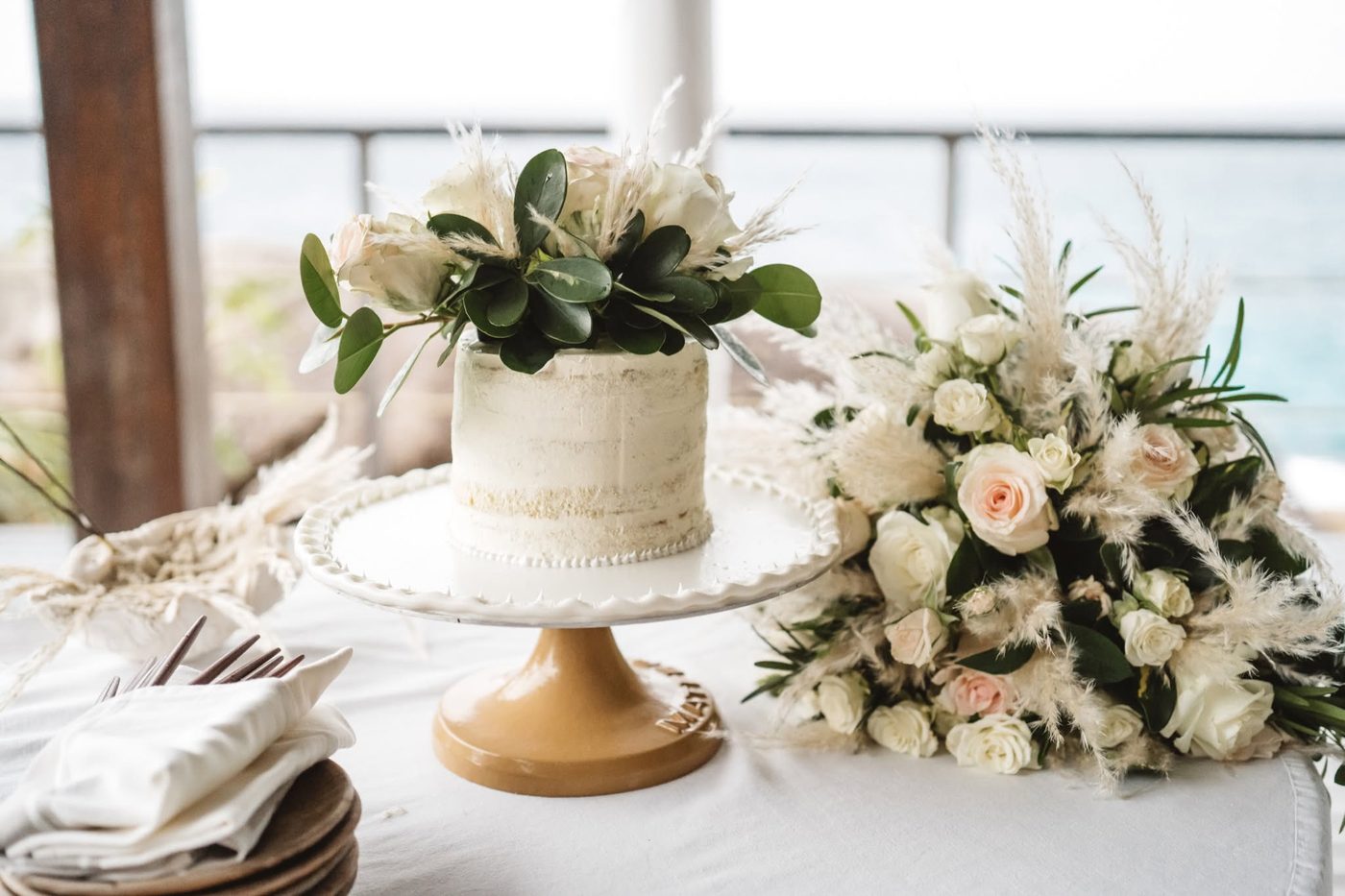
Your customised wedding cake is cut at the table and the sparkling wine is opened. Couples who do not drink alcohol tell us in advance and we swap it for something cold and sparkling without fuss. This is also when family photographs happen if you have brought people with you, while everyone is together and nobody has wandered towards the water yet.
- 14:50
Two hours with your photographer
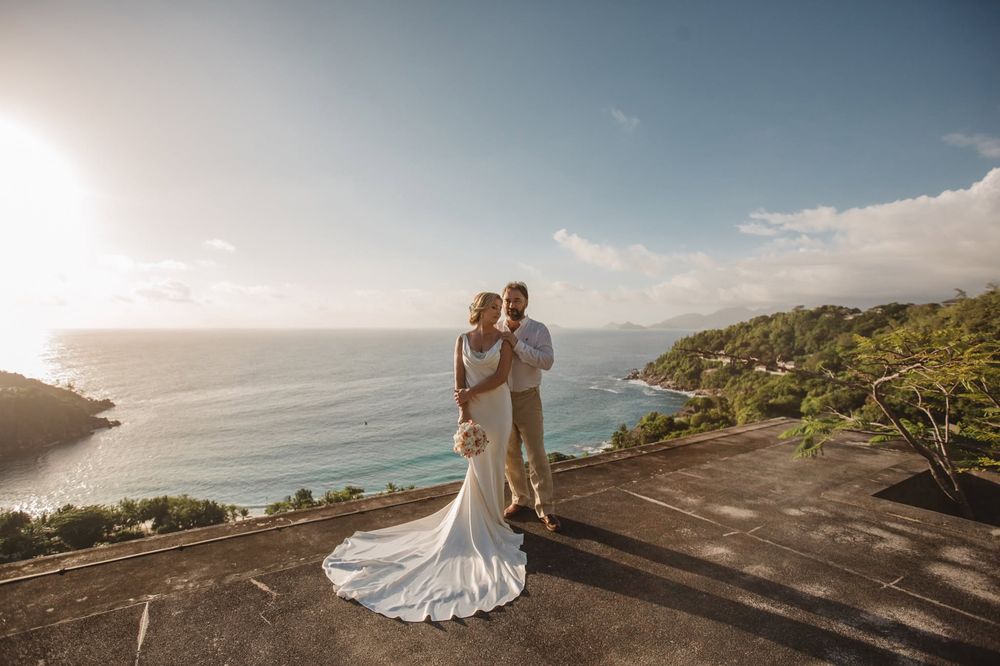
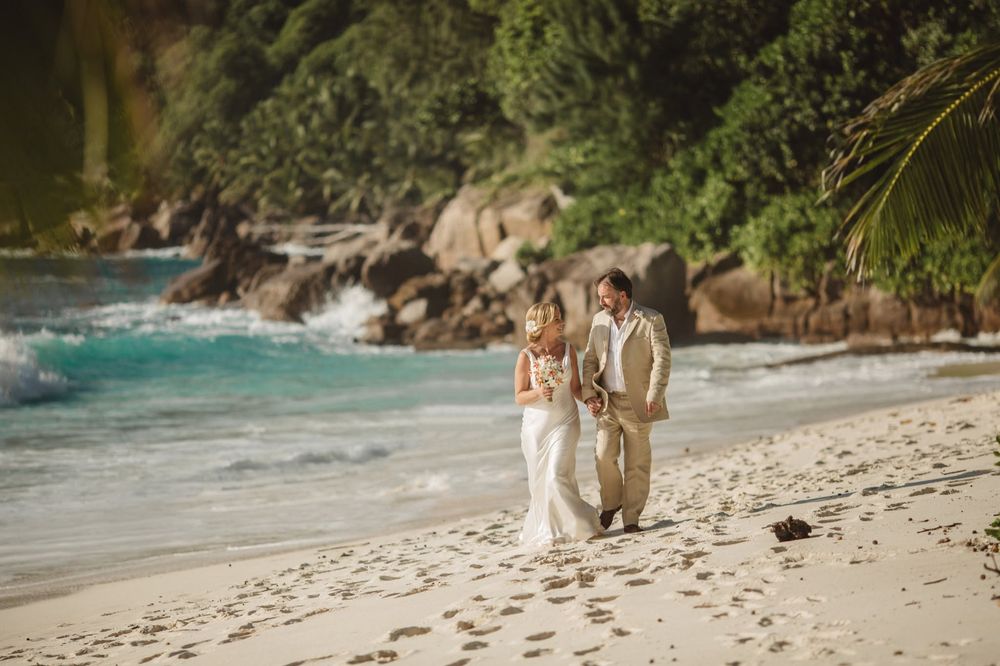
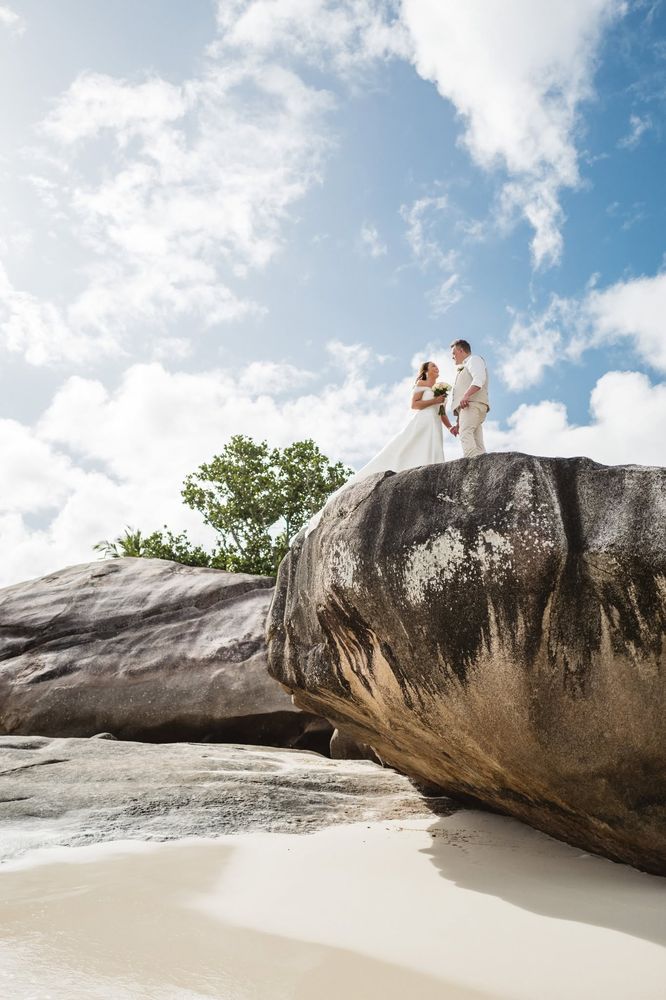
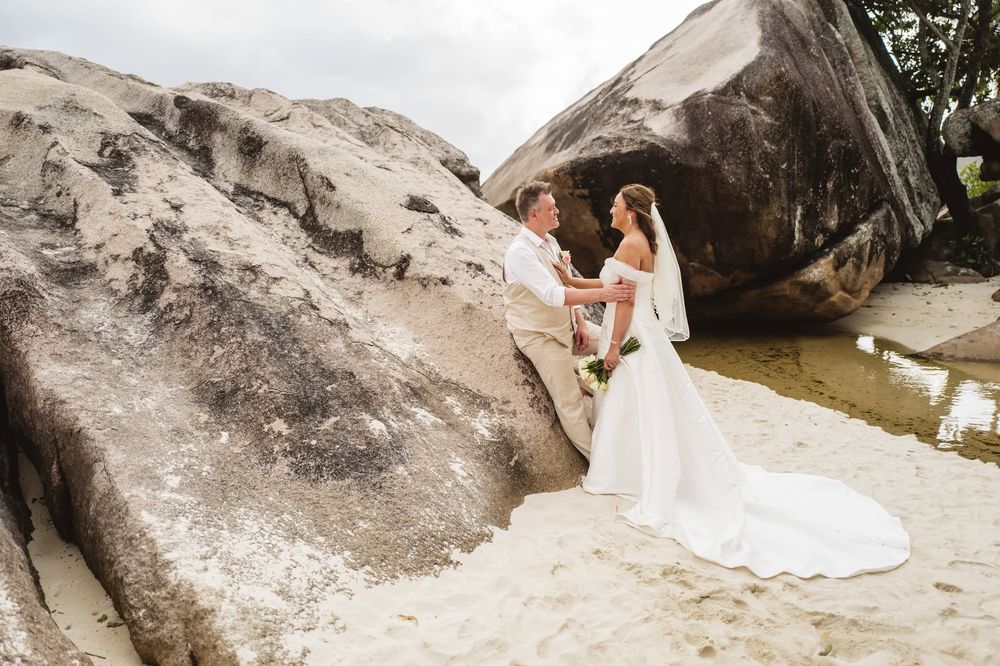
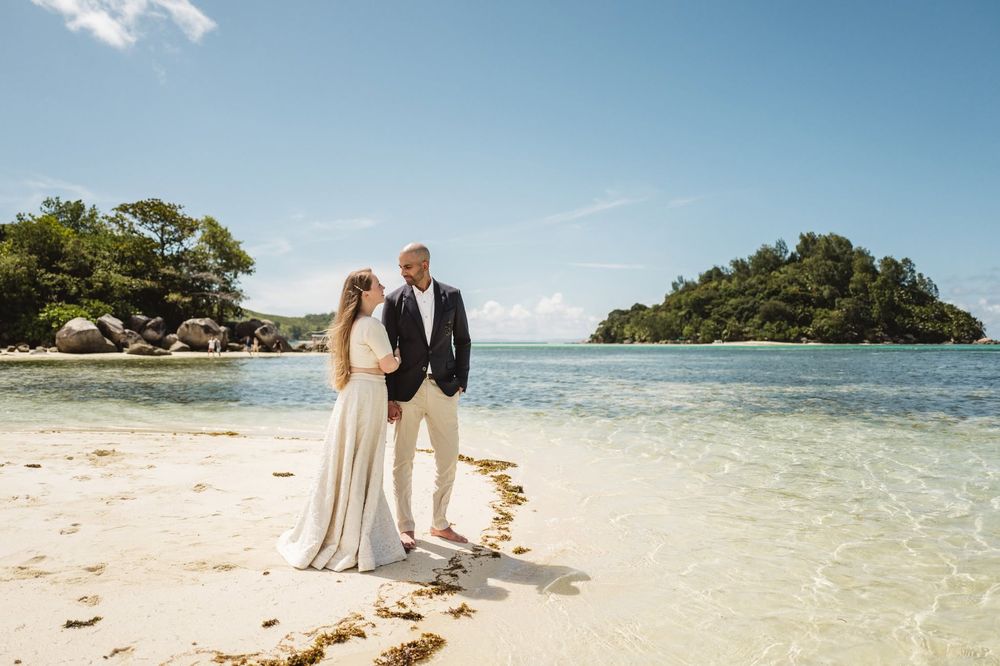
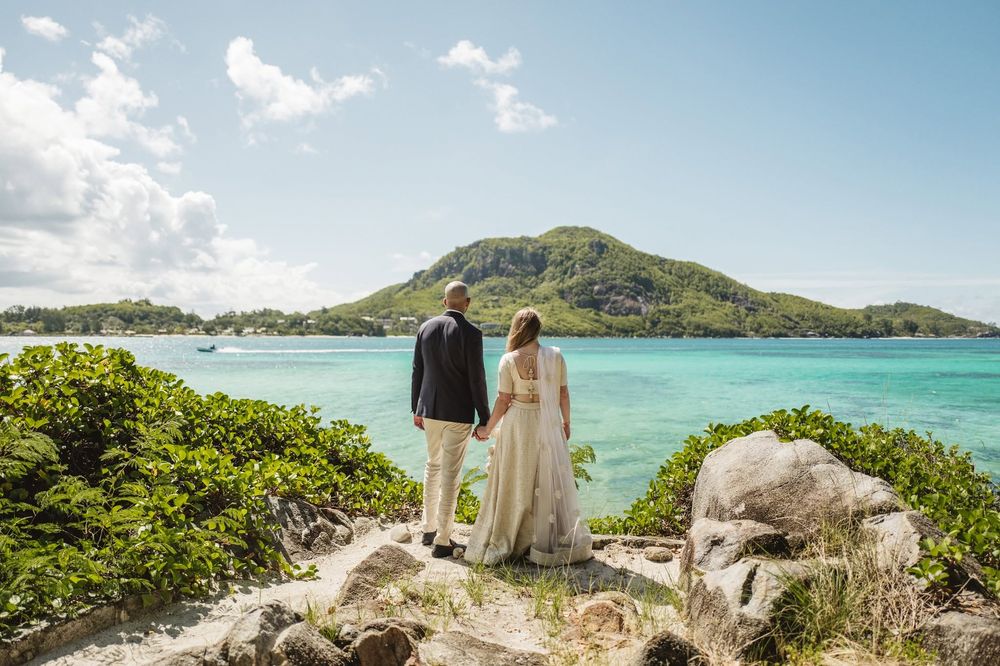
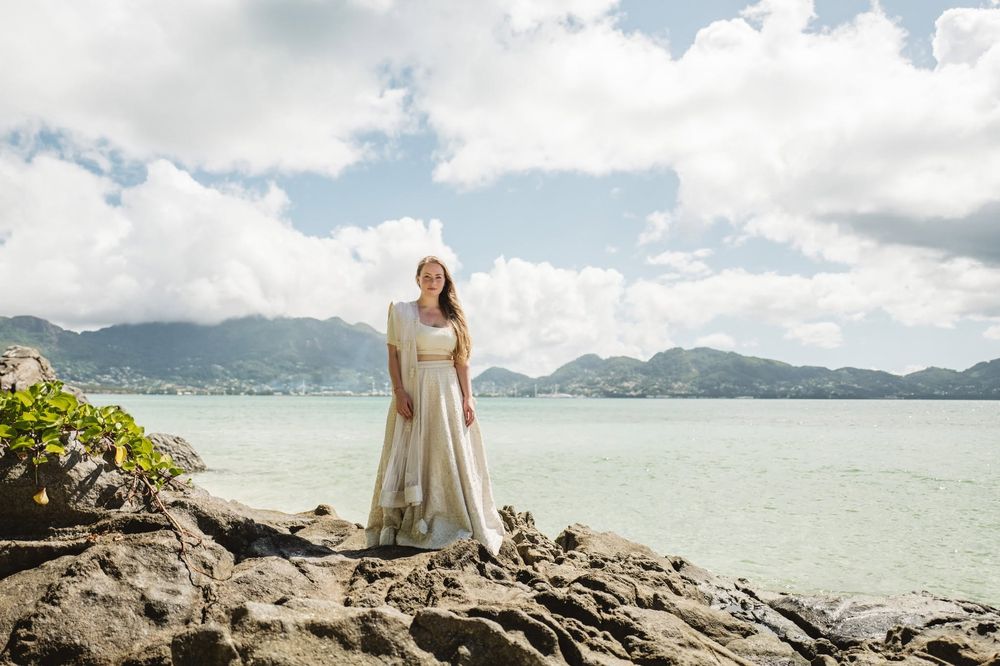
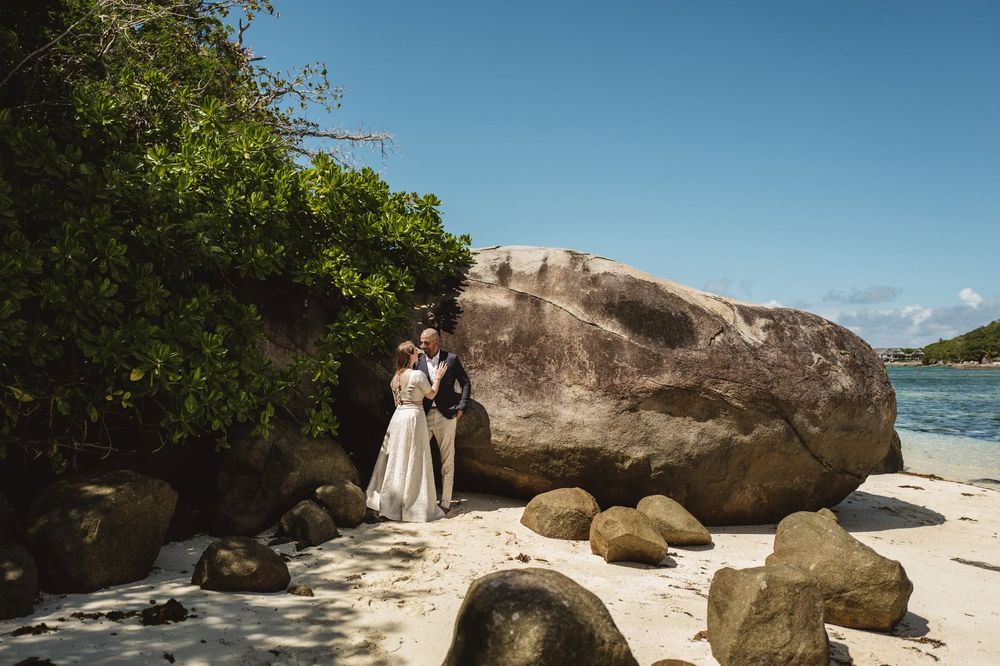
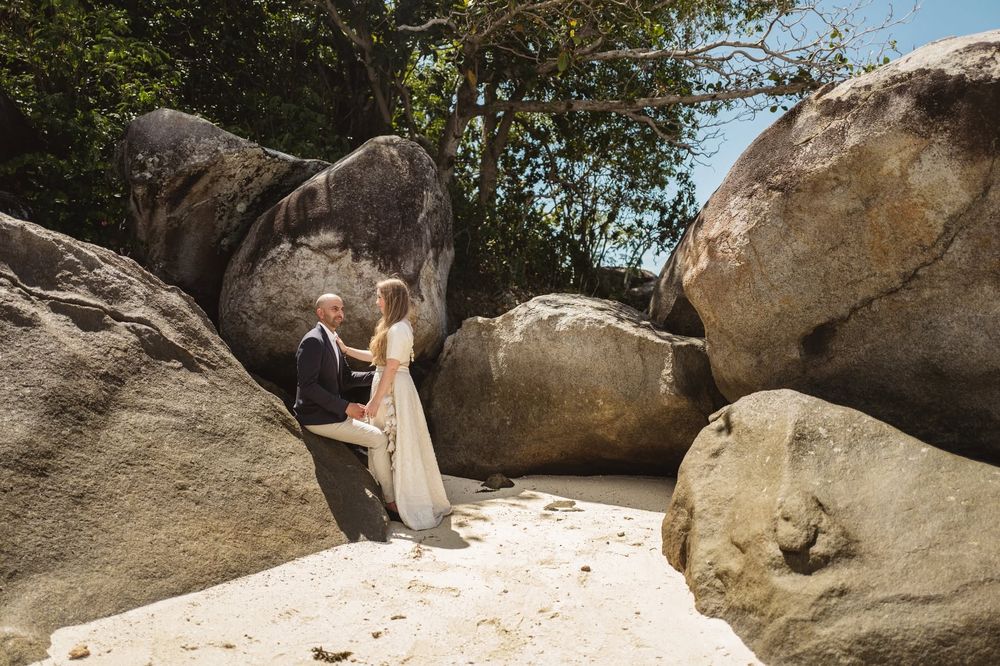
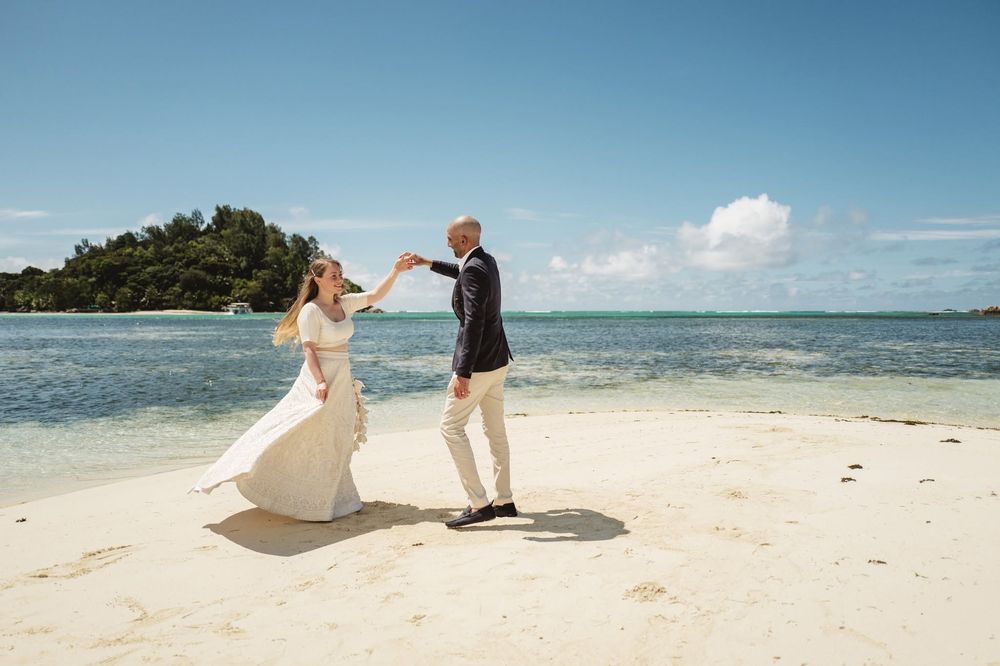
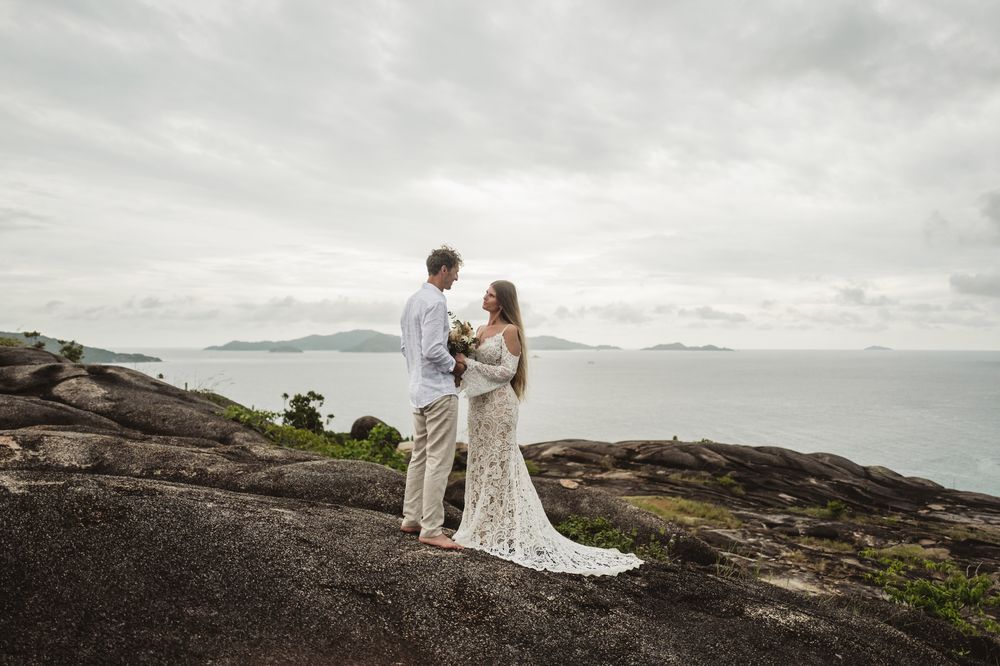
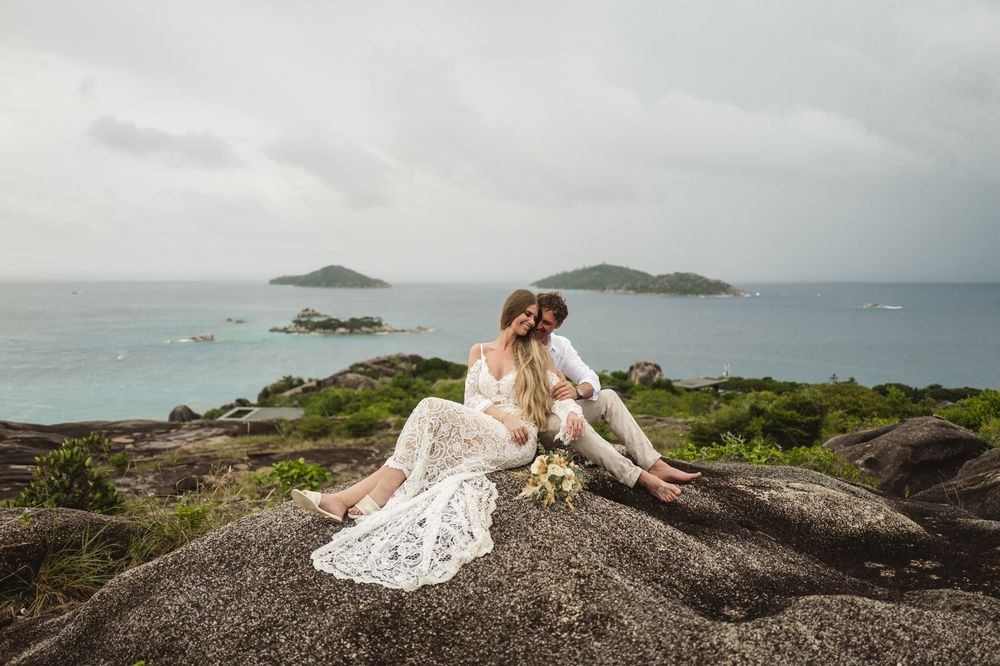
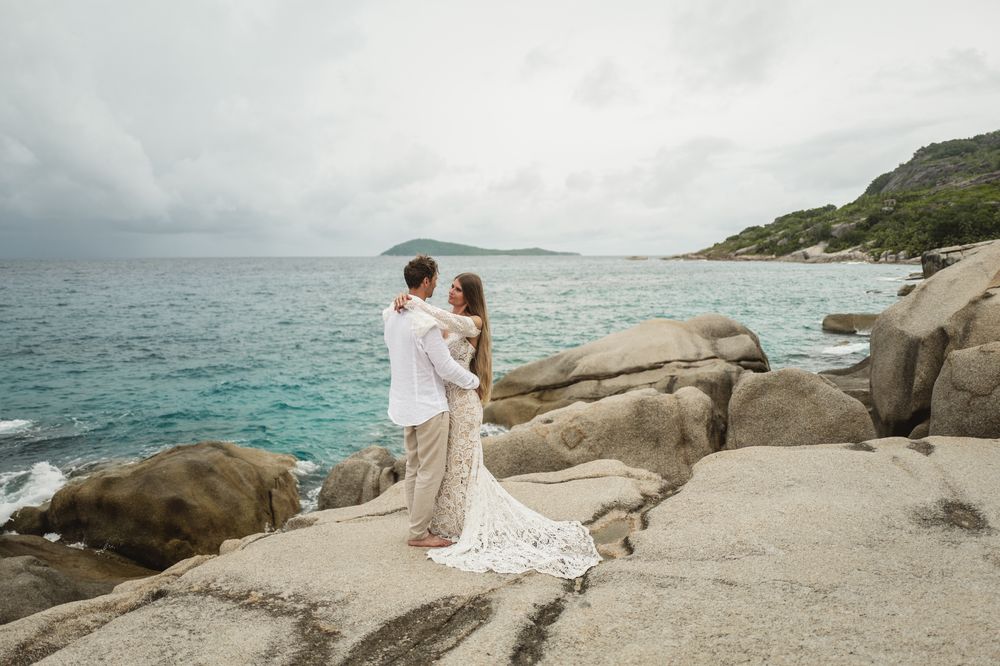
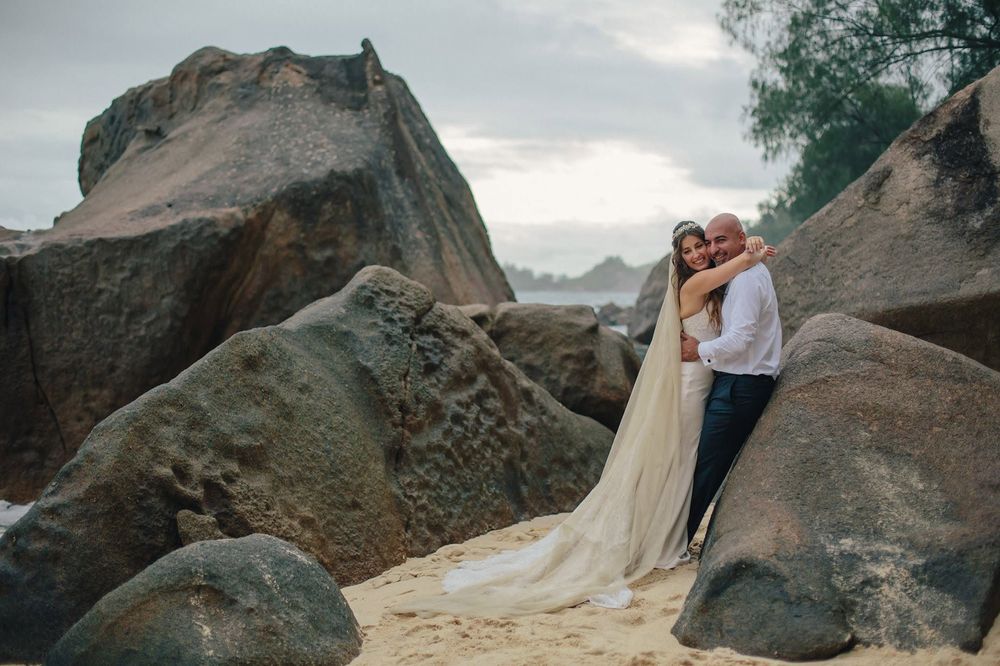
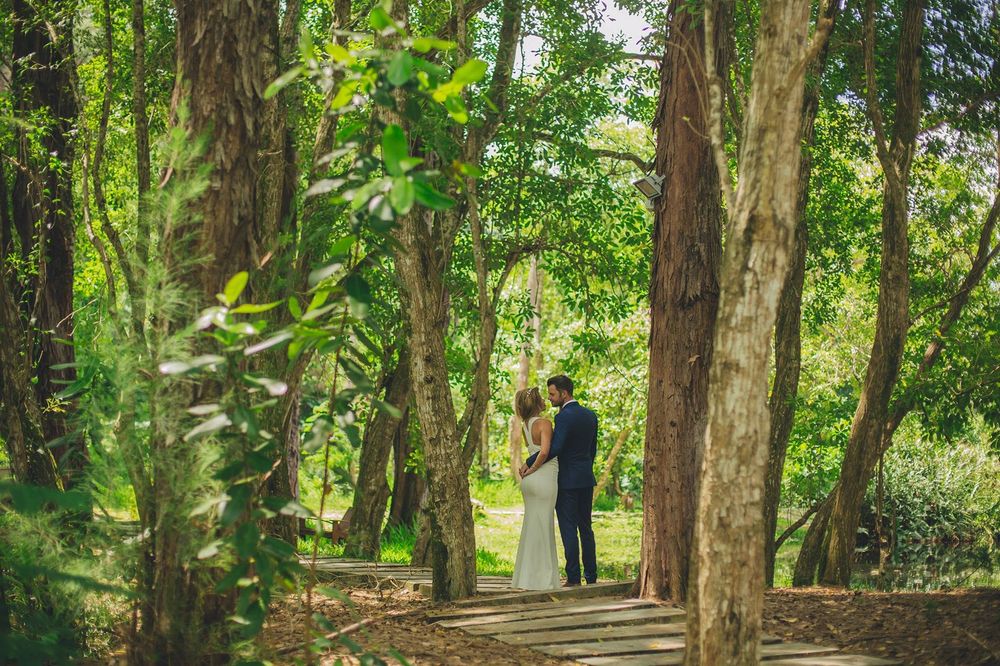
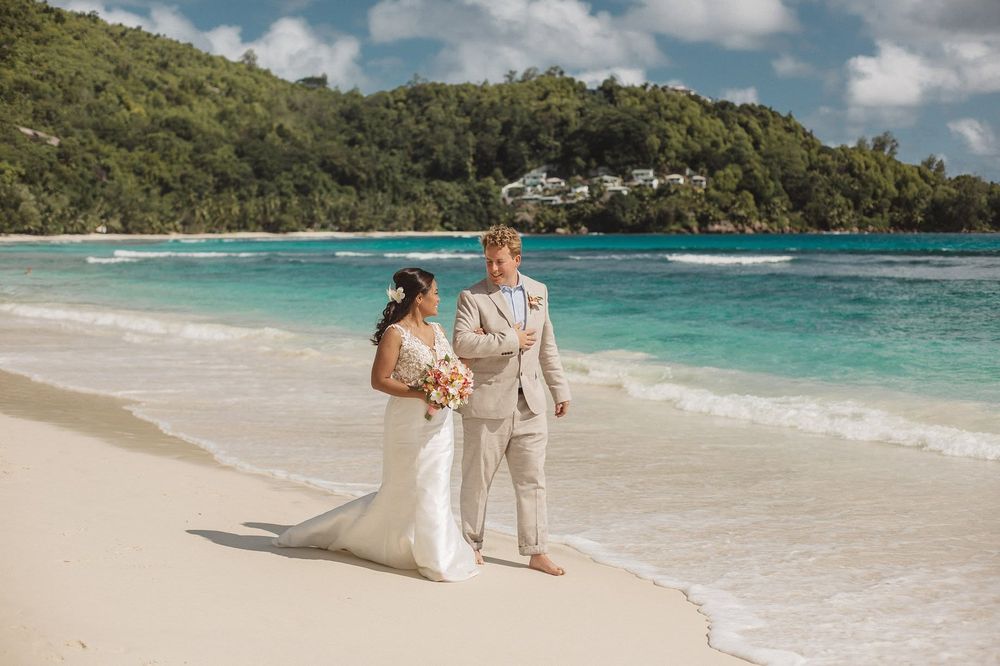
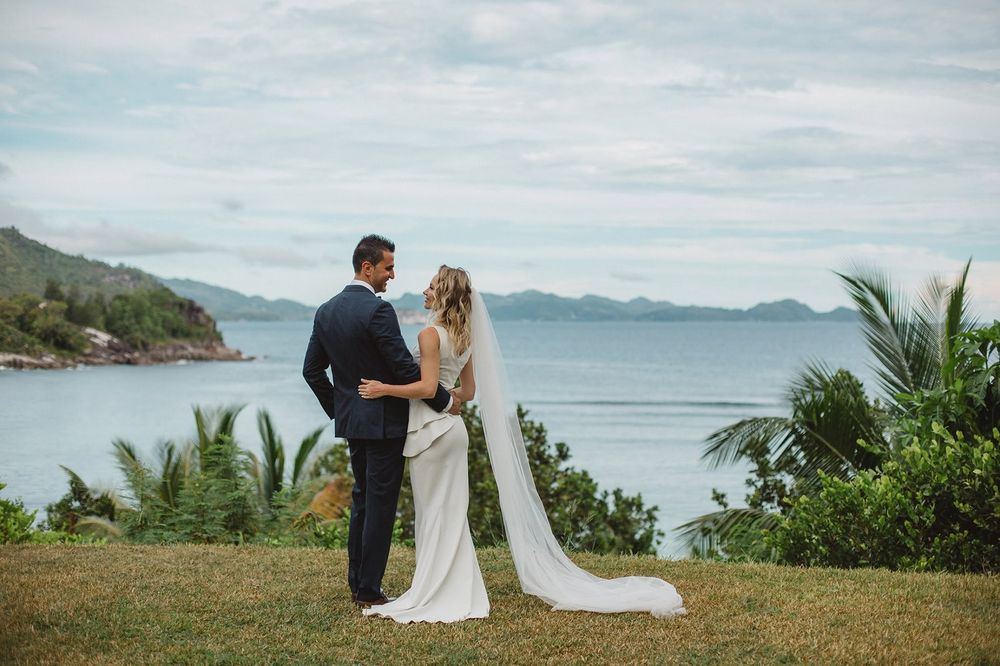
The photographer has you from now until around half past four. Two hours sounds long. It is not. The beach has granite boulders, takamaka trees, a palm that leans over the sand and a shoreline that changes colour as the sun drops. You walk, you sit, you get your hem wet, and the best pictures come from the moment you forget the camera is there.
A local Mahé photographer delivers 80 or more edited images. Our professional photographer, who works in English, German, French or Russian, delivers 270 to 300, around 160 for every hour photographed. If you have booked a film, the videographer works alongside and the drone goes up while the light is still high, and that drone footage is included with every film at no extra cost.

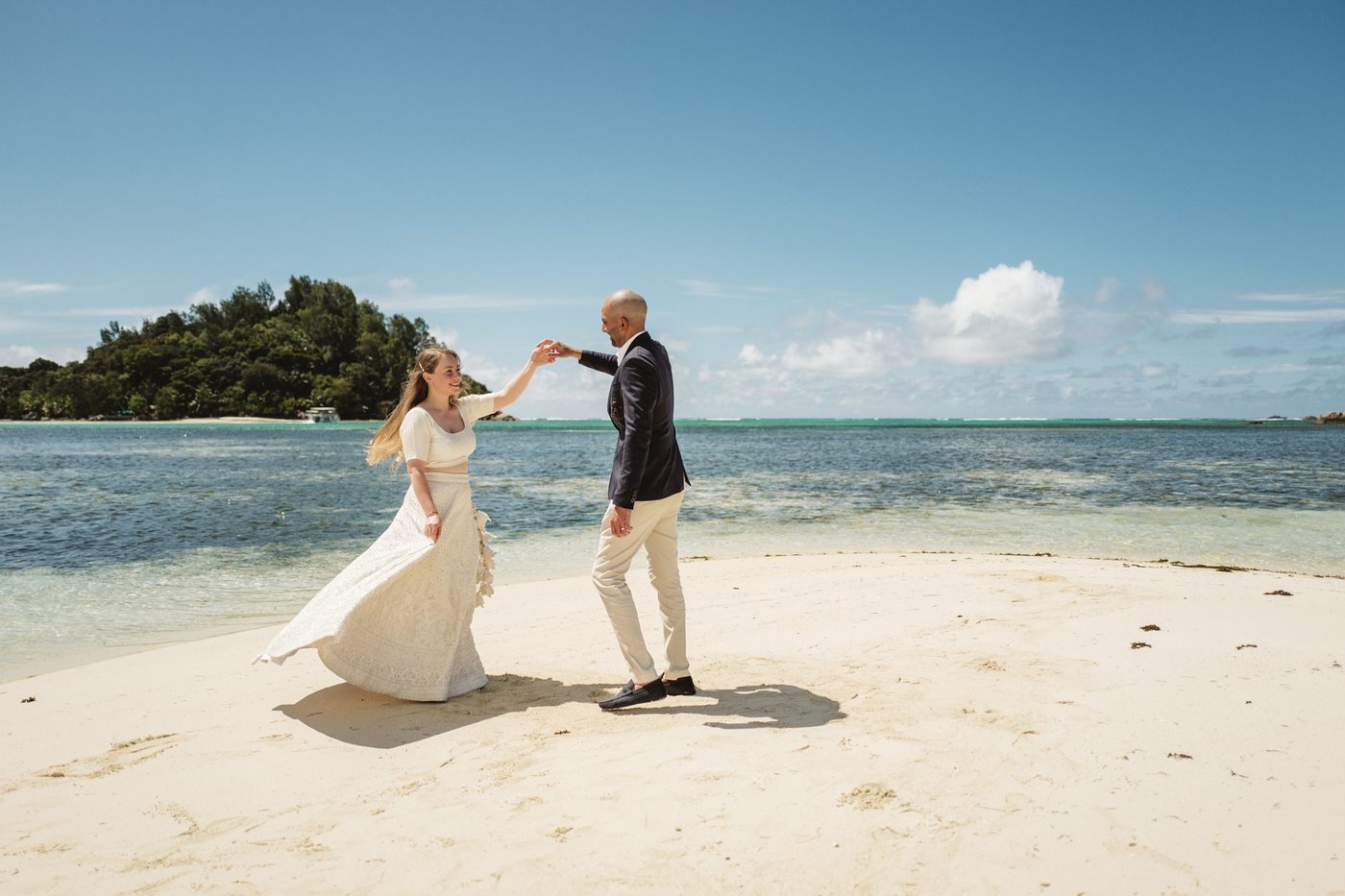
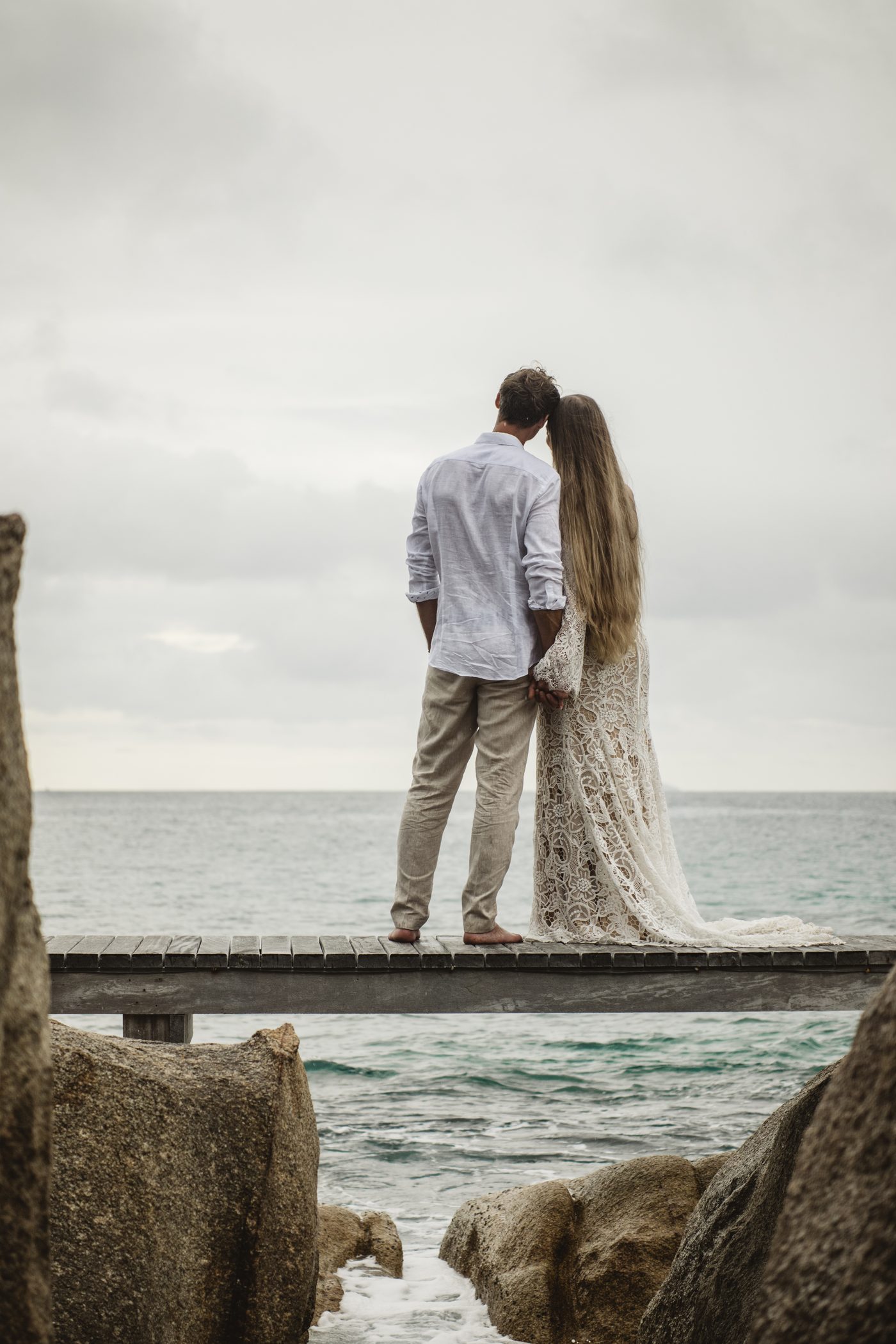
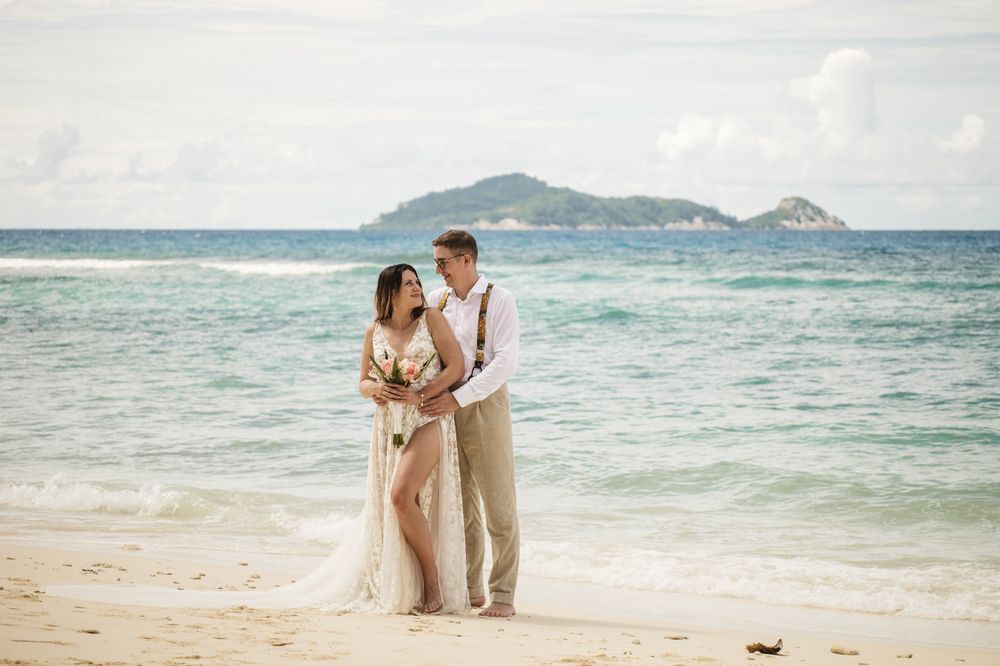
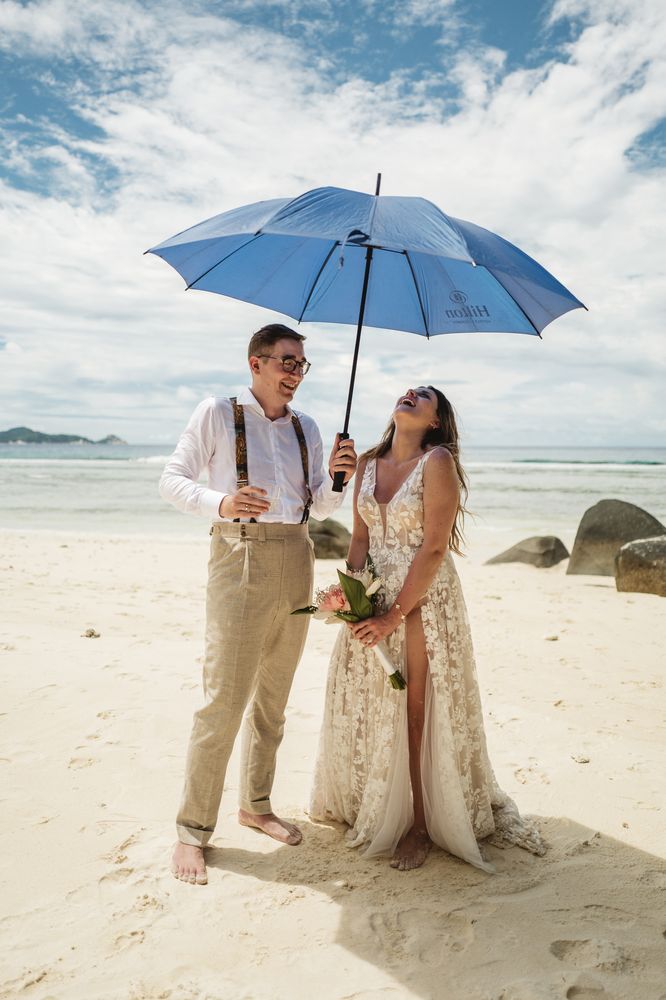
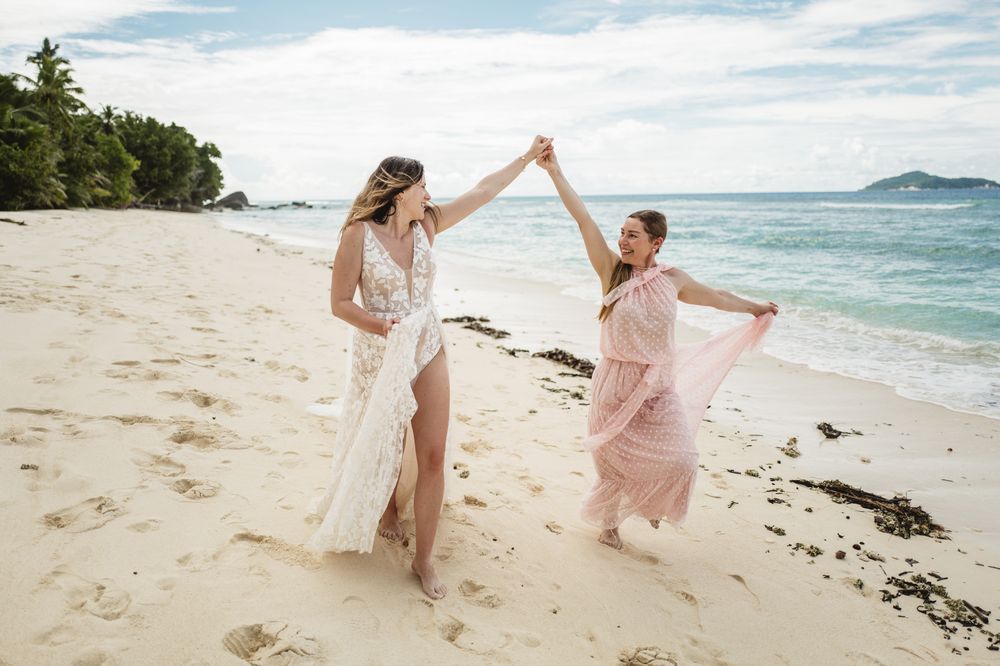
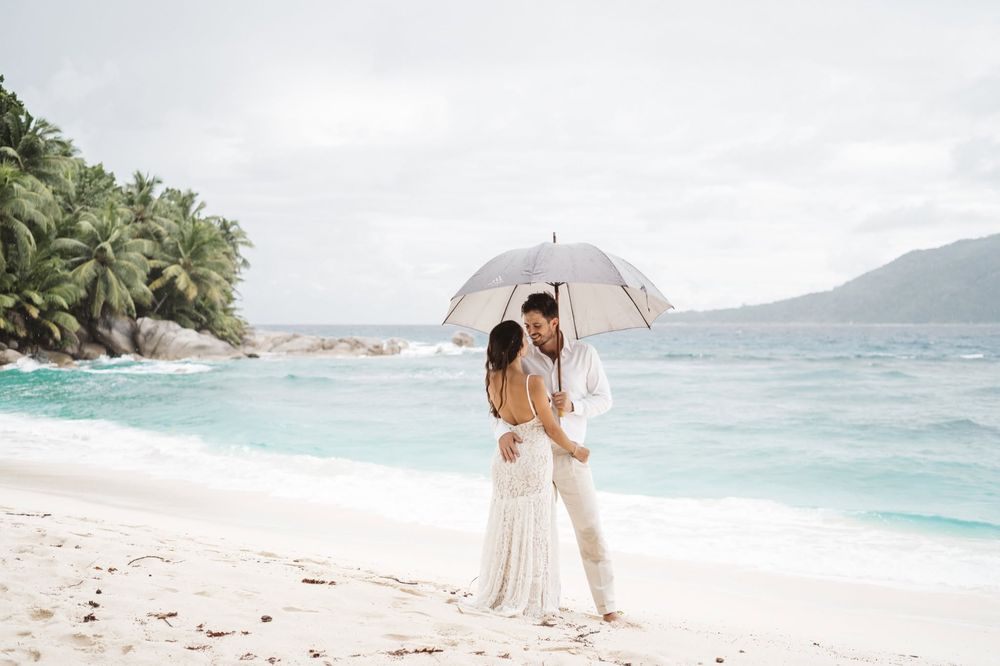
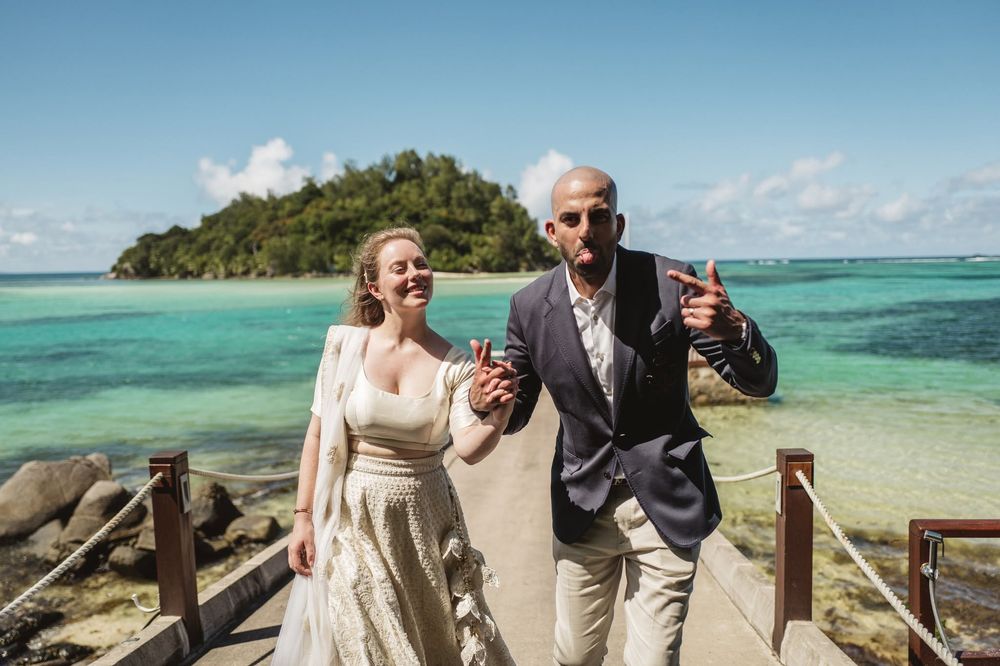
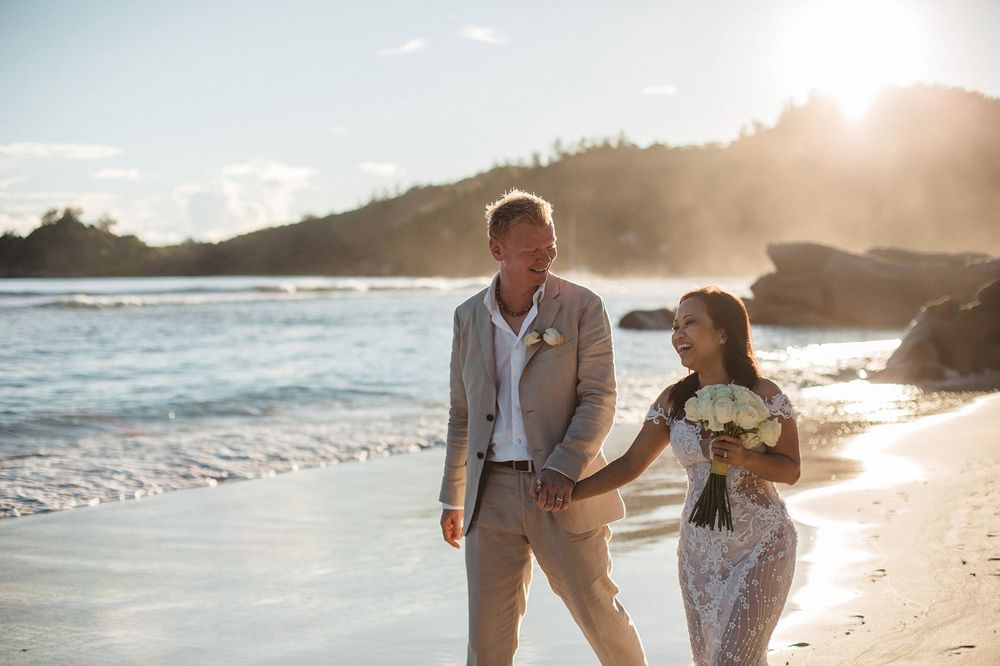
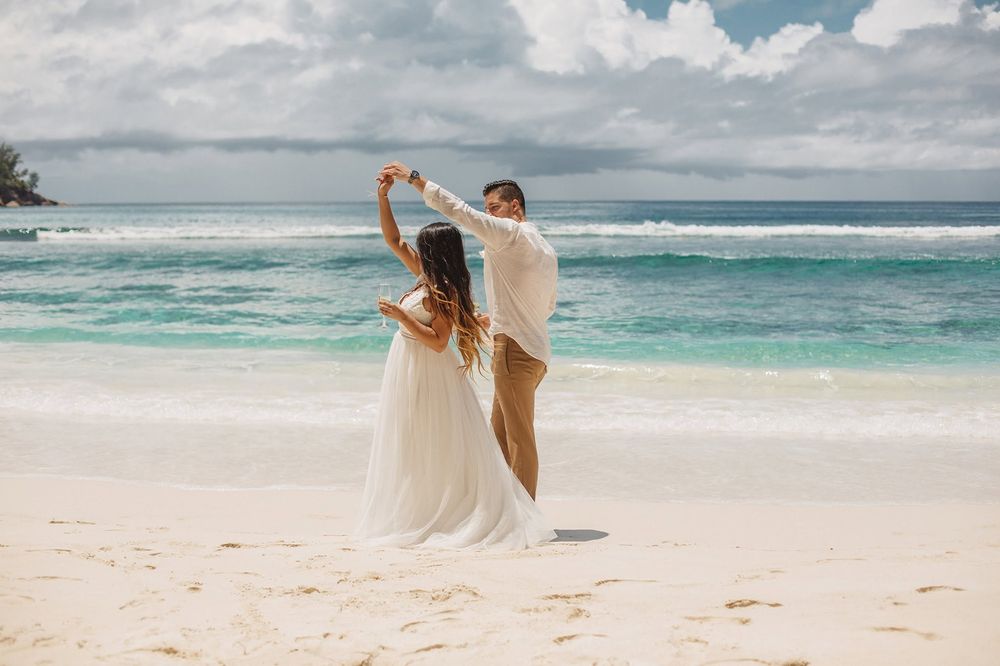
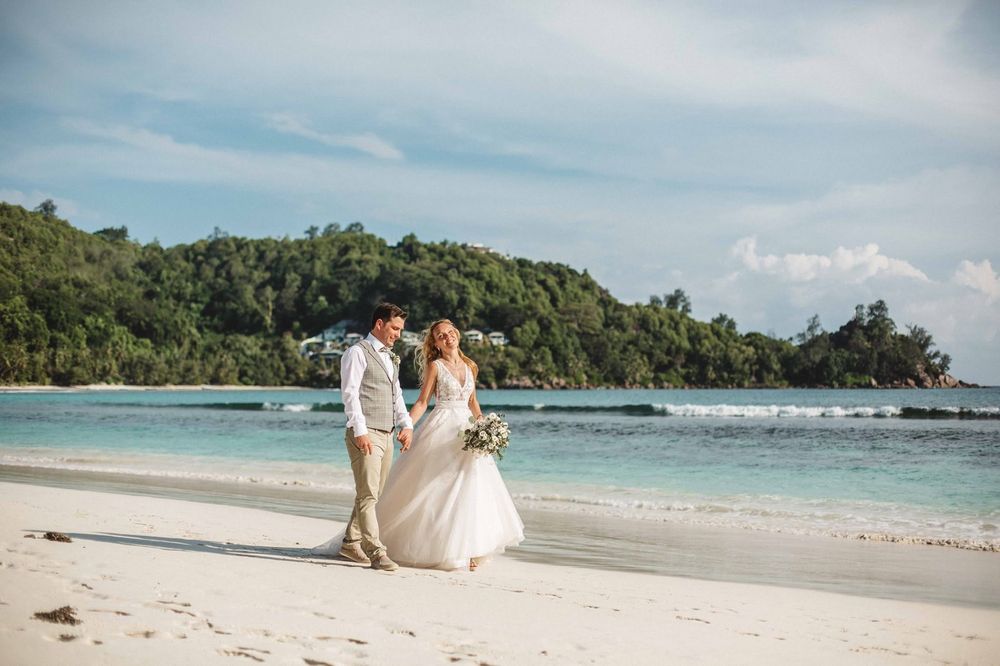
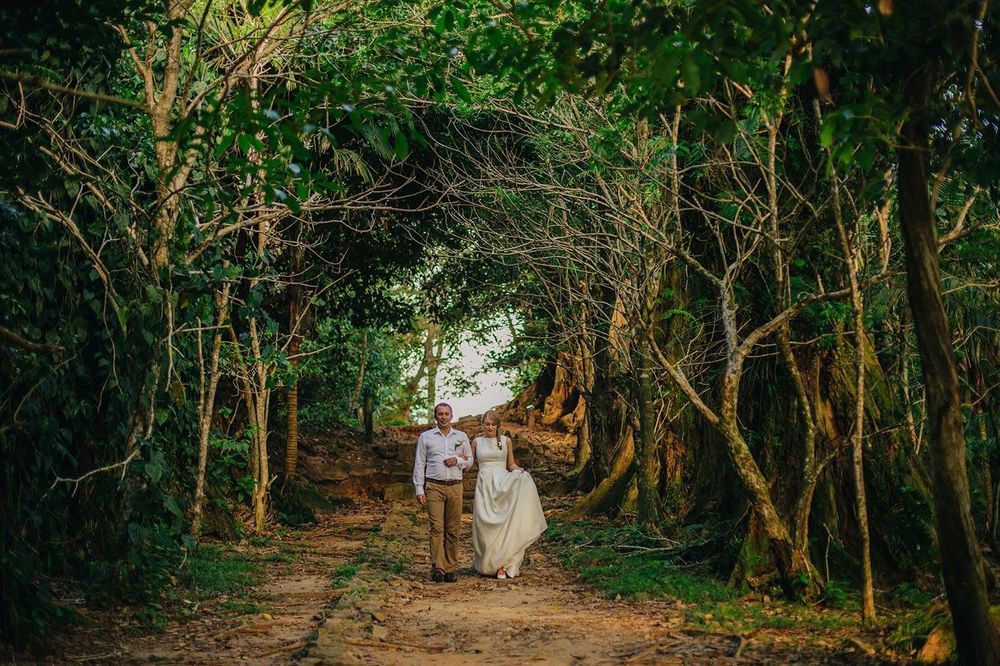
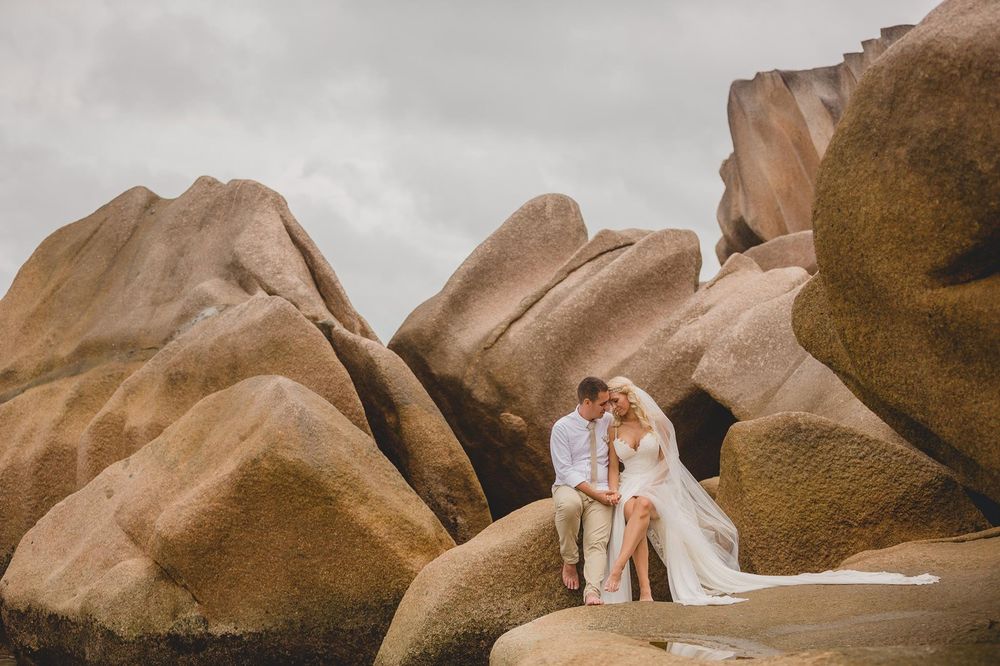
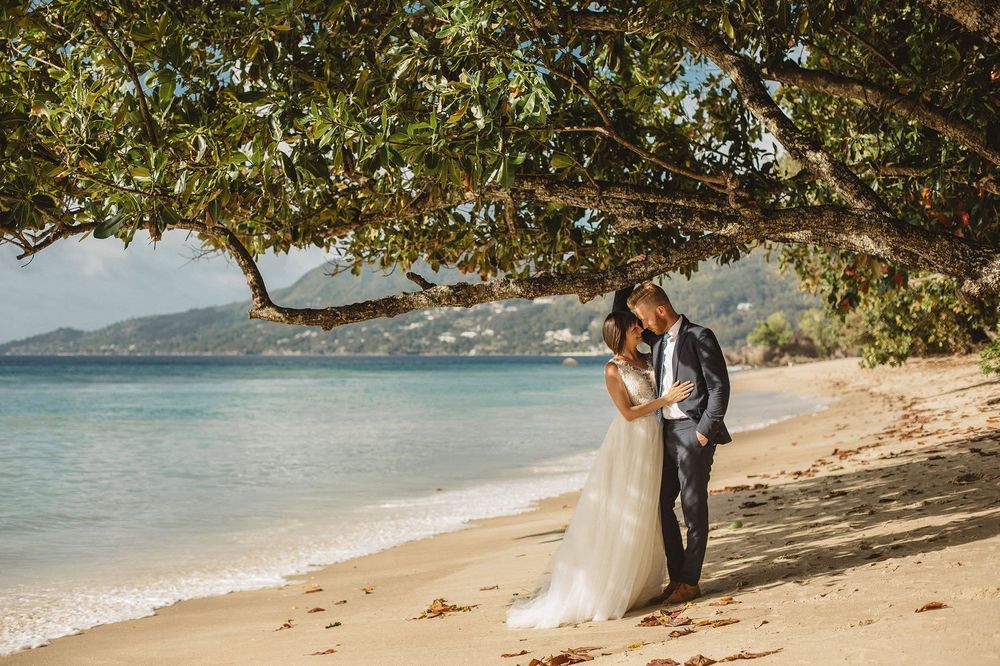
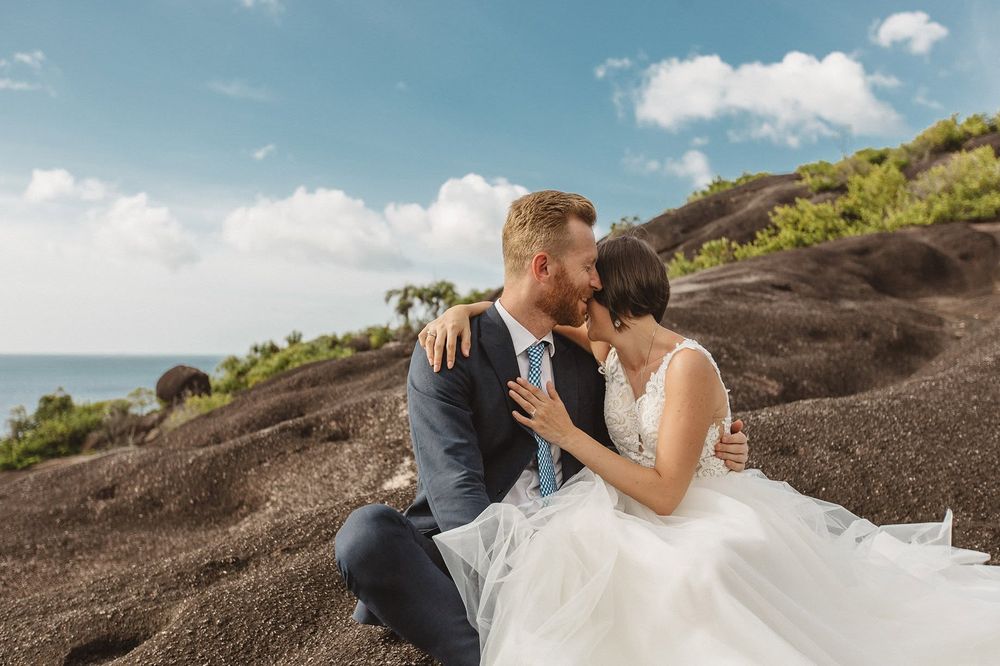
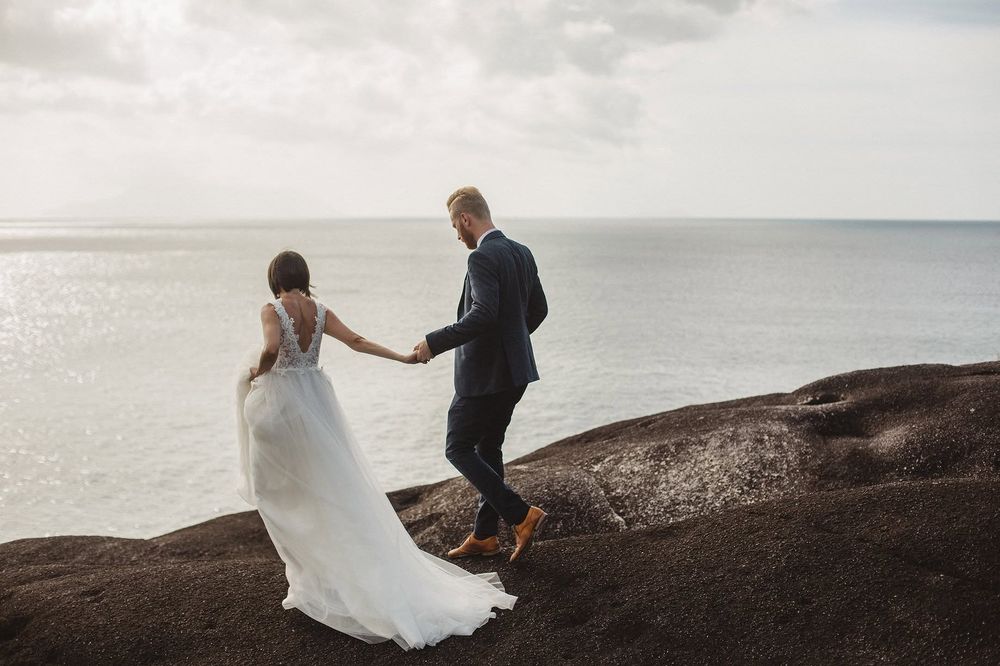
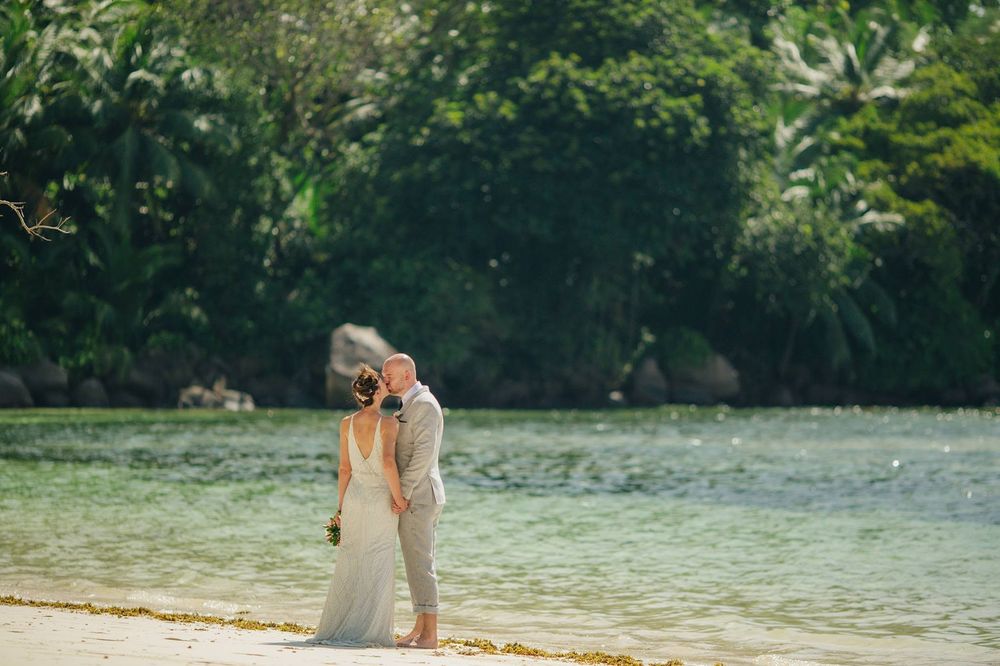
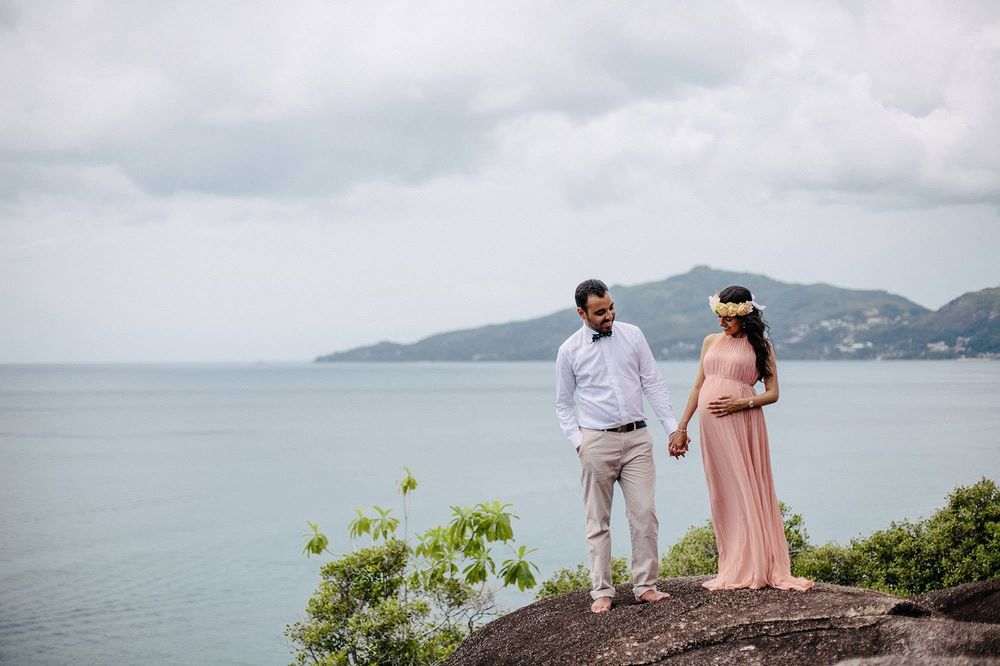
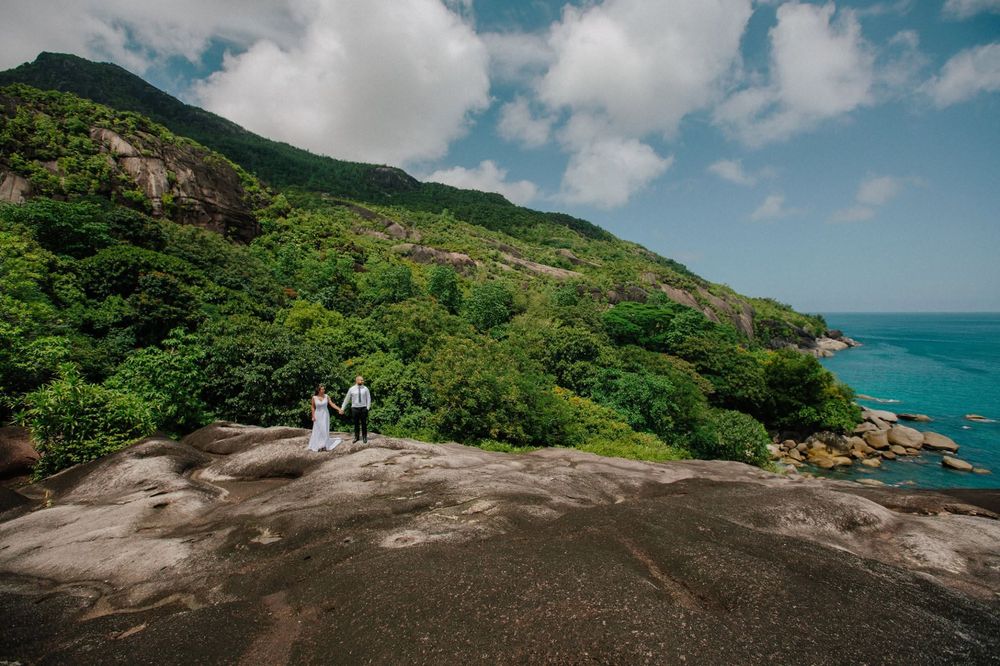
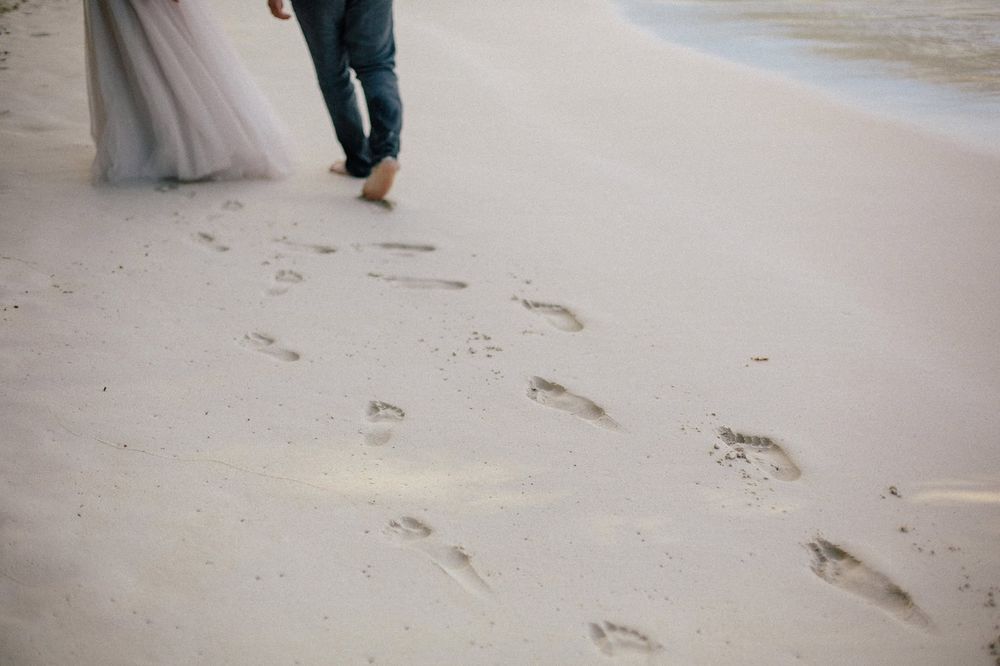
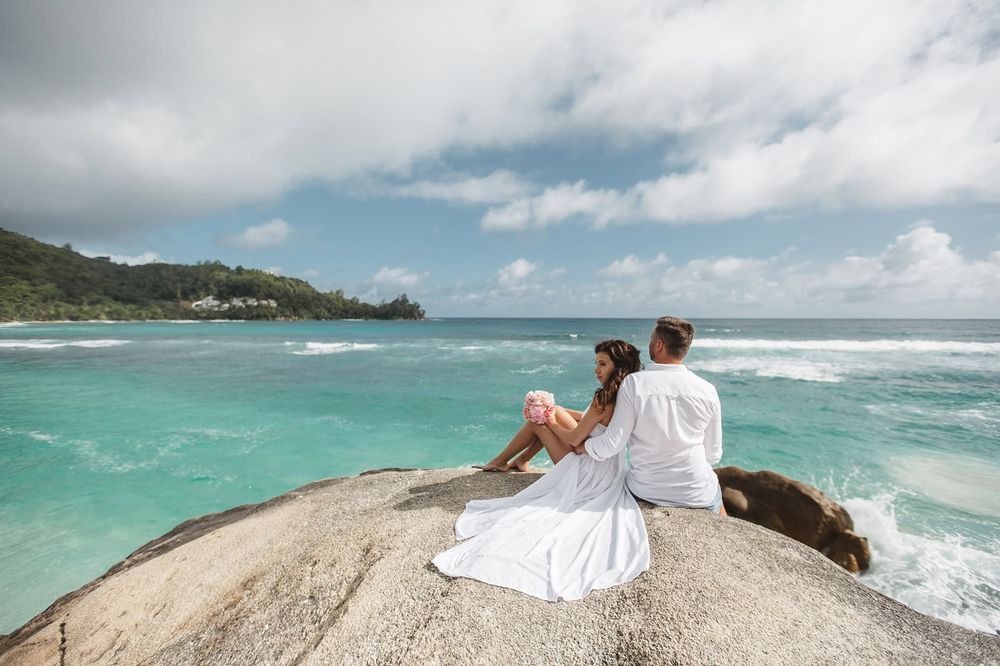
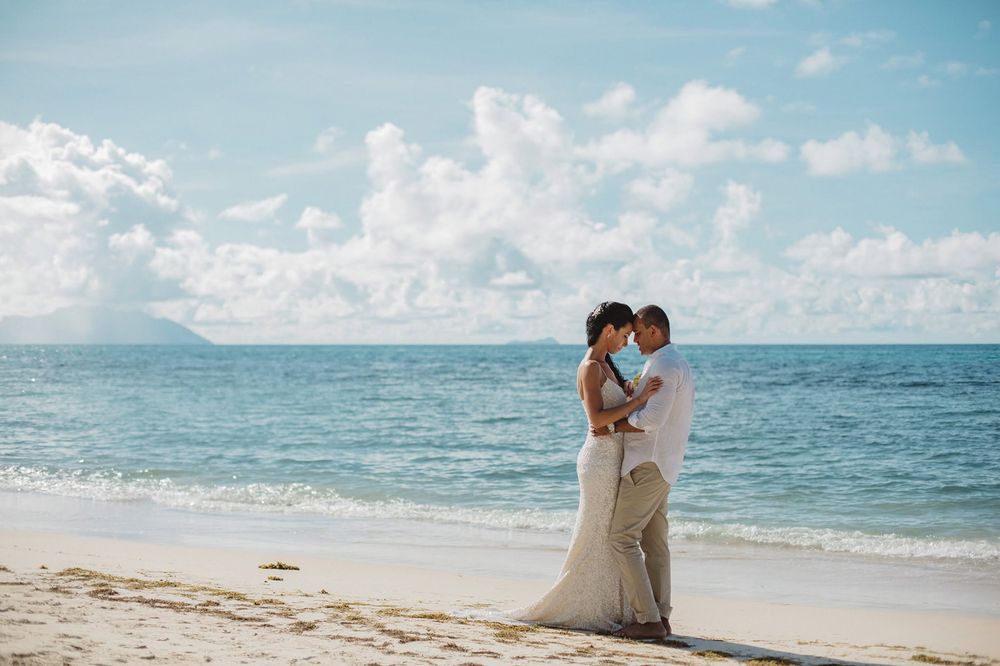
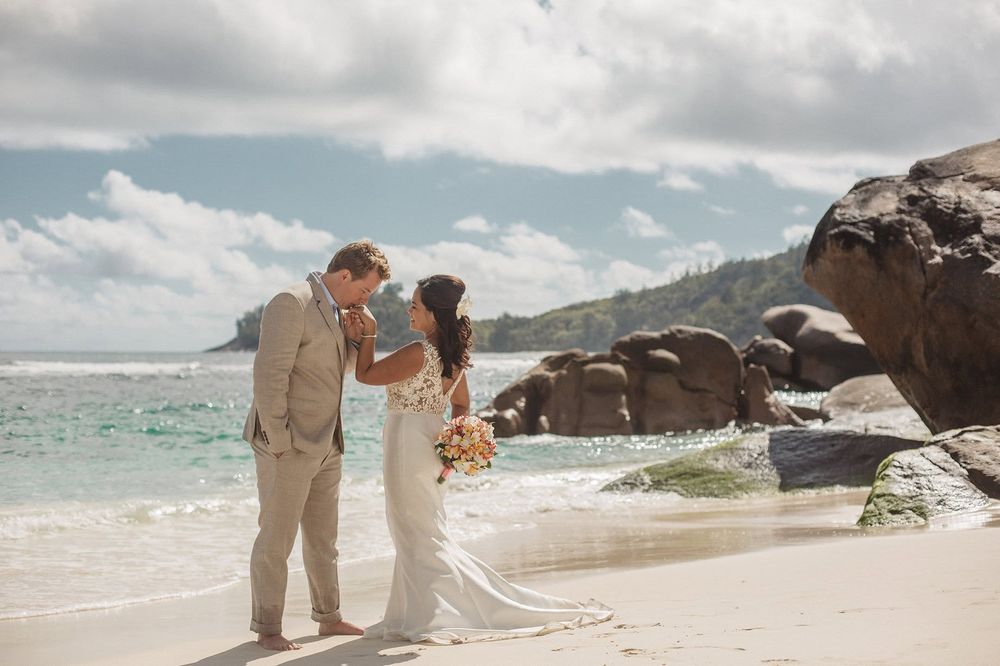
Forty-four frames from those two hours, taken by our photographers with couples across Mahé, Praslin, La Digue and the private islands. Granite, water, a jungle path, a rain shower, one set of footprints. This is what the album looks like when the photographer knows the island and you forget the camera.





- 16:30
Home, or dinner on the sandoptional
Your chauffeur takes you back to your accommodation, married. Many couples ask us to book a table somewhere with a view for that evening. A private dinner on the beach can also be arranged through a separate catering team, with no fixed price because it depends entirely on what you would like, from a simple Creole table for two to something with lanterns and a chef.
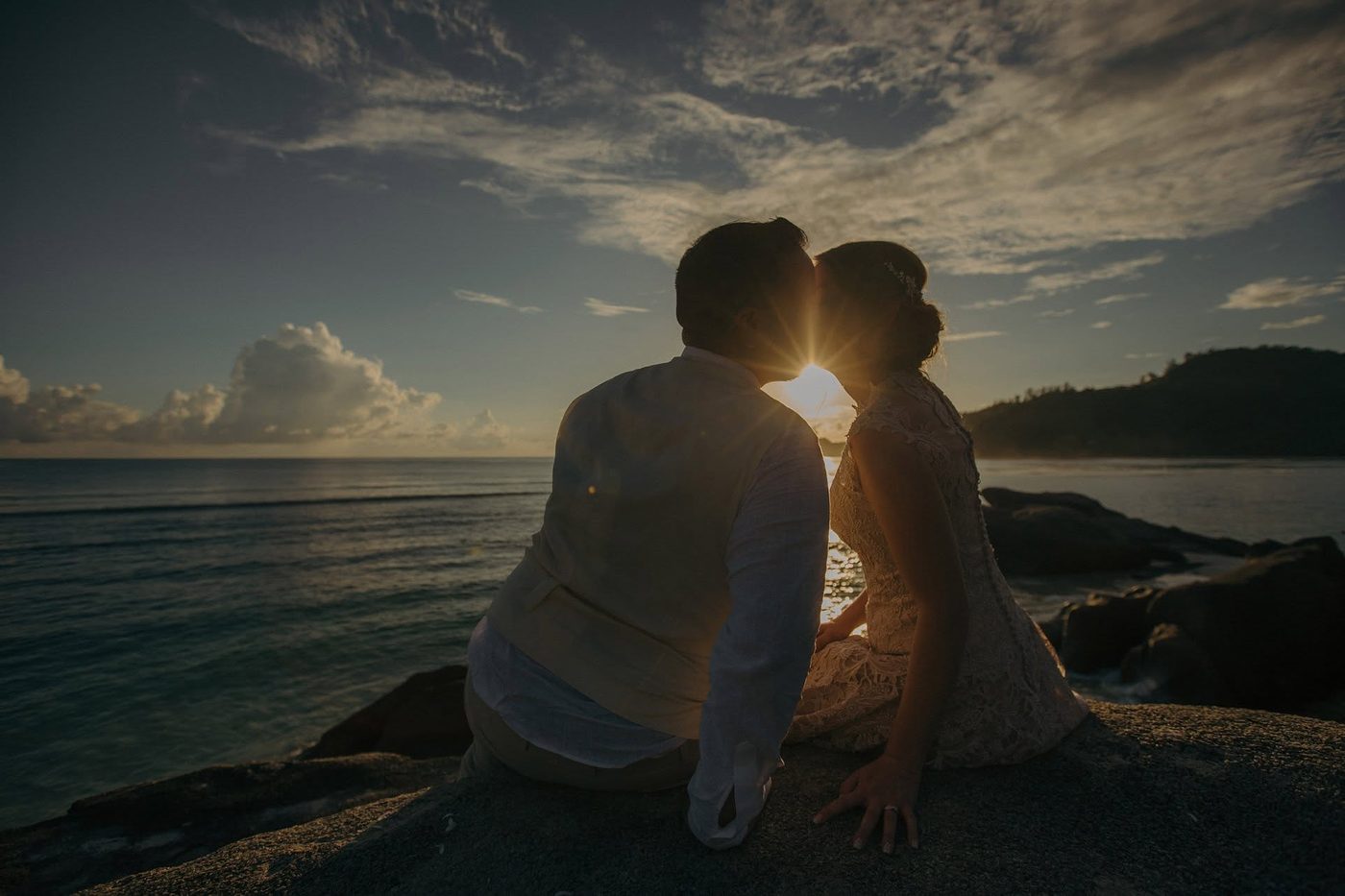
Sunset on Mahé falls between ten past six and twenty to seven all year round. Couples who want golden hour in their gallery simply ask the photographer to stay an extra hour, and we plan the ceremony an hour later to suit.
- Next day
Your certificate, then the apostille
The morning after, we collect your marriage certificate from the Civil Status Office and take it to the Supreme Court registry at Ile du Port for the Hague apostille. Seychelles has been a party to the Apostille Convention since 1979, so that single stamp is what makes your certificate recognised in more than 120 countries. Our standard is five working days, not counting weekends and public holidays, and we usually have it back within 48 to 72 hours. If you fly sooner we push to get it into your hand, and otherwise we send it on by DHL or FedEx.
The one thing to know about timing. Two and a half hours from pickup to the last frame is the honest figure for a couple on their own or with a handful of guests. Add family photographs and a sunset extension and the day stretches to four. Neither is rushed. We simply build the afternoon around what you told us you wanted.
What the registrar actually says
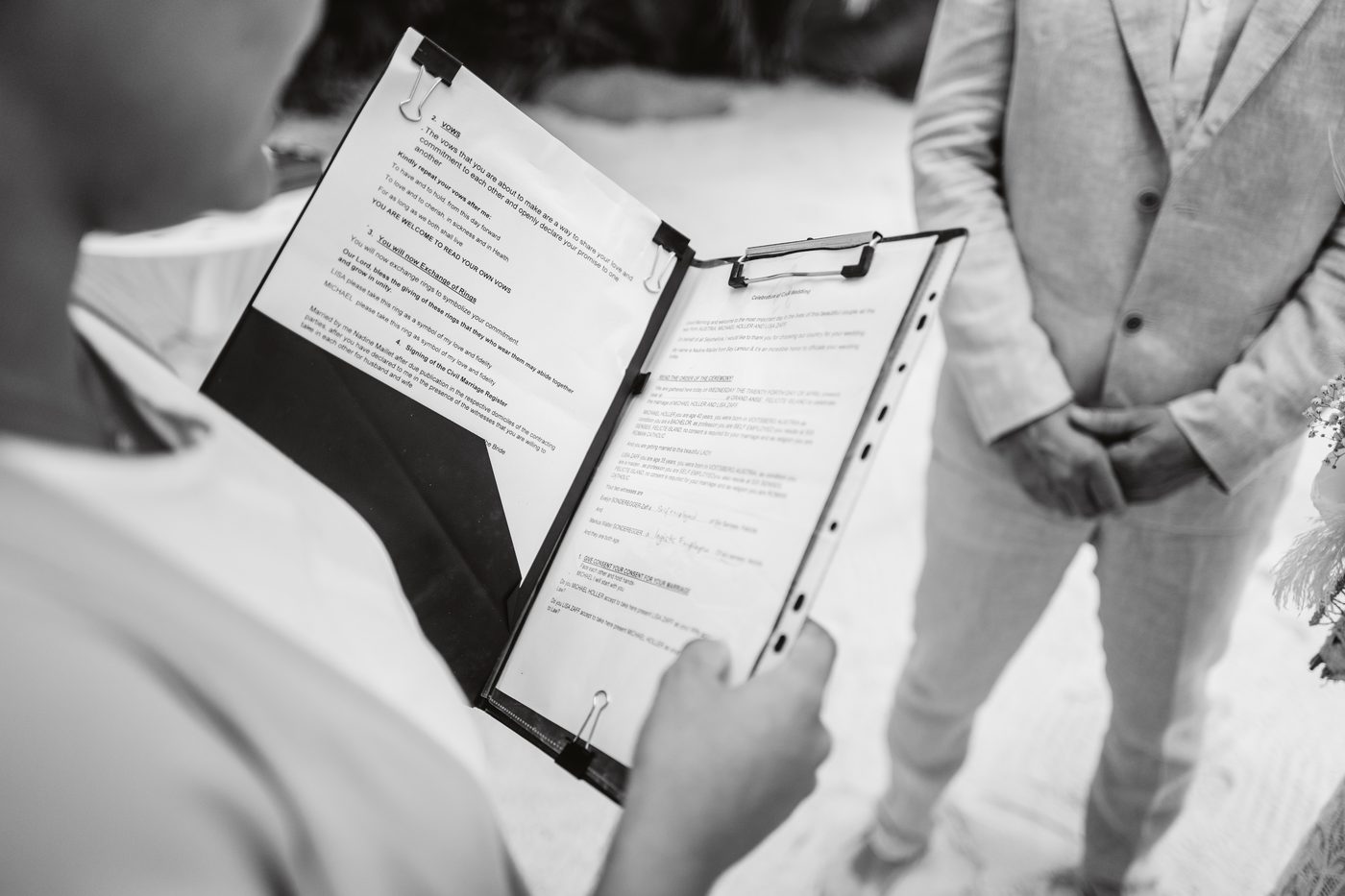
Couples worry that a civil ceremony means something cold and administrative. The legal wording in Seychelles is brief, and it is warmer than most people expect. The officer of civil status states your names and particulars as recorded in the notice of marriage, asks each of you whether you consent to take the other as husband and wife, and once you have both said yes, declares you duly married according to law. That is the statutory core, set out in the Civil Status Act, and it is over in a few minutes.
Everything else is yours to shape. The registrars we work with are used to couples reading their own vows, exchanging rings with words they wrote on the plane, or asking a parent to say something. They conduct the ceremony in English, French or Creole, and if your first language is none of those, our coordinator makes sure you understand each question before you answer it.
Saying your own vows
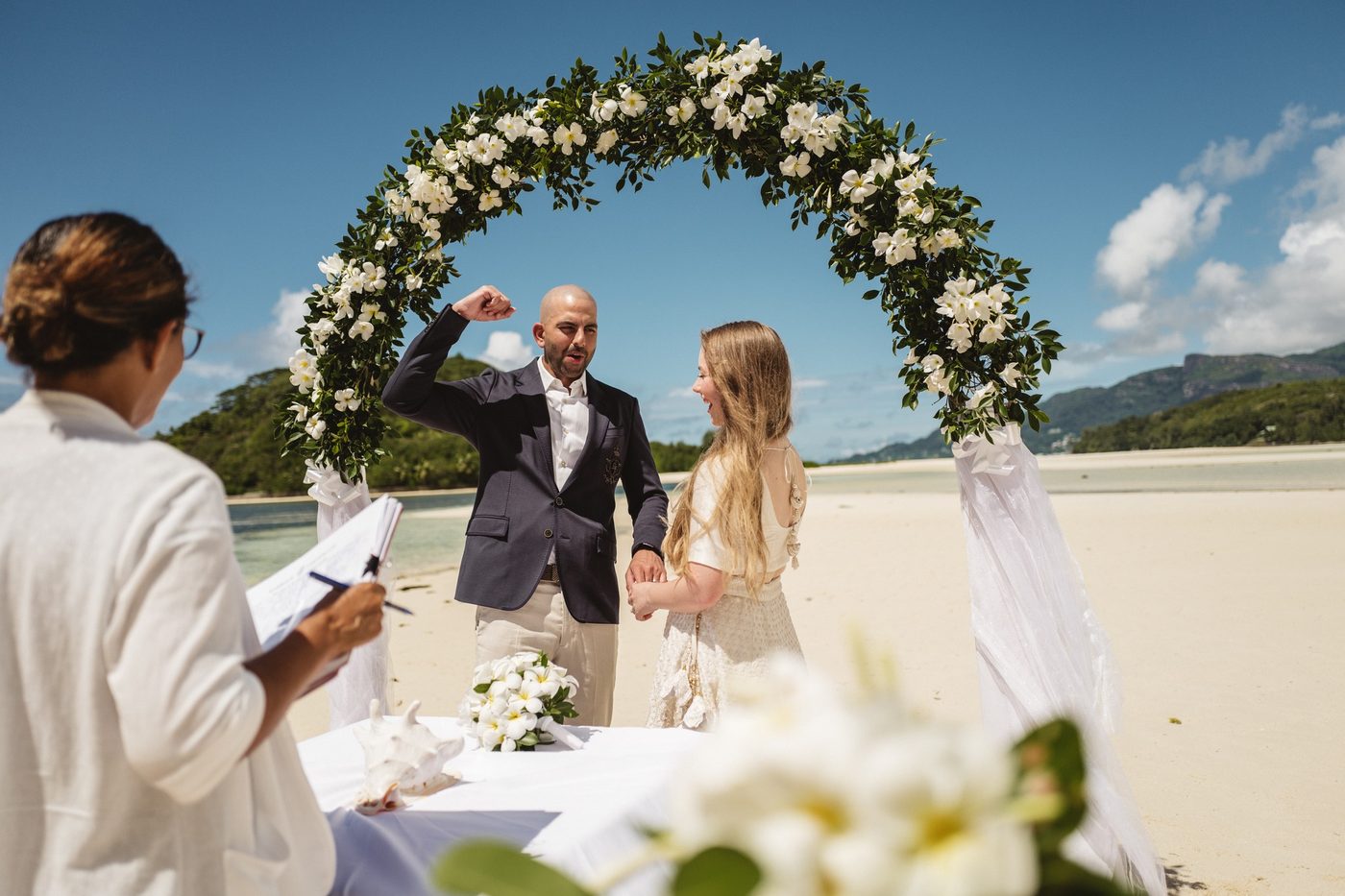
Write them on paper, on a card or in the notes app, and bring them in your pocket. Two to three minutes each is the length that lands. The registrar pauses, you turn to each other, and the photographer moves in close. Nobody minds a wobble in the voice, and most couples laugh at least once.
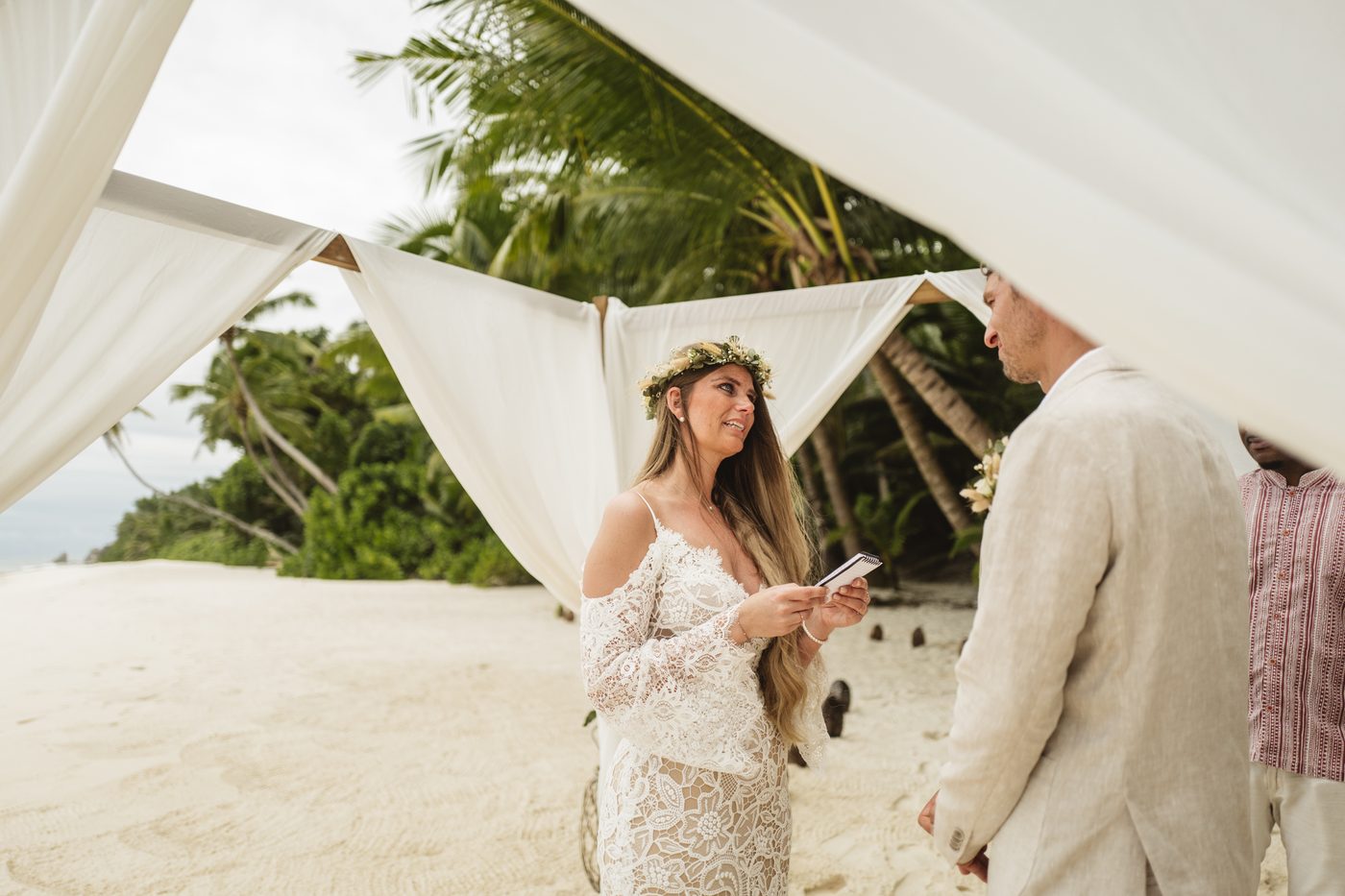
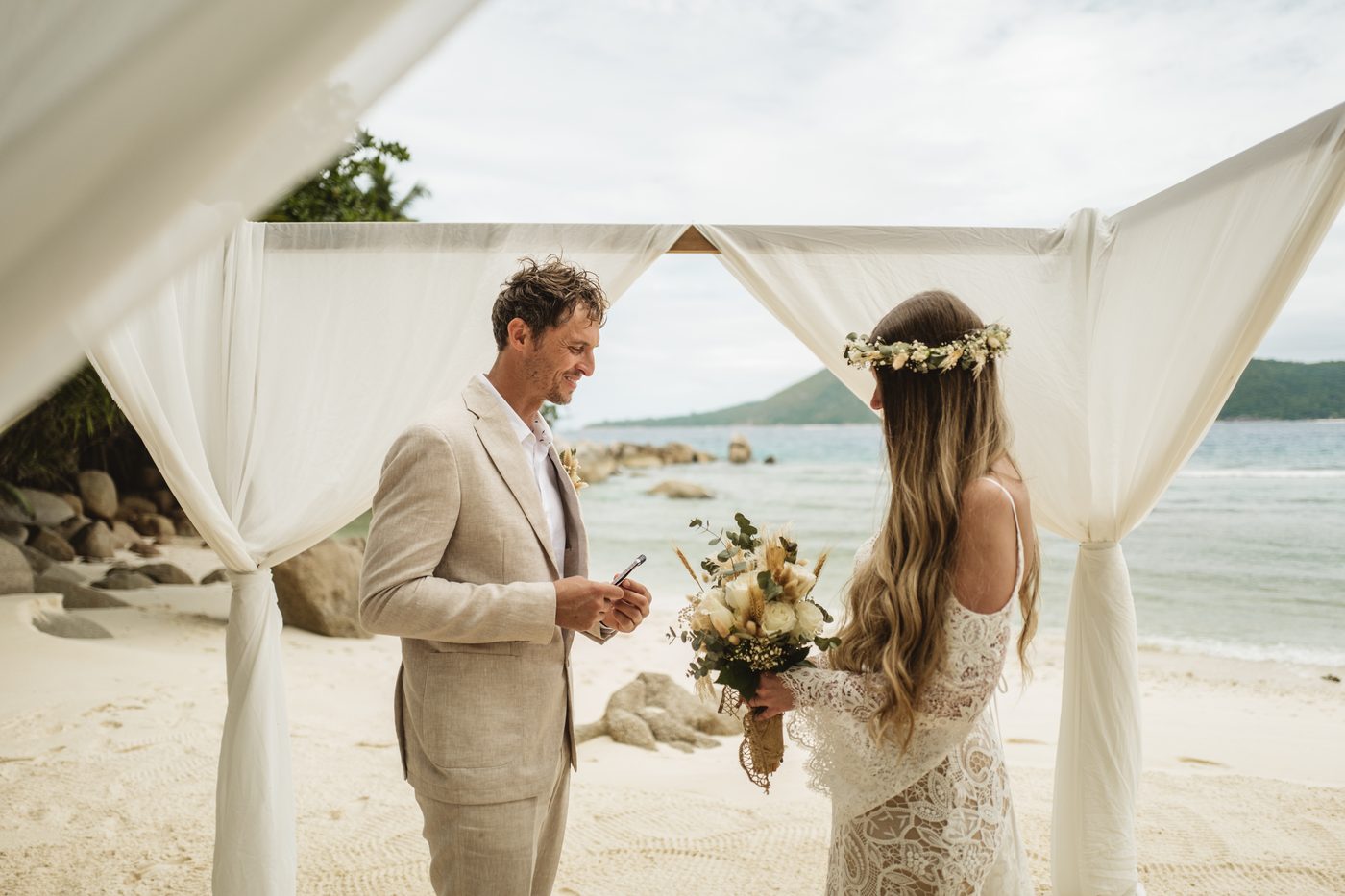
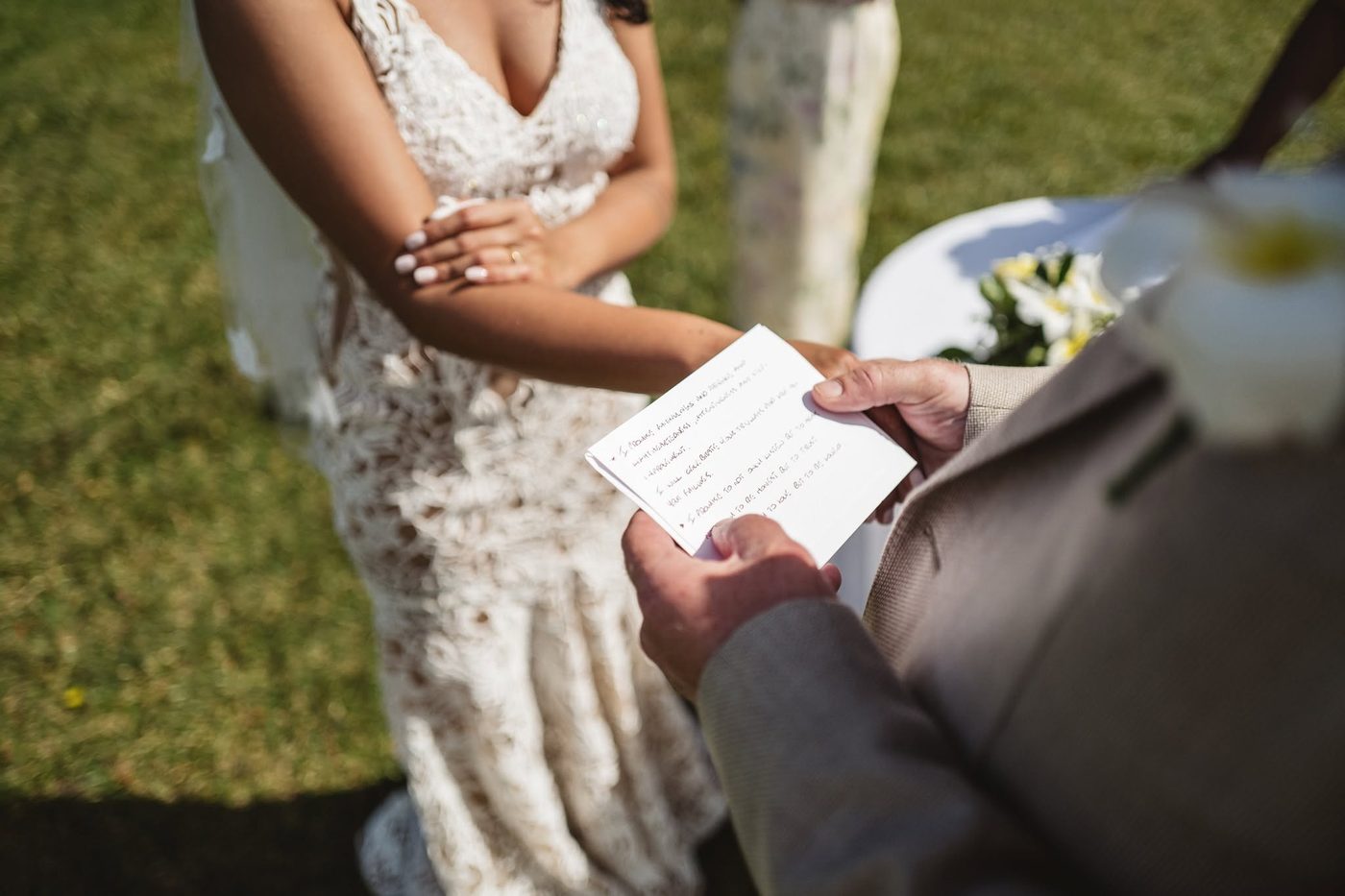
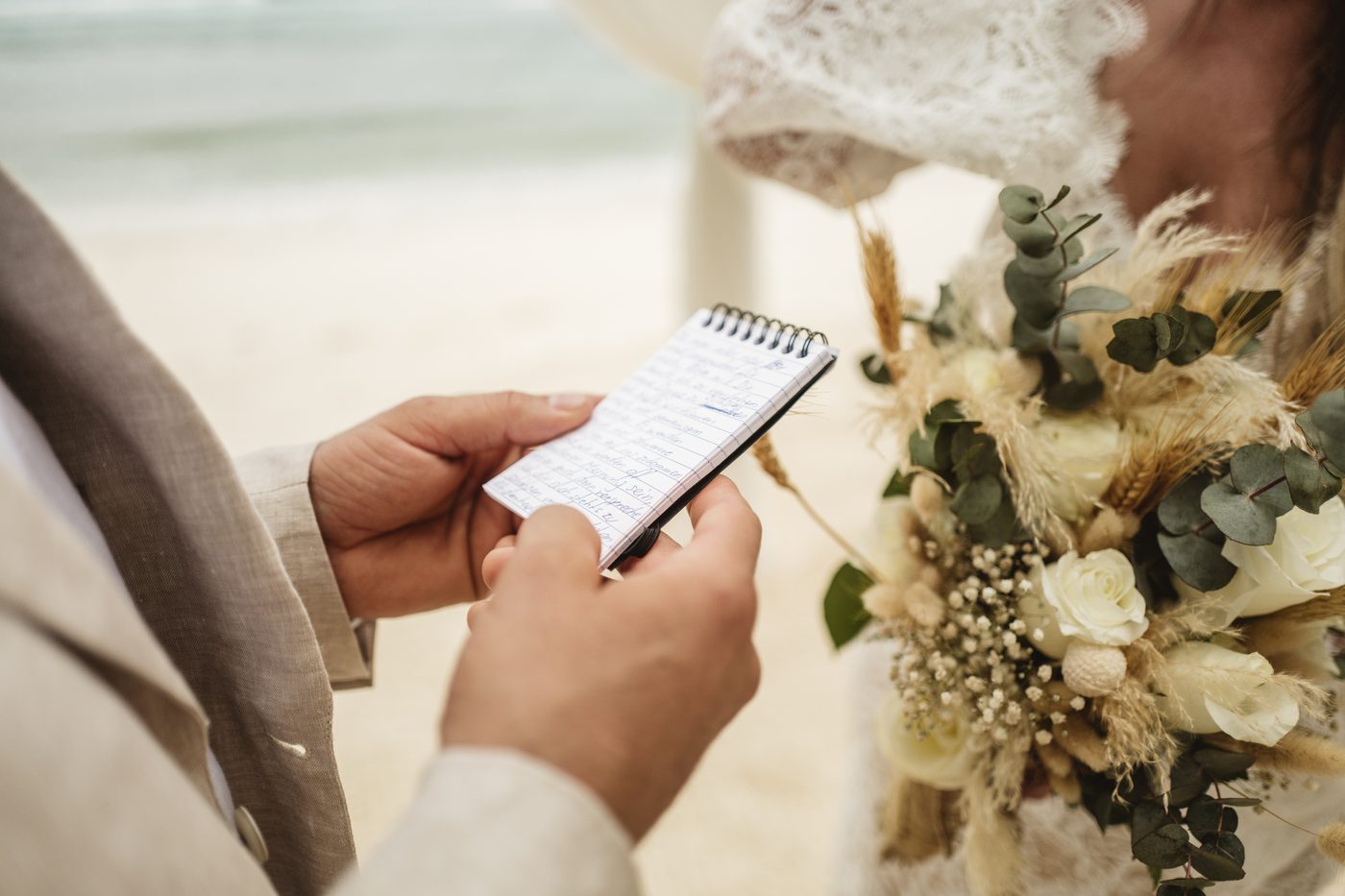
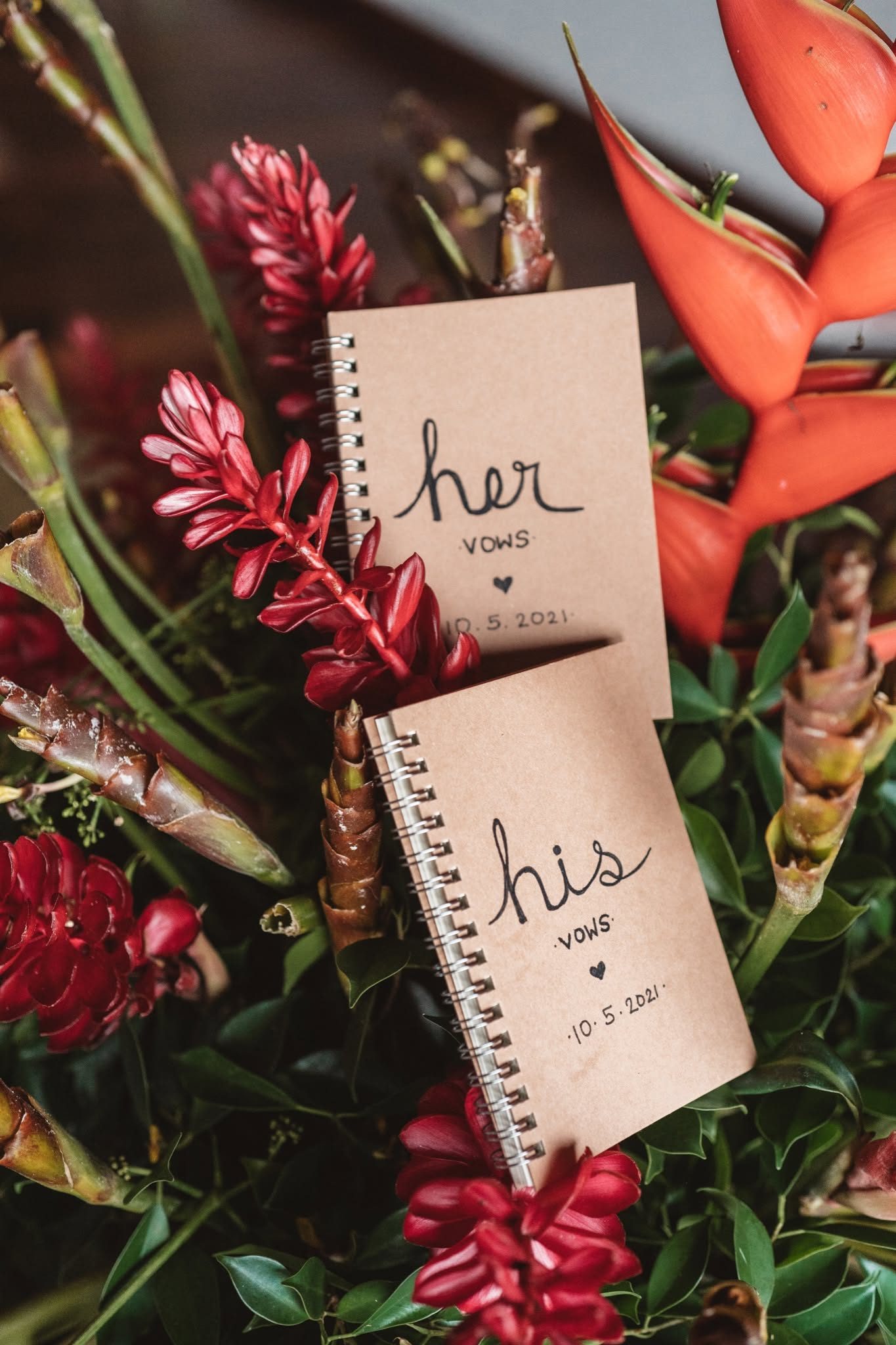

Your own vows fit inside the legal ceremony. Most couples write them, most read them off a phone, and most laugh at least once.
Barefoot, heels or something in between
Barefoot. The beach we use is on the sheltered side of Mahé and the sand is powder fine. Heels disappear into it within three steps, and flat sandals fill with sand and start to rub before you reach the gazebo. Most brides walk in barefoot and put shoes back on for the car home. Grooms in linen trousers roll the hem once and are glad of it by the time the photographer sends them into the shallows.
If you would like something on your feet, a pair of simple leather sandals photographs beautifully and comes off in a second for the beach shots. What we would gently steer you away from is anything with a heel or a closed toe. You will be standing on sand that is warm in the sun, cool in the shade of the takamaka trees and, at the water’s edge, wet.
Where it happens
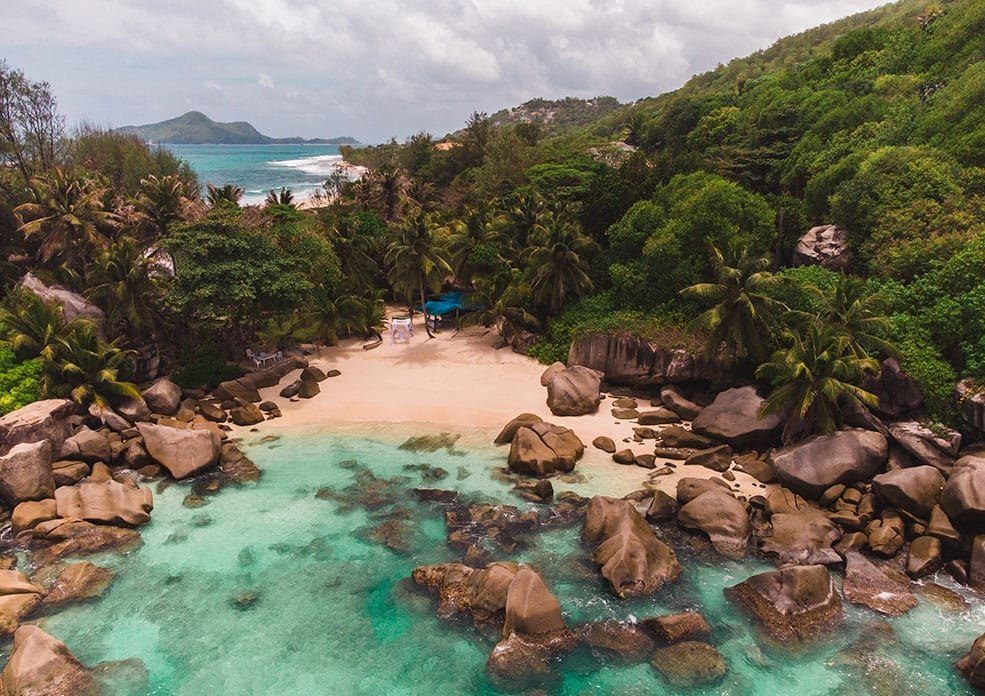
Every beach in Seychelles is public by law, which is why “private beach wedding” is usually a marketing phrase rather than a fact. Ours is the exception for a simple reason. The beach we use sits behind a private property with no path in from anywhere else, so the only way onto the sand is across land we control. On your wedding afternoon nobody wanders through the back of your photographs, nobody swims past the gazebo, and there is a proper bathroom and a changing area a few steps from the sand. We explain how that works in our guide to private beach weddings in Seychelles.
The setup is the bamboo gazebo. Four bamboo posts, white drapes that move in the breeze, fresh tropical flowers on the corners, and the reception table with Creole wedding chairs beside it. It is included in every package, it photographs from every angle, and it is the same gazebo you will see in almost every film on our YouTube channel. Couples who want something more minimal or more lush send us inspiration pictures and we dress it to match.
What you never have to think about
The Mahé package is €1,645 and the point of it is that the list below is already handled before you land. There is a significant government fee for a foreign couple marrying in Seychelles, and the apostille has to be paid for at the Supreme Court. Both sit inside the price rather than on top of it.
- The licensed registrar and the legal civil ceremony on the beach
- Publication of the notice of marriage, 11 days ahead, lodged by us with the Civil Status Office
- Your marriage certificate and its Supreme Court apostille
- A chauffeur driven wedding car from your accommodation and back
- The bamboo gazebo, reception table and Creole wedding chairs
- A fresh bridal bouquet and a groom’s pin
- A customised wedding cake, sparkling wine and cool drinks, plus welcome drinks on arrival
- The coconut casket for your rings
- Two witnesses if you are travelling alone
- A coordinator on the sand from the moment you arrive to the moment you leave
Photography, film and the stylist at €230 are the three things couples add. Photography is the one almost everyone keeps, because the photographs are what you keep. See what our photographers and filmmakers charge per island, or browse the To Happy Endings gallery to see the results.
Small things that make the afternoon better
Eat lunch. A light one, around noon. The ceremony is at two, the photographs run to half past four, and the cake is not a meal. Drink water in the car. It is warm on the sand even in the trade wind months from May to October, and the Seychelles Meteorological Authority puts afternoon showers as the main pattern from December to March, which is why we keep a covered spot ready and why the gazebo has drapes. A shower passes in twenty minutes and the light after it is the best of the day.
Keep the vows to a page. Two or three minutes each reads as heartfelt. Ten reads as a speech, and the registrar is on a diary. Tell us about guests early. Ten people change the chairs, the cake and the car. And if either of you has been married before, bring the apostilled divorce decree in your hand luggage, not your suitcase. Our documents guide lists everything by nationality.
Send us everything in one message
You have seen the prices and the add-ons. Now tell us about you, once, and it reaches us complete. No back and forth, no hundred messages.
- One message, not a hundred. Everything we need in a single send.
- A real reply within a day. From a local team on the island.
- Email or WhatsApp. Whichever suits you, same details either way.
Send us your details
Takes under a minute. We reply within a day.
Frequently asked questions
What time is a beach wedding ceremony in Seychelles?
Usually two o’clock in the afternoon. That gives you a slow morning, a beach that has emptied of the midday sun, and four hours of daylight for photographs. Sunset on Mahé falls between about 18:10 and 18:40 all year, so couples who want golden hour move the ceremony an hour later and keep the photographer an extra hour.
How long does the wedding ceremony itself take?
About 20 minutes. The registrar reads your names from the notice of marriage, asks each of you whether you consent, hears your yes and declares you married, all in front of two witnesses. Your own vows, a reading or an exchange of rings with your own words sit inside that time. From pickup to the last photograph the whole afternoon is roughly two and a half hours.
Can we write and say our own vows at a Seychelles civil wedding?
Yes. The statutory wording under the Civil Status Act is short and the registrar reads it, then hands the ceremony back to you. Most couples write vows of two to three minutes each. A poem, a reading by a family member or a moment of silence all fit. If your vows are in a language other than English, French or Creole, that is fine too, because the legal consent is the only part the registrar needs to hear.
When do we exchange rings, and do we have to?
Rings are not a legal requirement for a civil marriage in Seychelles, so the exchange is yours to shape. It comes after each of you has said yes and before the registrar declares you married, and it has its own line in the registrar’s running order. Most couples say one short sentence each. The rings wait in a coconut casket on the table until that moment, and our coordinator takes the bouquet so both of the bride’s hands are free.
Is it appropriate to be barefoot at a beach wedding in Seychelles?
It is the norm, and we recommend it. The sand is powder fine, heels sink and sandals fill with sand. Most brides walk to the gazebo barefoot and put their shoes back on for the car. Grooms roll their trousers once. The registrar and your guests will not blink, and the photographs are better for it.
Do we need a stylist, or can we get ready ourselves?
Most of our couples get ready themselves, in their own room, and it looks wonderful in the photographs. The bridal stylist is an optional extra who comes to your hotel or villa about two hours before the car, with a trial look first if you want one. Grooms almost always dress themselves. If you want getting ready pictures of you both, the photographer can start at your room instead of the beach, so tell us when you book and we add the hour.
Who is at the wedding, and what does each person do?
The registrar, an officer of the Civil Status Office, conducts the legal ceremony. Two witnesses sign the register, and we provide them free if you come alone. Our coordinator briefs you on arrival and runs the afternoon. Your chauffeur brings you and takes you home. If you have added them, the stylist comes to your accommodation in the morning, the photographer and videographer work from the ceremony to about half past four.
What happens if it rains on our wedding afternoon?
Showers on Mahé are short, twenty minutes is typical, and the gazebo has drapes and a covered spot nearby. December to March is the wetter season and afternoon showers are the usual pattern then, while May to October is dry and sunny under the south east trade winds. If a heavy front is forecast we move the ceremony earlier or later on the same day. We have never had to cancel one.
Is every Seychelles wedding run exactly like this timeline?
No. This is a typical Mahé timeline with a two o’clock ceremony, not a fixed schedule. The sequence and the times vary with the registrar’s diary, your beach, where you are staying, your photography package, the weather and the extras you choose. Praslin and La Digue add a ferry at either end, and on La Digue the tide sets the ceremony time at Anse Source d’Argent. We send you your own running order before you fly.
When do we get our marriage certificate after the ceremony?
Your certificate is drawn up at the Civil Status Office from the register you signed on the beach, usually the next working day. We then take it to the Supreme Court at Ile du Port for the Hague apostille. Our standard is five working days, not counting weekends and public holidays, and we usually have it back within 48 to 72 hours. If you fly before it is ready, we send it on by DHL or FedEx at your cost.
- Immigration and Civil Status, Republic of Seychelles. Marriage Registrar FAQ: 11 day publication of banns, documents and government fees for foreign couples on Mahé, Praslin and La Digue. www.ics.gov.sc
- Civil Status Act of Seychelles, sections on the celebration of marriage before an officer of civil status in the presence of two or more witnesses. citizenshiprightsafrica.org
- Ministry of Foreign Affairs and the Diaspora, Seychelles. Authentication and legalisation of documents: the Supreme Court at Ile du Port issues apostilles. mfa.gov.sc
- Hague Conference on Private International Law. Status table of the 1961 Apostille Convention, Seychelles in force since 31 March 1979. www.hcch.net
- Seychelles Meteorological Authority. Seychelles climate guide, month by month rainfall and wind patterns. www.meteo.sc
- Sunrise and sunset times for Mahé, Seychelles, earliest and latest sunset across the year. sunrisesunset.io
🌺 Mahé from €1,645 all inclusive
Want the running order for your beach and your date?
Every beach in Seychelles has its own tide pattern and sunset angle. Send Anisa your names, nationalities and the month you have in mind, and she replies with your document list, whether the registrar is free, and what your afternoon looks like, minute by minute. Usually the same day, and never with pressure to pay a deposit.
Message us on WhatsApp[email protected]

Comment (0)